






What if you could stop paying to cool the guest room you only use twice a year and finally fix that stubborn hot spot in your master bedroom? We know the frustration of opening a utility bill in July only to see it climbing higher while your upstairs rooms stay uncomfortably warm. It often feels like you’re fighting an uphill battle against the Northern California heat just to keep your family’s sanctuary comfortable.
The good news is that you don’t have to settle for inefficient cooling or the massive expense of tearing out walls for new ductwork. In this guide, we’ll show you how the benefits of a ductless mini split system provide a smarter way to achieve personalized comfort and significant energy savings. We’ve helped many neighbors transition to these high-efficiency systems to gain total control over the temperature in every corner of their home.
We’ll walk you through why a ductless setup is the most precise tool for modern home comfort in 2026. You’ll learn about the latest R-32 refrigerant standards, how to tap into local rebates from SMUD or Roseville Electric, and how these systems protect your indoor air quality during the smoke-heavy days of fire season. Let’s explore how to make your home more efficient and your monthly bills more manageable.
Key Takeaways
- Understand how the two-component design of a mini-split replaces bulky ducts with a streamlined conduit for more efficient cooling and heating.
- Learn how the benefits of a ductless mini split system can eliminate the 30% energy loss typical of traditional ductwork in Sacramento area homes.
- Discover how to solve comfort issues in challenging layouts with quiet, zoned technology that puts you in control of every room’s climate.
- Find out how these systems help protect your household’s air quality from dust and smoke particles during the local fire season.
- Get guidance on the importance of professional load calculations to ensure your new system is perfectly sized for your specific living space.
What is a Ductless Mini-Split and How Does It Work?
We often see homeowners surprised by how simple the mechanical side of a ductless system actually is. Unlike traditional setups that rely on massive furnaces or bulky outdoor units, a mini-split consists of just two primary components: an outdoor condenser and one or more indoor air handlers. These are connected by a small “conduit” that houses the power cable, refrigerant tubing, and a suction line. This streamlined design is one of the biggest benefits of a ductless mini split system because it eliminates the need for invasive construction inside your walls.
To better understand the physical layout and how these components work together, watch this helpful video:
The magic happens through heat pump technology. Instead of burning fuel to create heat, these systems move heat from one place to another. In the summer, the system pulls heat out of your living space and dumps it outside. In the winter, it harvests heat from the outside air, even in chilly temperatures, and brings it indoors. To manage this process with extreme precision, modern units utilize inverter technology to vary the compressor speed based on your home’s actual needs instead of just blasting on and off. For a deeper technical dive into these mechanics, you can read more about How Ductless Systems Work.
You aren’t limited to just wall-mounted units either. We can install floor-mounted consoles or discreet ceiling cassettes that blend into your decor, providing the same high-efficiency performance without disrupting your home’s aesthetic.
The Role of the Inverter Compressor
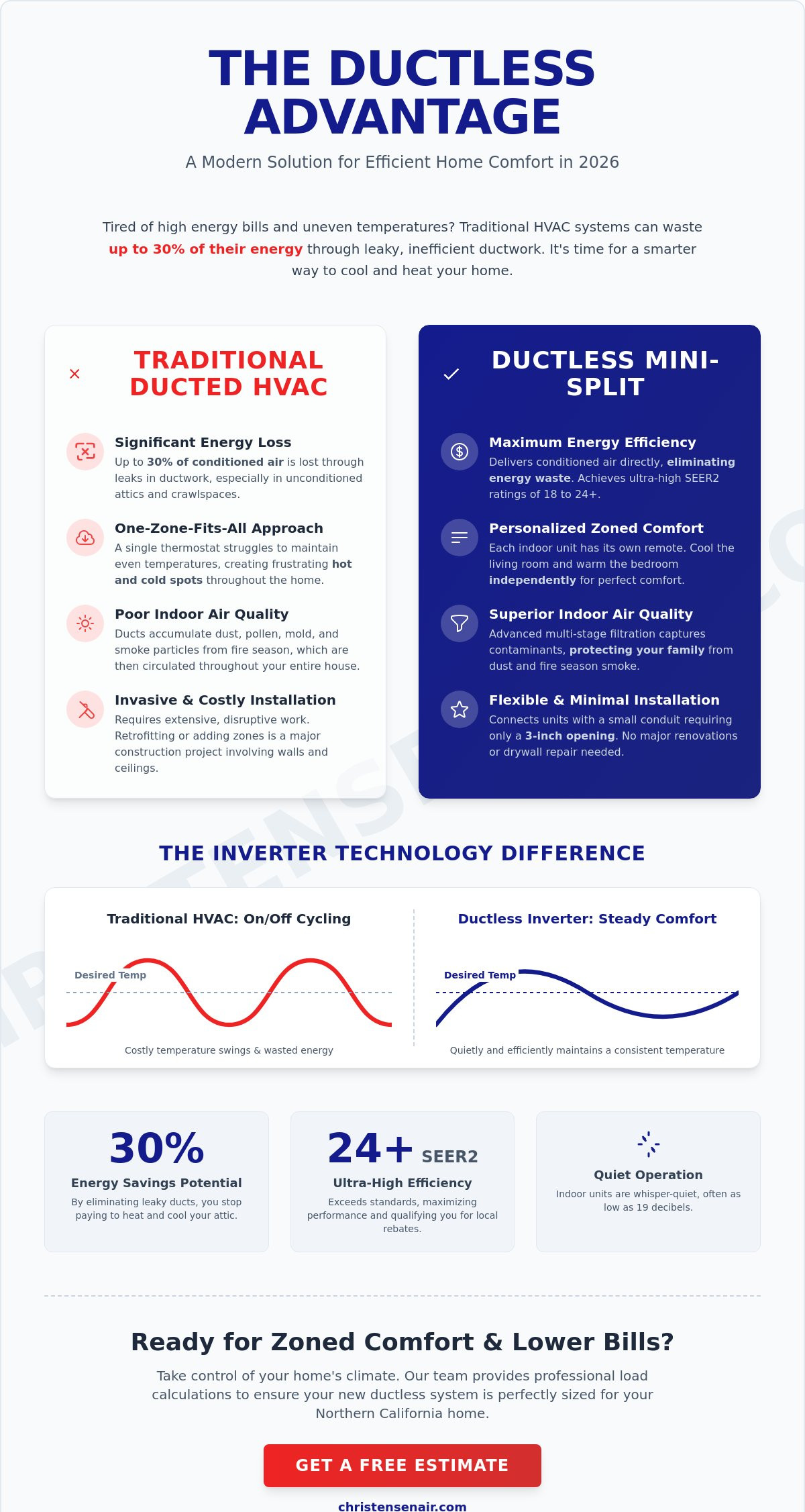
Think of a standard HVAC system like a light switch; it’s either 100% on or 100% off. This creates those annoying temperature swings where you’re too cold, then too hot. An inverter compressor acts like a dimmer switch. It slows down or speeds up to maintain a perfectly steady temperature. Because the system isn’t constantly jolting into action with a high-energy start, there’s much less wear and tear on the internal parts. This reliability is another one of the long-term benefits of a ductless mini split system for our local families.
Ductless vs. Ducted: A Mechanical Comparison
Traditional ducted systems take up a lot of real estate in your attic or crawlspace. When you’re looking at HVAC considerations for home remodels, ductless systems are often the clear winner because they don’t require you to drop ceilings or sacrifice closet space for duct runs. Adding a new zone is as simple as mounting a new indoor unit and running a small conduit. This flexibility allows us to bring comfort to specific rooms without reworking your entire home infrastructure.
The Financial and Energy Efficiency Benefits of Going Ductless
We’ve all felt the sting of a high utility bill during a Sacramento heatwave. One of the most significant benefits of a ductless mini split system is how it tackles energy waste at the source. According to Energy.gov, duct leakage in traditional central HVAC systems can account for more than 30% of a home’s total energy consumption. When conditioned air travels through leaky, uninsulated ducts in a scorching attic, you’re essentially paying to cool a space where nobody lives. Ductless systems bypass this issue entirely by delivering comfort directly to the rooms you use.
In 2026, efficiency standards have reached new heights. While the federal minimum SEER2 rating currently sits at 14.3 for our region, many ductless units we install operate in the 18 to 24 SEER2 range. This higher efficiency, combined with the new low-GWP refrigerant standards that took effect on January 1, 2026, means your system uses less electricity to produce more cooling. For Sacramento homeowners, this translates to lower monthly overhead and a much smaller environmental footprint.
Eliminating Duct Loss Energy Waste
Traditional ducts often lose energy through conduction, especially when they’re buried in unconditioned crawlspaces or attics. Ductless systems deliver 100% of the conditioned air exactly where it’s needed. When you compare a ductless unit to a traditional 14-SEER central unit, the difference is clear; the ductless system doesn’t have to fight the heat gain of the attic before the air even reaches your vents. This direct delivery ensures your system runs shorter cycles and experiences less mechanical stress.
Zoning: Only Pay for the Comfort You Use
Operational zoning is a core feature of Zoned Comfort and Versatile Installation. Unlike central systems that use mechanical dampers to “choke” air flow, ductless zones operate independently. Consider a typical night in a 2,500 sq. ft. Roseville home; rather than cooling the entire downstairs and empty guest rooms, you can set the system to only cool the occupied bedrooms. These targeted choices lead to cumulative monthly savings that really add up over a long California summer.
While federal tax credits for these systems expired at the end of 2025, local utility programs remain a fantastic resource for our neighbors. Roseville Electric currently offers rebates of $900 per ton for those converting from gas to electric heat pumps, while SMUD provides up to $3,000 for qualifying installations. If you’re interested in maximizing your home’s efficiency, we’re here to guide you through the latest Ductless Mini Split Installations to ensure you get the best return on your investment.
Zoned Comfort and Versatile Installation for Challenging Spaces
We often find that Northern California homes have “personality” when it comes to their floor plans, but that personality often leads to uneven temperatures. Whether you’re dealing with a sprawling ranch-style home in Roseville or a multi-story house in Sacramento, the benefits of a ductless mini split system include the ability to bring precise comfort to spaces that traditional ductwork simply can’t reach. These systems allow for a multi-zone approach, where every family member can enjoy their preferred temperature in their own room simultaneously.
One of the most appreciated features for our neighbors is the ultra-quiet operation. Many indoor units run as low as 19 decibels, which is quieter than a soft whisper or rustling leaves. This makes them perfect for nurseries or home offices where silence is a priority. For more technical details on how these flexible setups work, you can consult this Department of Energy guide on ductless systems. We also understand that aesthetics matter. You aren’t stuck with just a white box on the wall; we offer recessed ceiling cassettes that sit flush with the surface and low-wall consoles that resemble traditional radiators for a more discreet look.
Perfect Solutions for Remodels and Additions
If you’re planning a mini split installation for a garage conversion in Rocklin or building a “granny flat” for a family member, extending existing ductwork is often cost-prohibitive and structurally difficult. Mini-splits are the ideal alternative because they require only a three-inch hole in the wall for the conduit. This “no-demo” installation process keeps your home clean and preserves the architectural integrity of historic properties in Placerville or Midtown Sacramento. We take pride in performing Ductless Mini Split Installations that respect the character of your home while providing modern climate control.
Solving the “Bonus Room” Temperature Crisis
We frequently hear from homeowners about the “room above the garage” that stays ten degrees warmer than the rest of the house all summer. Because these rooms are often far from the main air handler, central systems struggle to push enough air to them. A single-zone mini-split can act as a powerful supplement to your existing HVAC, giving that bonus room its own independent thermostat. This is a game-changer for home offices where computers generate extra heat or for nurseries where maintaining a steady, safe temperature is vital for your peace of mind.
Enhancing Indoor Air Quality and Health in Northern California
Living in Northern California means we’ve all learned to keep a close eye on the Air Quality Index during the summer months. One of the most vital benefits of a ductless mini split system is the level of protection it offers your family’s lungs during our local fire season. Traditional central systems rely on a network of ducts. Over time, these hidden pathways can harbor layers of dust, pollen, and even fine smoke particles from previous years. Every time the fan kicks on, those pollutants circulate through your living room. Because ductless units don’t use these large transit routes, you eliminate the risk of duct-born allergens invading your sanctuary.
We believe your home should be a safe haven from the outside elements. To keep your system running at its peak, it’s essential to understand how to improve indoor air quality through basic, routine care. Most ductless air handlers feature multi-stage filtration that captures microscopic particles before they reach your air. This provides a cleaner environment for children and those with respiratory sensitivities who might struggle with the hazy Sacramento air.
Wildfire Smoke and Advanced Filtration
When smoke hangs heavy over Roseville and Sacramento, high-end ductless units act as your first line of defense. Many of these systems come equipped with specialized charcoal or enzyme filters. These aren’t just standard mesh screens. They’re designed to chemically neutralize odors and trap the ultra-fine particulate matter found in wildfire smoke. Another one of the practical benefits of a ductless mini split system is that the filters are incredibly easy to access. You don’t need a technician to swap them out. You can simply pop open the front panel, rinse the filters in your sink, and slide them back in to maintain fresh air throughout the season. For homeowners who want to understand whether adding UV technology to their system can provide an additional layer of protection, our guide on whether UV lights help with wildfire smoke explains how these two technologies work together as part of a complete air quality strategy.
Reducing Humidity and Mold Growth
Sacramento’s summer nights can occasionally bring a sticky humidity that makes sleep difficult. The variable-speed inverter technology we discussed earlier plays a huge role here by providing superior dehumidification. Because the system runs in longer, lower-speed cycles, it has more time to pull moisture out of the air. Drier air feels significantly cooler, allowing you to stay comfortable at a higher thermostat setting. Many of our premium units also feature a self-cleaning mode. This function continues to run the fan for a few minutes after the cooling cycle ends, drying out the internal coils. This prevents the moisture buildup that often leads to mold or mildew. If you want to take your home’s protection even further, we can also discuss UV light installation for wildfire smoke and indoor air quality to keep your indoor air handlers completely sanitized.
Planning Your Ductless Installation in Roseville and Sacramento
We’ve seen the shift firsthand. As our local climate continues to present new challenges, homeowners in Placer County are looking for more than just a standard air conditioner. They want precision. Taking advantage of the benefits of a ductless mini split system starts with a plan tailored to your specific home. Whether you’re in a classic bungalow in Midtown or a newer build in Roseville, the future of home comfort is about targeted, efficient cooling that doesn’t rely on aging, dusty ductwork. Of course, if your existing central system is struggling before you make the switch, understanding your options for residential AC repair Carmichael homeowners rely on can help you make a more informed decision about whether to repair or replace.
The most critical step in this process is the load calculation. We don’t believe in “rule of thumb” estimates. Our team performs a detailed analysis of your room’s square footage, window orientation, and insulation levels. This ensures your mini-split is sized perfectly. An oversized unit will cycle on and off too quickly, failing to dehumidify the air, while an undersized unit will struggle to keep up during a July heatwave. Getting this right from the start is how we protect your long-term investment.
Once your system is in place, we want to make sure it stays as efficient as the day it was installed. We always recommend our Comfort Club Maintenance Plan to our neighbors. Regular checkups allow us to keep those inverter compressors and sensitive electronics in top shape, preventing unexpected breakdowns when you need the cooling most. It’s our way of partnering with you to ensure your home remains a sanctuary of reliable comfort.
What to Expect During Installation Day
We value your time and your property. For most single-zone systems, we can complete the entire installation in just one day. We use a “small-hole” approach, meaning we only need to create a three-inch opening to connect the indoor and outdoor components. This preserves your home’s exterior and eliminates the need for major construction. After the units are mounted, we begin the commissioning process. We carefully test refrigerant levels and airflow to verify that the system meets the manufacturer’s exact specifications. We don’t leave until we’re certain every zone is performing perfectly.
The Christensen Commitment to Local Comfort
We’ve been a family-owned, Roseville-based team since 2009. Our roots in this community run deep, and we take personal pride in every task we handle. We’ve spent years honing our expertise in inverter technology and multi-zone configurations because we know these systems provide the best benefits of a ductless mini split system for our unique California environment. We treat your home with the same care we would apply to our own, focusing on honesty and long-term relationships rather than quick sales. Schedule your ductless mini-split consultation with Christensen Heating and Cooling today!
Secure Your Home’s Comfort and Savings for the Future
Choosing the right HVAC system is about more than just numbers on a utility bill; it’s about protecting the sanctuary of your home. You’ve seen how the benefits of a ductless mini split system can help you reclaim control over those stubborn hot spots while eliminating the 30% energy waste often caused by leaky ducts. From breathing cleaner air during our hazy fire seasons to finally enjoying a perfectly cooled home office, these systems offer a level of precision that traditional units simply can’t match.
As a family-owned team serving our neighbors since 2009, we take personal pride in being specialists in high-efficiency inverter systems. We’re here to help you navigate these modern comfort choices with honest, straightforward guidance. Whether you’re ready for a new installation or want to ensure long-term reliability with our Comfort Club priority maintenance, we’re ready to partner with you. Get a Professional Ductless Mini-Split Estimate in Roseville today to start your journey toward a more efficient home. We look forward to helping you make every room in your house feel exactly the way it should.
Frequently Asked Questions
Are ductless mini-splits worth the higher upfront cost?
Yes, the long-term savings on your utility bills make these systems a sound financial investment. By eliminating the energy loss associated with leaky ducts and allowing you to cool only the rooms you’re using, you can reduce your energy consumption by up to 40%. While the initial installation requires a larger investment than some central units, the monthly operational savings and local utility rebates help the system pay for itself over time.
How long do ductless mini-split systems typically last?
Most high-quality ductless systems will last between 15 and 20 years when they’re cared for by a professional team. This lifespan often exceeds that of traditional central air conditioners, which typically last closer to 10 or 15 years. We recommend joining our Comfort Club Maintenance Plan to ensure your system stays in peak condition. Regular checkups prevent small mechanical issues from turning into expensive repairs, keeping your home comfortable for two decades.
Do ductless mini-splits work effectively in extreme Northern California heat?
Modern mini-splits are designed to handle the intense heat of a Sacramento summer without breaking a sweat. High-efficiency inverter heat pumps can maintain cooling performance even when outdoor temperatures climb well above 100 degrees. Because the system adjusts its speed to meet the exact cooling demand, it doesn’t have to work as hard as a traditional unit. This reliability is one of the primary benefits of a ductless mini split system for our local climate.
Can I install a ductless mini-split system myself to save money?
We strongly advise against attempting a DIY installation for your home’s safety and your system’s longevity. Installing these units requires specialized tools and technical expertise in handling refrigerants, which is strictly regulated by the EPA. Most manufacturers will also void your warranty if a licensed professional doesn’t perform the work. Our team ensures the electrical connections and refrigerant lines are perfectly sealed, preventing leaks that could damage your equipment.
How often do I need to clean the filters on my ductless unit?
You should check and clean your filters every two to four weeks during the height of the summer and winter seasons. Ductless units move a lot of air through a compact space, so keeping the filters clear is vital for maintaining airflow and efficiency. The process is very simple; you just pop open the front panel and rinse the mesh filters with water. For a complete walkthrough of the process, our guide on how to clean the indoor filter on a ductless mini split covers every step in detail. Keeping them clean also helps your system provide the best possible indoor air quality for your family.
Will a mini-split system devalue my home if I decide to sell?
A ductless system typically increases your home’s marketability and overall value. Potential buyers in 2026 are looking for energy-efficient features and the ability to control temperatures in specific rooms like home offices or guest suites. These systems are especially attractive in older homes where traditional ductwork is difficult to install. Highlighting the benefits of a ductless mini split system, such as lower utility costs and quiet operation, can be a major selling point during a home inspection.