





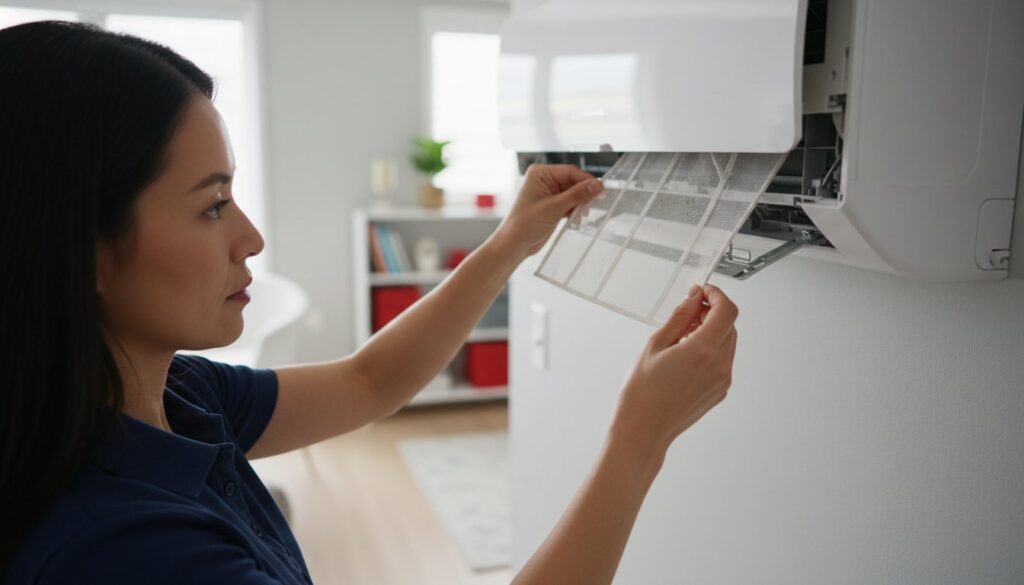
What if the secret to cutting your summer cooling costs and reducing those nagging seasonal allergies was sitting right behind a plastic panel in your living room? We know that keeping up with home maintenance can feel like a chore, especially when you’re worried about accidentally damaging your expensive equipment. It’s frustrating to watch your electricity bills climb during a hot California summer while the air coming from your unit feels weak or dusty. We believe you should feel confident in your own home, not stressed by your HVAC system.
We want to help you take control of your home’s comfort. In this guide, we’ll show you exactly how to clean the indoor filter on a ductless mini split to boost efficiency, lower your bills, and ensure your family breathes cleaner air. We’ll walk you through the simple steps to handle both mesh and specialized carbon filters so you can maintain your system with ease. By the end of this article, you’ll have the knowledge to keep your system running smoothly and protect your sanctuary’s air quality for years to come.
Key Takeaways
- Protect your home’s air quality and prevent a 30% drop in system efficiency by maintaining a regular cleaning schedule.
- Master the safe way how to clean the indoor filter on a ductless mini split using basic household supplies like mild soap and a soft brush.
- Learn to distinguish between permanent washable mesh screens and specialized inserts that need periodic replacement to stay effective.
- Follow our essential safety checklist to ensure your unit is completely powered down before you begin any maintenance tasks.
- Recognize the signs that your system needs a professional deep cleaning to protect the delicate internal components and extend its lifespan.
Why Cleaning Your Ductless Mini-Split Filter is Non-Negotiable in 2026
Living in Roseville and the wider Sacramento Valley offers a beautiful landscape, but it also brings unique environmental challenges for your home. Between the heavy oak pollen in the spring and the persistent dust of our dry summers, your HVAC system works incredibly hard to maintain your comfort. Ductless systems are prized for their high efficiency, but that performance depends entirely on a clean air intake. The indoor filter serves as the primary gatekeeper for your home, trapping dust, pet dander, and pollen before they can settle into the delicate internal components of your unit.
When you learn how to clean the indoor filter on a ductless mini split, you’re doing much more than just a simple household chore. You’re protecting a significant investment. A clogged or dirty filter can reduce airflow by up to 30%, which forces the entire system to struggle. This lack of air doesn’t just make you less comfortable; it causes the evaporator coil to drop in temperature significantly, which can lead to the unit freezing over or becoming bogged down with debris that requires professional extraction. We want to help you avoid these preventable headaches and keep your home’s sanctuary intact.
To better understand how these filters function and why they need your attention, watch this helpful video:
Energy Efficiency and Cost Savings
There’s a direct connection between the state of your filters and your monthly SMUD or PG&E statements. Most modern mini-splits utilize an inverter compressor that scales its power use based on the cooling demand. When airflow is restricted, the system detects the lack of cooling and pushes the compressor to run at much higher speeds than necessary. Static pressure is the measurement of resistance that air must overcome to move through your unit, and it spikes dangerously when filters are ignored. By keeping those filters clear, you ensure the air moves freely, keeping your energy consumption low and your bills predictable.
Protecting Your Indoor Air Quality
Your filters are your first line of defense during Northern California fire seasons. Smoke and fine particulate matter can saturate a filter in a matter of days during active fire events. If you don’t stay on top of maintenance, these trapped particles can interact with the natural moisture inside the unit, leading to what technicians call “dirty sock syndrome” or a persistent musty smell. Understanding how to clean the indoor filter on a ductless mini split is the simplest way to prevent these odors from taking hold. We recommend checking them even more frequently when the air quality index outside begins to drop, ensuring the air inside your home remains crisp and safe for your family.
Before You Begin: Tools, Safety, and Timing
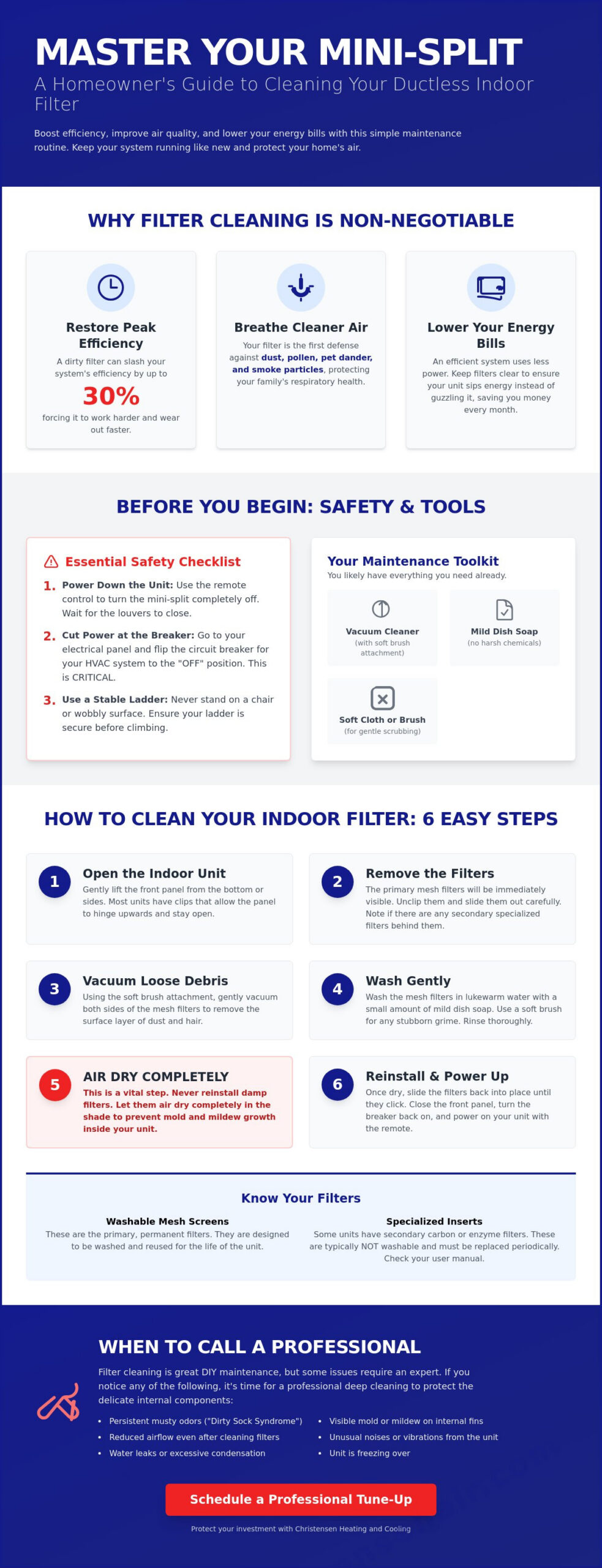
We want you to feel completely safe and prepared before you start working on your system. Taking a few minutes to set up your workspace prevents accidental damage to the delicate plastic hinges or the internal fins of your unit. Before you even grab a ladder, the most critical step is ensuring the power is completely cut. Start by turning the unit off with your remote control. Once the louvers have fully closed and the system has powered down, head to your electrical panel and switch off the circuit breaker for the HVAC unit. This double layer of safety protects both you and the sensitive electronics inside the machine.
Since most indoor units are mounted high on the wall to optimize airflow, you’ll need a stable ladder. Please avoid the temptation to balance on a chair or reach from an awkward angle. Clear the area directly beneath the unit so you have plenty of room to move. Having everything within reach before you climb up will make the process much smoother and keep you focused on the task at hand.
The Homeowner’s Maintenance Toolkit
You don’t need a garage full of specialized gear to maintain your system properly. Most of the items required for how to clean the indoor filter on a ductless mini split are likely already in your utility closet. We recommend gathering these basic supplies:
- A vacuum cleaner with a soft brush attachment for removing surface dust.
- Mild dish soap (avoid harsh chemicals or degreasers that can brittle the plastic).
- A soft-bristled brush, like a clean paintbrush or an old toothbrush, for stubborn spots.
- Clean microfiber cloths for wiping down the tracks and the unit’s exterior.
Using a handheld vacuum for a quick weekly surface cleaning can prevent heavy buildup from ever forming. However, when it’s time for a deeper wash, stick to lukewarm water and gentle soap. Harsh cleaners can leave behind residues that eventually blow back into your living space or damage the integrity of the filter mesh. If you ever feel overwhelmed by the technical side of your system, our Comfort Club Maintenance Plan is a great way to ensure your unit gets a professional eyes-on inspection twice a year.
How Often Should You Clean?
Your specific environment dictates your cleaning schedule. While the U.S. Department of Energy provides great general resources on Ductless Mini-Split Air Conditioners, local factors matter more. In a standard home, we recommend a thorough filter check every two to four weeks during peak cooling or heating seasons. If you have pets that shed or live in a particularly dusty area of the Sacramento Valley, you should move to a bi-weekly schedule. Don’t just wait for the “filter” light to blink on your display; a quick visual check of the top air intake will tell you if dust is starting to accumulate. Staying ahead of the buildup is the best way to keep your air crisp and your energy bills low.
Step-by-Step: How to Clean Your Indoor Mini-Split Filter
We know the most nerve-wracking part of learning how to clean the indoor filter on a ductless mini split is the fear of breaking a plastic clip or hinge. These units are built to be sturdy, but the front panels require a gentle touch. Start by placing your hands on the lower sides of the indoor casing. You’ll typically find small indentations designed for your fingertips. Pull the panel toward you and then upward. Most covers are designed to click into a “propped” position, staying open while you work. If you feel significant resistance, stop and check for a center latch that might need a light press.
Once the panel is open, you’ll see two large mesh screens. These are held in place by small plastic tabs at the bottom. Simply press the tabs up slightly to unhook them, then slide the filters down and out of their tracks. While the unit is open, it’s a good idea to take a microfiber cloth and wipe away any dust that has settled on the plastic frame. For those interested in seeing what a more intensive maintenance process looks like, this provides excellent context on the internal components that live behind these filters.
Washing and Drying Techniques
If your filters only have a light layer of dust, a vacuum with a soft brush attachment can do the job in seconds. However, if the buildup is thick or you live in a home where cooking oils or incense are common, a wet wash is necessary. Take the filters to a sink and use lukewarm water mixed with a single drop of mild dish soap. The secret is to rinse from the “clean side” first. This means spraying water through the back of the filter to push the dust out the way it came in, rather than forcing it deeper into the mesh. After rinsing, shake off the excess water and let them air-dry completely. Avoid the temptation to put them in direct sunlight or use a hair dryer; high heat or UV exposure can warp the plastic frames, making them impossible to reinstall.
Reinstallation and Resetting the System
The most important rule of mini-split maintenance is to never reinstall a wet filter. Moisture trapped inside the unit can lead to mold growth on the evaporator coils, which creates those musty odors we discussed earlier. Once the filters are bone-dry, slide them back into their tracks until they are fully seated. You’ll know they’re in place when the bottom tabs click back into their slots. Close the front panel and press firmly on the corners until you hear the safety latches engage. Finally, restore power at the breaker. Many units have a “Clean Filter” or “Reset” button on the remote or the wall controller. Hold this down for a few seconds to clear the timer so your system can accurately track the next time you need to perform this task.
Beyond the Basic Filter: Specialized Air Purifiers and Deep Cleaning
Once you’ve mastered the basics of how to clean the indoor filter on a ductless mini split, you might notice your unit contains more than just those large plastic mesh screens. Many modern systems include smaller, colorful inserts tucked into the filter frames. These are specialized air purifiers designed to tackle what a standard mesh screen can’t. We’ve seen many well-meaning homeowners accidentally throw these away or ruin them by soaking them in water. Understanding these components is vital because they are your primary defense against the fine particulate matter common during Northern California’s wildfire seasons.
While the mesh filters are permanent and washable, these secondary inserts are usually consumable. They work through chemical or electrostatic processes to neutralize odors and capture microscopic allergens. Because our region deals with high pollen counts and occasional smoke, these filters often work overtime. Keeping them fresh is one of the key benefits of a ductless mini split system, as they provide a level of air purity that traditional systems often struggle to match without expensive upgrades. If you are also evaluating the mini split system cost for 4 rooms in Sacramento to expand your home’s comfort, understanding how these specialized filters factor into long-term maintenance costs is an important part of your planning.
Handling Specialized Filter Inserts
There are three main types of inserts you’ll likely encounter: Carbon, Ion, and Catechin filters. Carbon filters are excellent for deodorizing and removing volatile organic compounds. Some manufacturers design these to be “recharged” by placing them in direct sunlight for a few hours, which helps release trapped odors. Ion filters use static electricity to clump small particles together, while Catechin filters use green tea extracts to inhibit the growth of bacteria. Unlike the main mesh, HEPA-style or enzyme inserts usually require replacement every three to six months. If you live in a home with pets or heavy cooking, you should check these monthly. Don’t try to wash them; water typically destroys the specialized coatings that make them effective.
Signs of Mold or Deep Clogs
Sometimes, knowing how to clean the indoor filter on a ductless mini split isn’t enough to solve every problem. If you’ve cleaned your filters but still notice a musty smell or a drop in airflow, it’s time to look deeper. Use a flashlight to peer past the filter tracks and look at the blower wheel, the long cylindrical fan inside the unit. If you see black spots or a “fuzzy” texture, that’s a sign of mold growth that requires professional attention. We also recommend watching for “jelly” buildup in the condensate pan. This is a bacterial slime that can clog your drain line, eventually causing water to leak behind your drywall. To prevent these issues from starting, professional UV light installations can be added to your unit to kill mold spores before they ever settle on your coils.
If you notice water dripping from your indoor unit or see visible mold on the fan blades, contact our team today for a professional deep cleaning to protect your home’s air quality.
When to Call Christensen Heating and Cooling for Professional Service
We believe that every homeowner should feel empowered to handle basic maintenance, and knowing how to clean the indoor filter on a ductless mini split is the best way to start. However, there is a significant difference between a routine filter rinse and a professional deep clean. While you can easily manage the mesh screens, we strongly advise against attempting to disassemble the blower assembly or remove the internal fan wheel yourself. These components are precisely balanced and connected to delicate plastic housing that can easily crack or warp if handled without specialized tools.
When our technicians arrive for a service visit, we go far beyond the surface. We use professional-grade “bib kits” and pressurized cleaning systems to flush out the evaporator coils and the blower wheel. This process removes the deep-seated biofilm and dust that even the best filters can’t catch. If you’ve followed the steps on how to clean the indoor filter on a ductless mini split but still notice weak airflow or a lingering odor, it’s a clear sign that debris has bypassed the filter and settled into the internal fins. Our team has the regional expertise to recognize the specific wear patterns caused by Roseville’s climate, ensuring your system remains a reliable source of comfort.
The Benefits of Professional Maintenance
Professional service covers the technical aspects of your system that are invisible to the naked eye. We check refrigerant levels to ensure there are no leaks and inspect all electrical connections to prevent unexpected shorts during a heatwave. We also take care of the outdoor condenser unit, clearing away the yard debris and Sacramento Valley dust that can bridge the gap between the cooling fins and block heat transfer. If your system has stopped cooling entirely or is making strange grinding noises, you may need more than just a cleaning. In those cases, we provide expert residential AC repair in Carmichael and the surrounding areas to get your sanctuary back to the right temperature.
Joining the Comfort Club
We created the Comfort Club Maintenance Plan to take the guesswork and stress out of HVAC care. By joining, you ensure your system receives a multi-point safety inspection and professional cleaning twice a year. This regular attention is often a requirement to keep your manufacturer warranty valid, protecting you from high out-of-pocket costs if a major component fails. Members also enjoy priority scheduling, which is a lifesaver when the Sacramento summer heatwaves hit and everyone is looking for help at once. We treat your home with the same care we would our own, building a long-term relationship based on honesty and the shared goal of keeping your family comfortable.
Protect Your Home’s Comfort for the Long Haul
Taking those first steps to learn how to clean the indoor filter on a ductless mini split is a powerful way to protect your family’s health and your household budget. By staying on top of mesh filter maintenance every few weeks, you’re preventing efficiency losses and ensuring the air in your Roseville or Rocklin home stays crisp. Remember that while basic cleaning is a great DIY task, your system still relies on professional eyes to handle the deeper mechanical needs that keep it running for years.
Since 2009, our family-owned and operated team has specialized in high-efficiency inverter heat pumps across the greater Sacramento area. We take personal pride in every task, treating your environment with the same care we would apply to our own. We’re here to be your reliable partner in home comfort, offering the technical proficiency you need with the neighborly care you deserve. Keep your home comfortable year-round—Join the Christensen Comfort Club today! We look forward to helping you keep your sanctuary safe and efficient for many seasons to come.
Frequently Asked Questions
How often should I clean my ductless mini-split filters?
We recommend cleaning your filters every two to four weeks during the heavy usage months of summer and winter. If you have pets that shed or live near a construction site in Roseville, checking them every two weeks is a safer bet. Consistent maintenance keeps your airflow strong and prevents the system from overworking during our intense Sacramento heatwaves.
Can I run my mini-split without the filter for a few hours?
You should never run your system without the filters in place, even for a short period. The filter is the only thing stopping dust and hair from being sucked directly into the wet evaporator coils. Running it without protection can lead to rapid mold growth and debris buildup that requires a professional deep clean to resolve.
Why is my mini-split still blowing weak air after I cleaned the filter?
Weak airflow usually indicates that dust has moved past the filter and is now clogging the internal blower wheel or the evaporator coils. While learning how to clean the indoor filter on a ductless mini split is a great first step, it doesn’t address the deeper components. If the airflow doesn’t improve after a filter wash, you likely need a professional technician to perform a specialized coil cleaning.
Do I need to clean the outdoor unit if I clean the indoor filters?
Yes, the outdoor condenser unit needs regular attention to ensure proper heat transfer and system health. While the indoor filters protect your air quality, the outdoor unit can become blocked by leaves, grass clippings, and local dust. Keeping the area around your outdoor unit clear and gently rinsing the fins with a garden hose helps maintain your system’s high-efficiency ratings.
What happens if I never clean my mini-split filters?
Neglecting your filters often leads to a 30% drop in airflow, which causes your energy bills to spike as the compressor works harder to compensate. Eventually, the lack of air causes the evaporator coils to freeze over. This ice buildup can lead to water leaks inside your home and potentially cause a total system failure that requires expensive repairs.
Can I use a hairdryer to speed up the drying of my filters?
Please avoid using a hairdryer or any high-heat source to dry your filters. The intense heat can warp the delicate plastic frames and make it impossible to slide them back into their tracks correctly. The safest method is to let them air-dry in a shaded area until they are completely moisture-free before reinstallation.
Why is the ‘filter’ light still on after I cleaned it?
The “filter” light is usually tied to a simple timer rather than a sensor, so it won’t turn off automatically just because the filter is clean. You’ll need to manually reset the timer using your remote control or the reset button on the indoor unit. Check your owner’s manual for the specific button sequence required for your particular brand and model.
Is it okay to use a pressure washer on my indoor filters?
You should never use a pressure washer on your indoor filters because the high-pressure stream will easily tear the fine mesh. A gentle rinse under a lukewarm tap or a light spray from a garden hose is all you need to remove most debris. If you’re wondering how to clean the indoor filter on a ductless mini split effectively, stick to mild dish soap and low-pressure water to keep the material intact.