





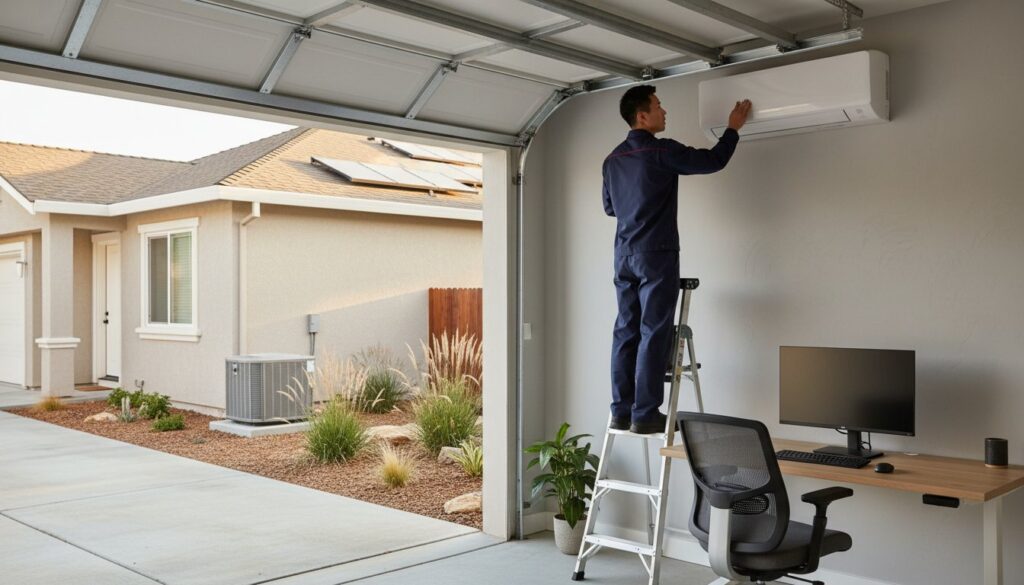
What if your garage could be the most comfortable room in your home, even when Rocklin hits triple digits this July? Many of our neighbors find that while the extra square footage is great, keeping a converted space cool with portable units leads to sky-high energy bills and a lot of noise. If you’re planning a project this year, a professional mini split installation for a garage conversion Rocklin is the most effective way to ensure your new office or guest suite feels like a true part of your home. We know that the transition from a storage area to a living sanctuary involves more than just a fresh coat of paint and some carpet.
We agree that the technical side of home upgrades, especially with the stricter 2026 California Energy Code standards, can feel a bit daunting. You deserve a quiet, efficient space that meets every local regulation without the stress of navigating permit offices alone. This guide will teach you how to transform your Rocklin garage into a year-round living space with the right ductless strategy. We’ll walk through the latest Title 24 requirements, the importance of HERS testing, and how to select a system that provides the ultimate sense of security and comfort for your family.
Key Takeaways
- Discover why a professional mini split installation for a garage conversion Rocklin is the gold standard for creating a quiet, climate-controlled living space without the inefficiency of extending your existing ductwork.
- Learn how to accurately size your system by understanding why garages require higher BTU ratings than standard interior rooms due to unique factors like sun exposure and ceiling height.
- Identify the critical preparation steps for your project, including the necessity of a dedicated electrical circuit and meeting the latest 2026 Rocklin building permit requirements.
- Understand the step-by-step installation process, from the initial site walk-through to the precise mounting of the indoor head unit for optimal airflow and comfort.
- See how high-efficiency inverter heat pumps can maximize your return on investment by providing superior energy savings while protecting the comfort of your household.
Why Mini-Splits are the Gold Standard for Rocklin Garage Conversions
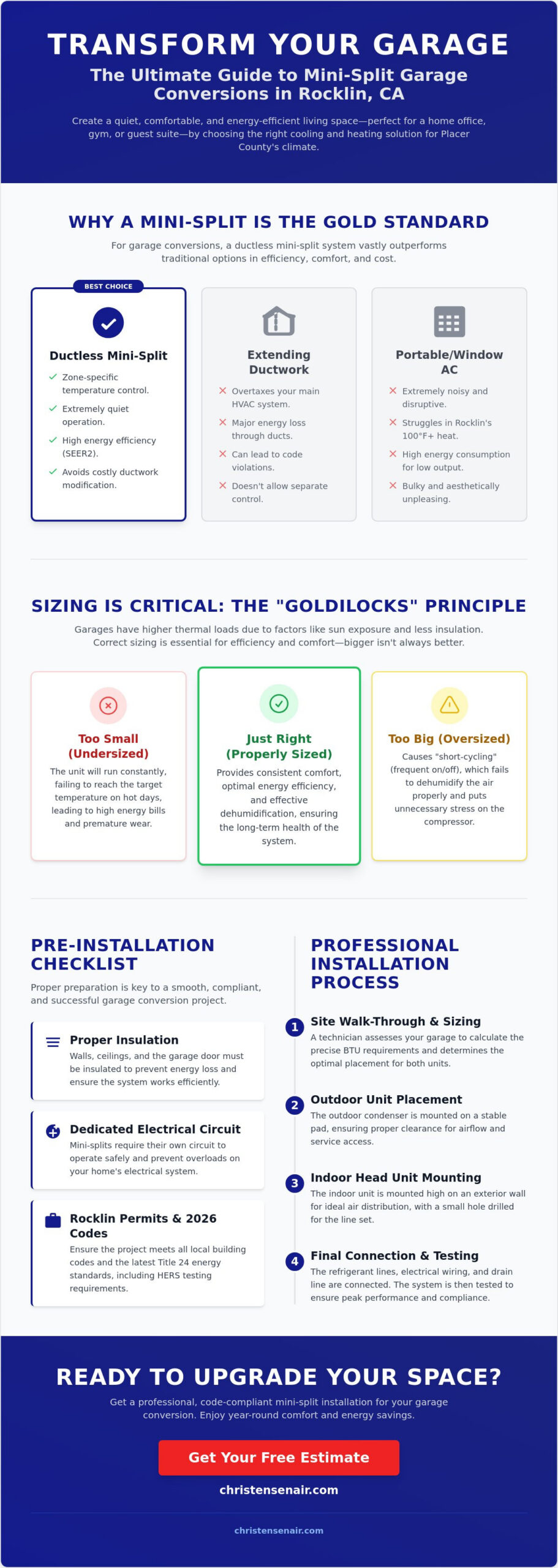
We’ve found that a garage conversion should feel like a natural extension of your home, not a secondary space that’s barely habitable. A ductless mini-split is a localized heat pump system that provides targeted heating and cooling exactly where you need it. Unlike central air, Ductless mini-split systems don’t rely on a complex network of vents to move air. This makes a mini split installation for a garage conversion Rocklin the most practical choice for homeowners who want to avoid the massive expense and inefficiency of modifying their existing HVAC system.
Extending your current ductwork into a garage often leads to performance issues and code violations. Your main unit was likely sized for your original square footage; adding a garage can overtax the system, leading to premature wear. Plus, ducts running through unconditioned garage spaces lose significant energy. By choosing ductless mini split systems, you gain independent temperature control. This means you can keep your new office cool without freezing everyone else in the main house.
To better understand the practical side of these systems, watch this helpful video regarding common installation experiences:
The “Garage Heat Trap” Challenge in Placer County
Our local Rocklin summers are legendary, with temperatures regularly soaring past 100°F. In these conditions, a standard garage becomes a heat trap. Portable air conditioners or window units often struggle because they aren’t designed for the high-volume cooling needs of an uninsulated garage shell. Mini-splits provide high-capacity cooling that can handle our extreme peaks while offering efficient heating during our crisp winter mornings. This ensures your new living area remains a sanctuary regardless of the weather outside.
Energy Efficiency and SEER2 Ratings in 2026
As we move into 2026, California energy standards have become even more rigorous to help protect our environment and your wallet. High SEER2 ratings are now the benchmark for efficiency. We prioritize inverter heat pumps because they avoid the energy-wasting “on-off” cycles of traditional units. Instead, they adjust their speed to maintain a steady temperature. This precision keeps your bills low and helps you qualify for potential utility rebates available for high-efficiency heat pump installs. It’s a smart way to invest in your home’s long-term value while staying comfortable.
Sizing Your Mini-Split: BTU Requirements for Rocklin Garages
We know that getting the math right is the most critical step in your project. A mini split installation for a garage conversion Rocklin requires a different calculation than a standard bedroom or living room. Because garages often lack the thick insulation found in the rest of your home, they face much higher thermal loads. If we simply used a standard square-footage chart, the unit would likely struggle to keep up during a blistering July afternoon in Placer County.
The U.S. Department of Energy highlights that energy-efficient mini-split systems are ideal for room additions, but only if they’re sized correctly. We often see homeowners fall into the “bigger is better” trap. If a unit is too large for the space, it will reach the target temperature too quickly and shut off. This “short-cycling” prevents the system from properly dehumidifying the air. It also puts unnecessary wear on the compressor. Our goal is to find the “Goldilocks” unit that runs steadily to maintain a perfect, dry climate.
Standard Garage Sizes and BTU Estimates
While every home is unique, we can use these general benchmarks for Rocklin properties as a starting point:
- 1-Car Garage (approx. 250-300 sq ft): These typically require 9,000 to 12,000 BTUs to handle the lack of overhead insulation.
- 2-Car Garage (approx. 400-500 sq ft): Most of these conversions need between 18,000 and 24,000 BTUs to stay comfortable year-round.
- 3-Car Garage or Large ADU: These larger spaces often require multi-zone systems or specialized high-capacity single-zone units to ensure even airflow. If you’re also considering conditioning multiple rooms throughout your home, reviewing the mini split system cost for 4 rooms in Sacramento can help you plan a whole-home ductless strategy alongside your garage conversion.
The Impact of “Hot Walls” and Garage Doors
In our region, sun exposure is a major factor. West-facing garages in Rocklin act like solar collectors, absorbing heat all afternoon. The garage door itself is often the primary source of thermal loss; even if it’s “insulated,” it remains a thin barrier compared to a standard house wall. We must also look at “thermal bridges” like concrete slabs and uninsulated shared walls. These HVAC considerations for home remodels are vital for a successful conversion. If you’re feeling overwhelmed by the technical details, our team can perform a professional load calculation to ensure lasting comfort for your new living space.
The Conversion Checklist: Insulation, Electrical, and Rocklin Permits
Preparing for a mini split installation for a garage conversion Rocklin requires more than just picking a high-efficiency unit. We believe that an HVAC system is only as good as the room’s envelope. If your garage walls consist of thin drywall and bare studs, heat will pour in as fast as your new unit can pump it out. This is why we always recommend a holistic approach to your conversion project. Professional installation isn’t just about getting the unit running. It’s also about protecting your investment and your peace of mind. Most manufacturers require a professional setup to keep your warranty valid, ensuring that any future repairs are covered under the brand’s protection plan.
Prioritizing Insulation and Air Sealing
We’ve seen that Northern California homes perform best when they meet specific R-value targets. For garage walls, you should aim for R-13 to R-15 insulation, while ceilings often require R-30 or higher to block the intense heat radiating from the roof. You must also address the garage door. Replacing the door with a conditioned, permanent wall is the most effective path for climate control. If you choose to keep the door, it needs high-quality insulation and a tight seal. Proper air sealing also serves a vital safety role. It helps prevent Rocklin wildfire smoke from entering your new living sanctuary during the dry months, keeping your indoor air quality high and your family safe.
Electrical Requirements
Most mini-split systems need a dedicated 220V/240V circuit to operate at peak efficiency. This Department of Energy explanation of mini-split heat pumps confirms that these systems are remarkably efficient, but they still require a stable, dedicated power source. We’ll work with you to ensure the unit is positioned where it can safely connect to your home’s electrical infrastructure, providing a reliable source of comfort for years to come. This focus on proper electrical planning prevents tripped breakers and ensures your system runs smoothly even during the hottest summer days.
Permitting and Code Compliance in Rocklin
Navigating the Rocklin Building Division requirements is a major part of any garage conversion. As of May 2026, the 2022 California Building Standards (Title 24) are the current rule, but the new 2026 code update has introduced even stricter requirements. This update is roughly 30% more stringent than previous years, requiring precise energy compliance for all new living spaces. You’ll need to submit a Title 24 energy compliance report (CF-1R) before the city issues a building permit. We take pride in ensuring our work meets all local safety and noise ordinances. Skipping the permit process might seem easier, but it can hurt your home’s resale value and lead to insurance complications. You can contact the Rocklin Building Department directly at building@rocklin.ca.us or (916) 625-5120 to discuss your specific permit fees and requirements.
Step-by-Step Installation Process: What to Expect
We want you to feel confident from the moment our team arrives at your home. Every mini split installation for a garage conversion Rocklin begins with a detailed site walk-through. We don’t just look for a convenient spot; we look for the right spot. We’ll identify the best location for the indoor head unit to ensure even airflow throughout your new living area. Once we’ve agreed on the placement, we mount the indoor bracket and carefully drill a small, three-inch hole through the wall. This single opening is all we need to pass the refrigerant lines, electrical wiring, and drainage tubing to the outside condenser.
Outside, we’ll install the condenser unit on a level, vibration-absorbing pad or a sturdy wall bracket, depending on your garage’s layout and local space. After connecting the copper line sets, we perform a critical step called system evacuation. We use a specialized vacuum pump to remove all air and moisture from the lines. This protects the system’s internal components from corrosion and ensures long-term reliability. Finally, we charge the system with refrigerant and run a comprehensive performance test to ensure your new space reaches the perfect temperature quickly and quietly.
Optimal Placement for Maximum Comfort
We always recommend placing the indoor unit away from direct sunlight or large windows. External heat can trick the thermostat into running longer than necessary, which increases your energy usage. It’s also best to avoid placing it directly above a desk or seating area to prevent uncomfortable drafts. For the outdoor unit, we ensure there’s plenty of clearance for airflow. Rocklin’s dusty summers can clog condensers if they’re tucked too tightly into a corner or hidden behind thick bushes. You can choose between traditional wall-mounted units, discreet floor-mounted models, or even ceiling cassettes that blend seamlessly into your new ceiling design.
Managing Condensate Drainage
Removing moisture is just as important as cooling the air, especially in a converted living space. Most systems use a simple gravity drain, but if your garage conversion requires the unit to be on an interior wall, we might install a small, quiet condensate pump to move the water. Proper drainage is essential to prevent mold growth or water damage to your new drywall and flooring. To keep everything flowing smoothly, it’s vital to learn how to clean the indoor filter on a ductless mini split. Clean filters prevent dust from clogging the drain pan and line. If you’re ready to start your project, we’d love to help you design the perfect Ductless Mini Split Installations for your household.
The Christensen Approach: Reliable Comfort for Your New Space
We believe every home project in Rocklin is an opportunity to strengthen our community. As a family-owned business, we don’t see our neighbors as just another service call. We see families like yours who want to turn a dusty garage into a quiet office or a cozy guest suite. Choosing a mini split installation for a garage conversion Rocklin means you’re investing in the long-term value of your property. We take personal pride in every task, treating your home with the same level of care and respect we would apply to our own sanctuary.
Our team focuses on high-efficiency inverter heat pumps because they offer the best return on investment for Placer County homeowners. These systems are incredibly quiet and adjust their power usage to match the exact needs of the room. This precision keeps your energy bills predictable and your comfort levels steady. Our “Neighborly Care” guarantee is more than a slogan; it’s a commitment to honest communication and dependable results that protect the well-being of your household.
Protecting Your Investment with the Comfort Club
A mini-split system is a finely tuned machine that requires specialized care to stay efficient. Unlike traditional central air, these units have dense coils and blower wheels that can collect dust and debris over time. Our Comfort Club Maintenance Plan is designed specifically to handle these needs. We provide annual deep cleanings that keep your air quality high and your system running at peak performance. Members also receive priority service, which is a lifesaver for Rocklin residents during those intense August heatwaves. Regular preventative care can significantly extend the lifespan of your unit, ensuring your garage conversion remains a comfortable retreat for a decade or more.
Start Your Rocklin Garage Conversion Today
We’re here to make the transition to your new living space as smooth as possible. From the initial site assessment to the final building inspection, we handle the technical details so you can focus on the fun parts of your remodel. We’ll guide you through the latest 2026 code requirements and ensure your new system meets every local safety standard. If you’re ready to stop struggling with the heat and start enjoying your new space, we’re ready to help. Contact Christensen Heating and Cooling for your Rocklin mini-split quote and let’s build something great together.
Bring Lasting Comfort to Your New Rocklin Living Space
Transforming your garage into a functional part of your home is an exciting journey. We’ve seen how the right approach to insulation and precise BTU sizing creates a sanctuary that stays cool even during our hottest Placer County summers. By focusing on high-efficiency SEER2 standards and following the strict 2026 building codes, you’re not just adding a room; you’re adding lasting value and security for your family. A professional mini split installation for a garage conversion Rocklin ensures your new space is quiet, efficient, and fully compliant with local regulations.
We’ve been family-owned since 2009, and our team takes pride in being local permit specialists who understand the unique needs of our neighbors. We’re here to help you navigate the technical details with ease and honesty. Whether you’re building a home office or a guest suite, we’ll treat your environment with the same care we would apply to our own homes. Schedule Your Rocklin Garage Conversion Consultation today to start your project with confidence. We look forward to helping you create a space where your family can thrive for years to come.
Frequently Asked Questions
Do I need a permit for a mini split installation in Rocklin?
Yes, the City of Rocklin requires a building permit for any HVAC system installation, including those for garage conversions. This process ensures your project meets the 2022 California Building Standards Code (Title 24) and local safety ordinances. You’ll need to submit a Title 24 energy compliance report before the city issues a permit. We recommend contacting the Rocklin Building Department at (916) 625-5120 for current fee estimates and application details.
How much does it cost to install a mini split in a garage conversion?
The total investment for a mini split installation for a garage conversion Rocklin depends on the unit’s capacity, the complexity of the electrical work, and local permit fees. Every home has unique insulation levels and sun exposure that affect the final scope of work. We suggest a professional site assessment to determine the best system for your budget and comfort needs without relying on generic national averages that don’t account for Placer County’s specific requirements. If you’re also weighing the cost of conditioning multiple rooms in your home, our detailed breakdown of mini split system cost for 4 rooms in Sacramento can give you a broader picture of what a full ductless investment looks like in the Central Valley.
Can a mini split heat a garage in Rocklin during the winter?
Yes, mini-splits are highly efficient heat pumps that provide both powerful cooling and reliable heating. They work exceptionally well during Rocklin’s chilly winter mornings by extracting heat from the outdoor air and moving it into your new living space. Modern inverter technology allows these systems to maintain a steady, cozy temperature even when the outside air is cold, making your converted garage a true year-round sanctuary for your family.
Is a 12,000 BTU mini split enough for a 2-car garage?
Typically, a 12,000 BTU unit is better suited for a 1-car garage of roughly 250 to 300 square feet. A standard 2-car garage in our area usually measures 400 to 500 square feet and often requires 18,000 to 24,000 BTUs to stay comfortable. Since garages often face higher thermal loads than standard interior rooms, an undersized unit will likely struggle to keep the space cool during a 100°F Rocklin afternoon.
Where is the best place to mount a mini split in a garage?
The ideal location for an indoor head unit is high on an exterior wall, about 7 to 8 feet above the floor. This placement allows for the best air distribution and simplifies the drainage for the condensate line. We recommend avoiding spots directly above your desk or seating areas to prevent uncomfortable drafts. It’s also vital to ensure the outdoor condenser has plenty of clearance for airflow, away from direct afternoon sun and dusty corners.
How long does a garage mini split installation typically take?
Most single-zone installations are completed within a single day. Our team usually arrives in the morning to handle the mounting, drilling, and line set connections. By the afternoon, we are typically performing the system evacuation and final performance tests to ensure everything is running perfectly. While more complex projects with significant electrical needs might take longer, we always prioritize a steady pace that respects your time and minimizes disruption to your home.
Are mini splits noisy enough to disturb a home office?
Mini-splits are incredibly quiet and are actually the preferred choice for home offices and bedrooms. Most indoor units operate at sound levels as low as 19 to 30 decibels, which is quieter than a whisper. You won’t have to worry about background noise during video calls or while you’re trying to focus on deep work. This makes them a far superior alternative to the loud clatter of traditional window units or portable air conditioners.
What electrical upgrades are needed for a garage mini split?
Most high-capacity mini-split systems require a dedicated 220V/240V electrical circuit. Standard garage outlets are usually 110V/120V, which isn’t sufficient for the system’s compressor. A new line from your main electrical panel is typically necessary to provide a stable and safe power source. During our initial site assessment, we’ll check your panel’s capacity to ensure it can handle the new load, protecting your household’s safety and the long-term reliability of your equipment.