





Imagine waking up in a bedroom that feels like a sauna, only to step into a hallway that’s shivering cold. It’s a common frustration for many of our neighbors here in Northern California, especially as our local climate becomes more unpredictable. You shouldn’t have to choose between a high utility bill and a comfortable night’s sleep. We understand how exhausting it is when you’re constantly fiddling with the thermostat, yet the stale air and dust buildup remain. The truth is, improving airflow in house isn’t just about cranking up the AC; it’s about ensuring your home’s entire ventilation system can actually breathe.
In this guide, we’ll help you reclaim every square inch of your sanctuary. We’re going to share practical DIY steps to eliminate those stubborn hot spots and explain the professional strategies, like duct system replacement, that provide a permanent fix. You’ll also discover how the 2026 Title 24 energy standards and new heat pump incentives can help you lower your energy consumption while keeping your indoor air fresh. From simple maintenance to optimizing your home for the latest efficiency regulations, we have the roadmap to keep your family cool and comfortable all year long.
Key Takeaways
- Learn how to use Northern California’s natural “Delta breeze” and the “Night Flush” technique to refresh your home without touching the thermostat.
- Discover the common household items, from heavy drapes to oversized rugs, that are secretly preventing you from improving airflow in house.
- Understand how upgrading to high-efficiency ECM motors and inverter heat pumps provides the gentle, constant circulation needed to eliminate stubborn hot spots.
- See why replacing aging, leaky ductwork is often a more effective and lasting investment for your home’s health than temporary duct cleaning.
- Find out how regular care through our Comfort Club ensures your system’s blower motor remains efficient and reliable for years to come.
Why Healthy Airflow Matters for Your Home and Comfort
Airflow is more than just a breeze from a fan. It is the continuous movement of air through your Heating, ventilation, and air conditioning (HVAC) system and into every corner of your living space. When we talk about improving airflow in house, we are really talking about the health of your home’s respiratory system. Proper circulation prevents air from becoming stagnant, helps regulate indoor humidity, and ensures your AC doesn’t have to work overtime just to keep you comfortable.
In Roseville and Sacramento, many homeowners experience what we call “Stuffy Room” syndrome. This happens when certain rooms feel thick, humid, or significantly warmer than the rest of the house. It’s a clear sign that your system is struggling to push air where it needs to go. Over time, this lack of circulation leads to higher monthly energy bills and shortens the lifespan of your expensive equipment because the system has to run longer cycles to meet the thermostat’s demands.
To better understand the physics of how air moves through your home, watch this helpful video on Bernoulli’s Principle:
The Science of Indoor Air Circulation
Think of your HVAC system like a set of lungs. For it to work correctly, it needs to inhale and exhale with equal ease. This balance is known as static pressure. If your ducts are too small or blocked, the system experiences high static pressure, which is like trying to breathe through a straw while running. We often find that homeowners focus on the supply vents where the cold air comes out, but the return vent is just as critical. If the system can’t pull air back in, it can’t push new air out effectively. This imbalance often leads to “short cycling,” where your unit turns on and off rapidly. This constant starting and stopping causes premature equipment failure and leaves your home feeling inconsistent.
Airflow and Your Health
Improving airflow in house is also a matter of wellness. Stagnant air allows allergens, dust mites, and pet dander to settle on surfaces rather than being caught by your filtration system. In our varying Sacramento climate, managing humidity is essential to prevent mold growth in dark, unventilated corners. Consistent air movement dilutes and carries away Volatile Organic Compounds (VOCs) that can off-gas from common household items like furniture, paint, and cleaning supplies. By keeping the air moving, you’re protecting the sanctuary you’ve built for your family.
Simple Strategies for Improving Airflow Without Professional Help
You don’t always need a toolbox to start improving airflow in house. Many of the most effective solutions involve simply working with the natural patterns of our Northern California climate. If you live in Roseville or the surrounding areas, you’re likely familiar with the Delta breeze that kicks in during summer evenings. We recommend using the “Night Flush” technique: open windows on opposite sides of your home once the sun goes down to pull that cooler, denser air through your living spaces. This naturally flushes out the day’s heat and refreshes your indoor environment without cost.
Inside your home, check the direction of your ceiling fans. In the summer, your fan blades should rotate counter-clockwise to push a cool downdraft directly toward you. Also, be mindful of “Closed Door” syndrome. Many of us close bedroom doors for privacy, but this often blocks the path for air to return to your HVAC system. If your rooms feel stuffy, try keeping doors cracked open to maintain a balanced pressure. Along those same lines, never close more than 20% of your supply registers. Closing too many vents doesn’t save energy; instead, it increases pressure in your ducts and can actually damage your blower motor.
Strategic Window and Fan Placement
Creating a cross-breeze is an art. To do this effectively, place a fan facing out of a window on the leeward side of your house (the side away from the wind) while opening a window on the windward side. This creates a vacuum effect that pulls fresh air through the entire floor. However, we must be cautious during our region’s wildfire season. If the local air quality index is poor, keep your windows tightly shut to improve indoor air quality and prevent smoke from settling in your carpets. During these times, switching your thermostat from “Auto” to “Fan On” mode can help by keeping air moving through your home’s filtration system even when the AC isn’t actively cooling.
Maintenance Tasks Every Homeowner Can Do
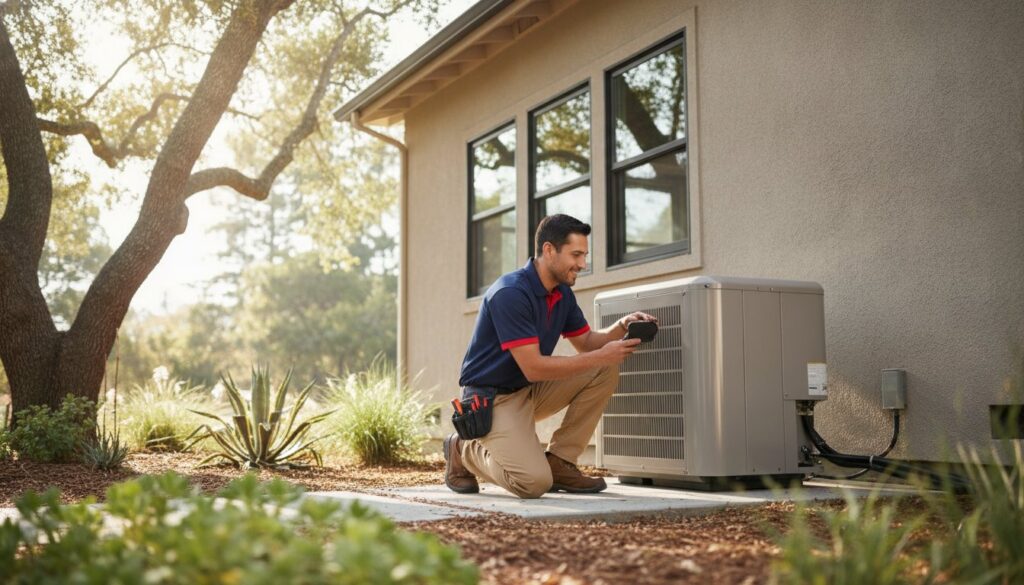
A little bit of regular care goes a long way in protecting your home’s sanctuary. Think of your air filter as the lungs’ first line of defense; a dirty filter acts like a solid wall, forcing your system to struggle for every breath. We suggest checking your filters every 30 days during peak summer and winter months. You should also take a walk outside to clear the “AC Jungle.” Ensure your outdoor unit has at least two feet of clear space from plants, shrubs, or debris so it can exhaust heat properly. Indoors, use a vacuum attachment to clean your register covers. Removing the buildup of dust and pet hair from these grates is one of the simplest ways to ensure nothing is restricting the air your family breathes. If you’re looking for a stress-free way to stay on top of these tasks, our Comfort Club maintenance plan is a great way to ensure your system stays in peak condition year-round.
Identifying and Fixing Common Airflow Blockages
Sometimes the biggest obstacles to improving airflow in house are hiding in plain sight. A sofa pushed too close to a wall might be suffocating a floor vent, while a thick area rug could be partially covering a return air intake. These physical barriers force your system to work much harder than necessary, which spikes your energy bills and creates those annoying hot spots. We also frequently see the “Curtain Trap” in Sacramento homes; heavy, floor-length drapes can block airflow even when they are pulled open if they hang directly in front of a register.
Beyond furniture, you should check the internal dampers in your ductwork. These are small levers on the side of the metal ducts, typically found in the attic or crawlspace. If they’ve been accidentally bumped or set to the “closed” position, air simply cannot reach the intended room. While it’s tempting to close vents in unused rooms to try and save energy, this manual zoning usually backfires. It creates excessive backpressure within the system that can lead to duct leaks or even cause your AC coil to freeze over.
The Hidden Impact of Air Filters
Many homeowners believe a higher MERV (Minimum Efficiency Reporting Value) rating is always better. While a MERV 13 filter captures more microscopic particles, it is also much denser. This density can act like a solid wall, severely restricting the air your blower motor needs to function. For Roseville homes, we typically recommend a MERV 8 to 11 filter as the sweet spot to balance effective filtration with healthy airflow, especially during our dusty summers. For more details on choosing the right setup for your family, check out our guide on How to Improve Indoor Air Quality in Your Roseville Home. This approach aligns with EPA home ventilation guidance, which emphasizes the importance of both filtration and adequate air movement for a healthy home.
Diagnosing Duct Leaks at Home
You can perform a simple “Hand Test” to find hidden leaks. Turn your system fan to the “on” position and feel around the edges of your register boots, which is where the metal vent meets your floor or ceiling. If you feel air escaping into the wall or floor cavity, you have a leak that’s wasting your conditioned air. In the attic, look for “kinked” flex ducts that look like a pinched garden hose; these restrictions stop air in its tracks. Also, remember that despite its name, traditional silver duct tape is actually the worst thing for sealing ducts. The adhesive dries out and fails quickly under the intense heat of a Northern California attic, leaving your system vulnerable once again.

Professional HVAC Solutions for Whole-Home Airflow
While DIY tips provide a great starting point, improving airflow in house often requires looking under the hood of your HVAC system to address mechanical limitations. Many older Roseville homes still rely on PSC (Permanent Split Capacitor) blower motors, which are designed to operate at only one speed. These motors are either full-blast or completely off, which often leads to uncomfortable “hot and cold” cycles and stagnant air between cycles. We prioritize upgrading these to high-efficiency ECM (Electronically Commutated Motors). These smart motors can modulate their speed to overcome resistance in your ducts, ensuring a steady, quiet stream of air reaches every corner of your sanctuary.
The Power of Inverter Technology
Inverter heat pumps represent the most significant leap in home comfort for 2026, especially as we move toward stricter energy standards across Northern California. Traditional systems create stagnant air pockets because they shut down completely once the thermostat is satisfied. In contrast, inverter technology allows the system to run at variable speeds, often adjusting in 1% increments to match the exact needs of your home. This constant, gentle movement prevents air from settling and keeps temperatures uniform across your entire floor plan. It also significantly reduces energy consumption because the system doesn’t have to “re-cool” a room from scratch every time it turns on. To learn more about the mechanics of these systems, read our guide on What Is an Inverter Heat Pump and How Does It Work?.
Advanced Filtration and UV Protection
Maintaining maximum air passage also means keeping the internal components of your system pristine. Over time, dust and microbial growth can accumulate on your indoor cooling coils, acting like a physical wall that slows down air as it tries to pass through. We find that a professional UV light installation is one of the most effective ways to keep these coils clean and your airflow at its peak. This is particularly important during our regional wildfire events when your system is working harder than ever to filter out heavy pollutants. You can find more information on how this protects your household in our article, Do UV Lights Help with Wildfire Smoke?. By integrating whole-home purifiers alongside UV protection, we can help you achieve superior air quality without sacrificing the static pressure your system needs to breathe.
If you’re ready to see how these modern technologies can transform your home’s comfort, we invite you to contact us for a professional Air Conditioning Installation consultation.
The Ultimate Airflow Fix: Duct System Replacement & Maintenance
If you’ve tried the DIY tips and upgraded your equipment but still struggle with hot spots, the problem is likely hidden in your attic. In Roseville, many homes built two decades ago are still using original ductwork that simply wasn’t designed for today’s high-efficiency standards. Over 20 years, these “lungs” of your home can deteriorate, leak, or become crushed. We often see homeowners fall for the “Duct Cleaning” myth, thinking a vacuum will solve their problems. While cleaning removes surface dust, it can’t fix undersized pipes, disconnected joints, or collapsed insulation. Improving airflow in house requires a system that is properly sized to deliver the exact cubic feet per minute (CFM) of air each room needs to stay comfortable.
When to Choose Duct System Replacement
Knowing when to move beyond repairs is key to protecting your sanctuary. If your ducts are undersized, they act like a bottleneck, forcing your AC to work harder and driving up your SMUD or PG&E bills. You might notice visible signs of trouble, like rodent damage or flex ducts that have kinked over time. A full Duct System Replacement in Roseville & Sacramento is often the most cost-effective way to ensure long-term comfort and efficiency. By investing in modern, sealed ductwork, you’re not just fixing a breeze; you’re ensuring your home’s air remains fresh and your utility costs stay manageable for the next generation of your family’s memories.
Preventative Maintenance for Consistent Flow
Once your system is optimized, the goal is to keep it that way. We created the Comfort Club to provide the consistent care your HVAC needs to thrive. During our regular visits, our technicians perform “static pressure” checks to ensure air is moving freely without stressing the blower motor. This proactive approach prevents the sudden burnout that often happens during a July heatwave. We treat your home with the same care we would our own, ensuring every component is tuned for maximum performance. Improving airflow in house is a journey, not a one-time task, and we are here to partner with you every step of the way.
If you’re tired of “living with” a stuffy home, it’s time for a professional perspective. Contact Christensen Heating and Cooling for an airflow diagnostic today!
Reclaiming Your Home’s Comfort
Improving airflow in house is a journey that blends small daily habits with smart, long-term investments. From the simple “Night Flush” technique to the advanced precision of inverter technology, every adjustment you make contributes to a healthier and more efficient living environment. We have explored how identifying hidden blockages and maintaining clean coils can transform a stuffy room into a refreshing space. By focusing on the health of your home’s “lungs,” you are not just reducing your monthly utility bills; you are protecting the sanctuary where your family grows and thrives.
Our team has been family-owned and operated in Roseville since 2009, and we understand the unique challenges of our Northern California climate. We specialize in high-efficiency inverter heat pumps and professional duct system replacements that address airflow issues at their root cause. You deserve a home that feels consistent and fresh in every season. We invite you to Schedule Your Professional Airflow Diagnostic with Christensen today. Let us bring our regional expertise to your doorstep and help you achieve the lasting comfort your household deserves. We are ready to partner with you for a cooler, more breathable future.
Frequently Asked Questions
Why is there no air coming out of one vent in my house?
If a specific vent has zero airflow, it usually indicates a disconnected or crushed flex duct in your attic or crawlspace. In many Roseville homes, we find that internal duct dampers have been accidentally bumped into the closed position, or that a heavy piece of furniture is physically suffocating the register. Our team can quickly diagnose if the issue is a simple blockage or a more serious structural failure in your ductwork.
Can a dirty air filter really stop my AC from cooling?
Yes, a clogged filter acts like a solid wall that prevents your system from breathing, which eventually causes the evaporator coil to freeze into a block of ice. When airflow is restricted, the heat exchange process fails entirely, and your AC will blow warm air or shut down to protect the compressor. We always suggest checking your filters every thirty days during our intense Sacramento summers to prevent this avoidable stress.
Will a higher MERV filter improve my home’s airflow?
No, a higher MERV rating actually increases resistance, which can hinder the process of improving airflow in house. While MERV 13 filters are great at catching tiny particles, their dense material forces your blower motor to work much harder to push air through. We typically recommend a MERV 8 or 11 filter for most local households to ensure you get clean air without sacrificing the system’s ability to circulate it effectively.
Is it okay to close vents in unused rooms to save money?
We don’t recommend closing more than one or two vents, as your HVAC system is carefully sized to move a specific volume of air throughout your entire floor plan. Closing too many registers creates excessive backpressure in your ducts, which can lead to leaks and put unnecessary strain on your blower motor. Instead of saving money, this often results in higher utility bills and premature equipment wear because the system has to run longer.
How do I know if my ductwork is too small for my AC unit?
Common signs of undersized ducts include loud “whooshing” or whistling noises at the vents and a system that frequently turns on and off. If you’ve recently upgraded to a high-efficiency AC without updating your original 20-year-old ducts, the new unit may be trying to push more air than the old pipes can handle. This bottleneck creates hot spots and prevents your home from ever feeling truly comfortable despite the thermostat settings.
What is the best ceiling fan direction for improving airflow in summer?
Your ceiling fan should rotate counter-clockwise during the summer months to push a direct, cooling downdraft into the room. This direction creates a wind-chill effect on your skin, which helps you feel much cooler even if the actual room temperature hasn’t changed. Using fans correctly is a great DIY strategy for improving airflow in house, allowing you to raise your thermostat by a few degrees and save on cooling costs.
How often should I have my HVAC system checked for airflow issues?
We recommend a professional airflow and system checkup twice a year, ideally before the start of the summer and winter seasons. Regular maintenance allows us to perform static pressure tests and ensure your blower motor is operating at peak efficiency. Joining a plan like our Comfort Club is the best way to stay ahead of these checks, ensuring your system’s “lungs” stay healthy and reliable for the long term.
Do whole-house fans actually work in the Sacramento heat?
Whole-house fans are incredibly effective in our region, but they rely on the cooler evening temperatures provided by the Delta breeze. These systems work by pulling fresh air in through open windows and exhausting trapped attic heat out through the roof vents. While they aren’t a replacement for your AC during a triple-digit afternoon, they are perfect for flushing out the day’s heat once the sun goes down.