






What if we told you that your air conditioner never actually “uses up” its refrigerant? It’s a common misconception we hear from our neighbors across Roseville; many folks believe that low cooling levels just mean they need a quick top-off of freon for ac unit performance. However, because your AC is a closed system, any drop in refrigerant levels means there is a leak that needs professional attention. We know how stressful it is to watch your energy bills climb while your living room stays stubbornly warm, especially when you’re worried about the cost of a major repair.
We want to provide the honest guidance you need to keep your sanctuary cool and safe. In this guide, we’ll explain why “refilling” a leaking system is often a waste of your hard-earned money and how to navigate the 2026 refrigerant regulations that are changing the industry. You’ll learn the truth about the R-410A phase-out and how these new laws impact the long-term value of your equipment. Our goal is to help you restore your home’s comfort with a clear understanding of whether your system needs a simple fix or if it’s becoming obsolete.
Key Takeaways
- Understand that your AC is a closed system that never consumes refrigerant; if levels are low, you have a leak that needs a permanent fix.
- Recognize signs of trouble like ice on your coils or warm air at the vents to catch issues before they compromise your household sanctuary.
- Navigate the 2026 refrigerant regulations to understand how the phase-out of legacy freon for ac unit systems affects your repair costs and options.
- Learn why a “gas and go” recharge is a temporary band-aid and how a professional leak repair protects your system’s lifespan and efficiency.
- Gain the clarity needed to decide between repairing a leaking older unit or upgrading to a high-efficiency system for lasting home comfort.
What is Freon and How Does it Cool Your Roseville Home?
Many homeowners in Roseville use the word “Freon” to describe the cooling fluid inside their air conditioner. While Freon is actually a trademarked brand name, the term has become a generic way to describe the chemical refrigerants that make modern comfort possible. To understand What is Freon and how it functions, you have to stop thinking of it as fuel. Unlike the gas in your car, your system doesn’t burn through its supply. Instead, it acts as a heat-transfer medium that travels in a continuous, closed loop between your indoor and outdoor units.
Maintaining the correct amount of freon for ac unit systems is vital because even a small deviation can disrupt the entire cooling cycle. If the “charge” is off by just a few ounces, your system works harder, uses more electricity, and struggles to keep your family comfortable during a Sacramento Valley heatwave. Our team often meets families who are worried about their cooling costs; we find that understanding how your system works is the first step toward peace of mind and lower bills.
To better understand this concept, watch this helpful video:
The Science of Heat Transfer
Refrigerant is a bit of a shapeshifter. It starts as a cold liquid in your indoor evaporator coil, where it absorbs heat from the air blowing over it. As it picks up that heat, it evaporates into a gas. This gas then travels to your outdoor unit, where the compressor squeezes it, and the heat is dumped into the outside air. Once it cools back down into a liquid, the cycle begins again. When your system is low on refrigerant, there isn’t enough fluid to complete this phase change efficiently. This usually leads to a frozen coil and a warm house because the cooling process has essentially stopped in its tracks.
Common Refrigerant Types Found in Northern California
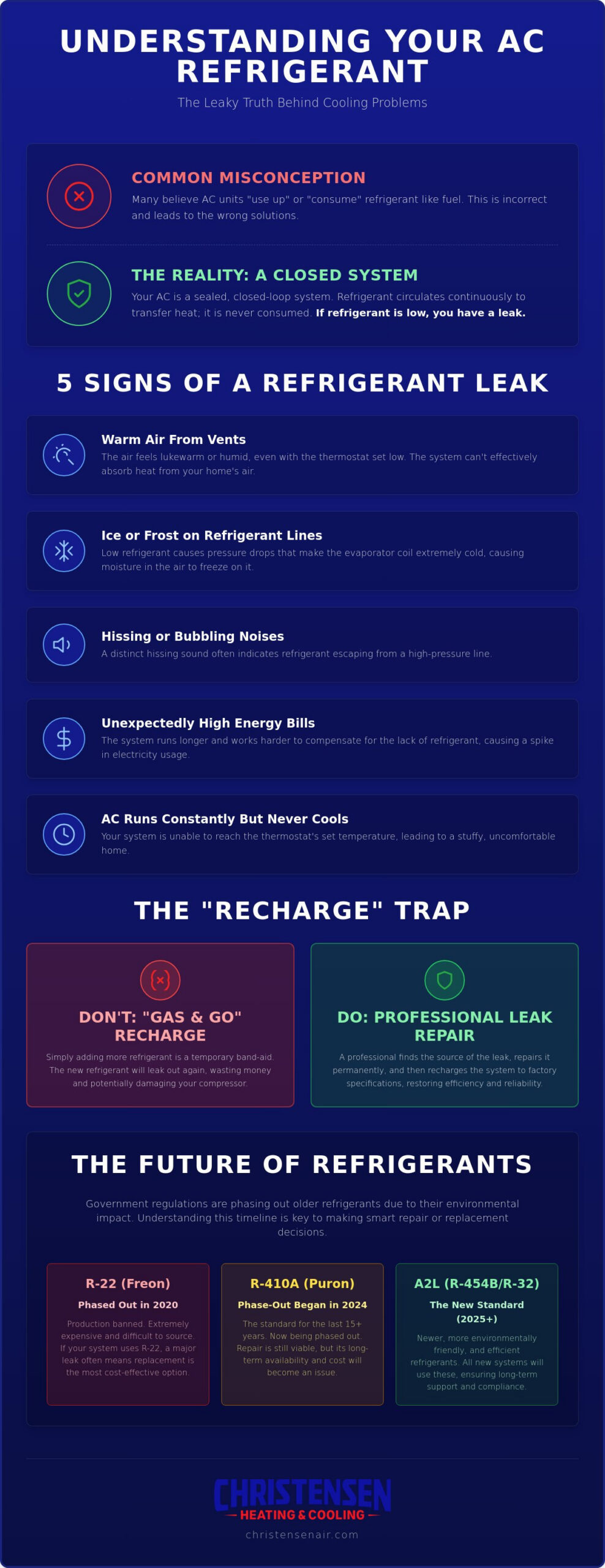
If your home is in Rocklin or Folsom, the type of refrigerant in your system depends largely on when it was installed. R-22 was the industry standard for decades, but it’s now nearly impossible to find and incredibly expensive because its production was banned in 2020. Most systems installed in the last 15 years use R-410A, often called Puron. As we move through 2026, we’re seeing another major shift. New systems are transitioning to A2L refrigerants like R-454B and R-32. These newer options are designed to be much better for the environment while maintaining the high-efficiency cooling our local climate demands. Keeping your freon for ac unit levels accurate is the best way to protect these sophisticated systems.
5 Signs Your AC Unit is Low on Refrigerant
Identifying a leak early can save you from a complete system breakdown during a July heatwave. While modern systems are incredibly reliable, they rely on a specific volume of refrigerant to operate effectively. If you suspect your home isn’t as cool as it should be, pay close attention to how your system behaves. We’ve found that homeowners who catch these signs early often avoid the most expensive repair bills. Here are five clear indicators that your supply of freon for ac unit performance is likely low:
- Warm air blowing: The air coming from your vents feels lukewarm or even slightly humid, even if the thermostat is set to 68 degrees.
- Ice on the lines: You see white frost or solid ice forming on the copper pipes leading to your outdoor unit or on the indoor evaporator coil.
- Strange sounds: A distinct hissing or bubbling noise near the indoor unit often signals a high-pressure leak in the refrigerant circuit.
- High utility costs: Your SMUD or PG&E bill is significantly higher than it was last year, even though your habits haven’t changed.
- Non-stop operation: Your unit runs all day long without ever reaching the set temperature, leading to a home that feels stuffy and uncomfortable.
The ‘Frozen Coil’ Paradox
It seems counterintuitive that a system low on freon for ac unit cooling would actually freeze over. However, when refrigerant levels drop, the pressure inside the evaporator coil also falls. This causes the coil to become much colder than it should be, eventually reaching temperatures well below freezing. Moisture from your home’s air hits that freezing coil and turns into solid ice. This is a red alert for your system. If you continue to run the AC with a frozen coil, you risk liquid refrigerant flowing back into the compressor, which can cause a total system failure. While a dirty air filter can also cause freezing, a professional diagnostic is the only way to be sure of the root cause.
High Energy Bills in the Sacramento Heat
A low refrigerant charge turns your air conditioner into an energy hog. Because the system can’t remove heat efficiently, it has to run twice as long to achieve the same results. This constant cycling doesn’t just drain your wallet through higher energy bills; it also wears out the motor and electrical components years before their time. If you notice these symptoms, scheduling a professional ac repair roseville service is the smartest way to protect your investment. Understanding the R-22 Phase-Out and Modern Refrigerant Standards helps explain why maintaining these levels is more critical now than ever before. If you’re worried about your unit’s performance, our team can provide an honest assessment to keep your home a cool sanctuary.
The Truth About ‘Refilling’ Freon: Why a Recharge Isn’t a Repair
We often hear from neighbors who think they just need a quick “top-off” to get through a Roseville summer. But the reality is that your air conditioner is a hermetically sealed system. It doesn’t consume refrigerant like your car uses gas. If you need more freon for ac unit performance, it means the refrigerant that was supposed to stay inside has escaped through a hole. Simply adding more gas without finding the source is what we call the “top-off trap.” It’s a temporary fix that leads to higher costs, more stress, and potential system damage down the road.
In California, we take our environmental responsibility seriously. Leaking refrigerant isn’t just a nuisance for your comfort; it’s a potent greenhouse gas that harms our atmosphere. This is one of the primary reasons behind the R-22 phase-out. By fixing leaks instead of just refilling them, we’re protecting both your home’s sanctuary and the local environment we all share. If your system is low, you have a leak, and ignoring it only allows the problem to grow.
Why DIY Refrigerant Kits are a Bad Idea
Many big-box stores sell “quick fix” kits, but these are incredibly risky for homeowners. First, it’s a legal requirement under EPA Section 608 for anyone handling refrigerant to be properly certified. Beyond the law, there’s a massive technical risk. If you accidentally overfill the system, you can cause “slugging.” This happens when liquid refrigerant enters the compressor, which is only designed to handle gas. It can destroy the compressor instantly. We also advise against “stop-leak” additives; these chemicals often gum up the precision valves in modern units, leading to even more expensive repairs later.
Professional Leak Detection Methods
When our team arrives at your home, we use advanced tools to find the root cause of the issue. We don’t just guess where the freon for ac unit systems might be escaping. Our technicians use electronic leak detectors that can “sniff” out microscopic amounts of refrigerant. If the leak is stubborn, we might perform a nitrogen isolation test. This involves emptying the system and filling it with high-pressure nitrogen to see which component is losing pressure. In some cases, we use ultraviolet (UV) dye that glows under a special light to reveal pinhole leaks in the coils. Deciding whether to repair a leak or replace the unit usually comes down to the age of the system and the type of refrigerant it uses. If you have an older unit, the cost of the repair and the scarce refrigerant often makes a new, high-efficiency installation the more sensible choice for your family’s long-term comfort.
R-22 Phase-Out and Modern Refrigerant Standards in 2026
If your home was built or your cooling system was installed before 2010, there’s a high probability your unit relies on R-22 refrigerant. While many people still call this “Freon,” the federal government began a strict phase-out of this chemical years ago due to its impact on the ozone layer. As of January 1, 2020, the production and import of new R-22 became illegal in the United States. This means that in 2026, the only way to get this specific freon for ac unit repairs is through reclaimed or recycled stocks, which are becoming incredibly scarce and expensive.
The dwindling supply has sent the cost of R-22 soaring. For many families in our community, a simple leak repair on an older system can now cost nearly as much as a significant down payment on a new unit. These regulatory shifts aren’t just affecting older models; they also influence the current market for residential AC repair in Carmichael and Roseville. As the industry moves toward greener technology, staying informed about these standards helps you make the best decision for your household’s long-term comfort and budget.
Should You Repair or Replace Your Old AC?
We often guide our neighbors using the “50% Rule.” If the cost of repairing your leaking R-22 system is approaching half the value of a brand-new unit, it’s usually time to consider an upgrade. Investing thousands of dollars into a system that uses obsolete refrigerant is often a gamble, as another leak could happen next season. Modern alternatives, such as high-efficiency inverter heat pumps, offer much better performance in the intense Sacramento heat. Plus, many of these systems qualify for significant tax credits and local rebates, making the transition to a more reliable sanctuary more affordable than you might think.
Understanding A2L Refrigerants
The newest chapter in HVAC history involves the transition to A2L refrigerants, such as R-454B and R-32. These are known as low-GWP (Global Warming Potential) refrigerants, designed to be much kinder to our planet. While they are technically classified as “mildly flammable,” they are incredibly safe when handled by experts. Modern units are now built with advanced sensors and safety protocols specifically for these fluids. Our Christensen technicians are fully trained and EPA-certified on these 2026 standards to ensure your installation is handled with the highest level of care. If you’re unsure if your current system is becoming obsolete, we invite you to contact our team for a professional equipment assessment today.
Professional AC Leak Repair and Maintenance in Roseville
We’ve seen too many Roseville families fall into the cycle of paying for a “gas and go” service every spring. This approach doesn’t just waste your money; it leaves your home’s comfort at risk when the Sacramento Valley heat is at its peak. At Christensen Heating and Cooling, our approach is rooted in honesty and neighborly care. We don’t just add more freon for ac unit performance and drive away. We’re committed to finding the root cause of the leak, whether it’s a microscopic pinhole in your evaporator coil or a loose fitting on your outdoor condenser. This honest diagnostic process ensures you aren’t paying for the same repair twice.
Our technicians take personal pride in providing Placer County families with clear, informative guidance rather than high-pressure sales tactics. We treat your home like our own, ensuring that every repair is a long-term fix that protects your sanctuary. Part of this commitment involves keeping your system’s internal pressures stable through routine care. When dust and debris build up on your coils, your system has to work harder, which can increase the strain on refrigerant lines and lead to premature leaks. Maintaining clean coils is one of the simplest ways to keep your system’s pressure within safe, factory-specified limits.
The Comfort Club Maintenance Advantage
Preventing a crisis is always better than reacting to one. Our Comfort Club Maintenance Plan is designed to catch minor issues before they turn into “no-cool” emergencies. During our scheduled inspections, we check your system’s charge and look for early signs of wear on the copper lines. This proactive care is the foundation of making your HVAC system last longer. Members also enjoy the peace of mind that comes with priority service, so you aren’t stuck waiting when the thermometer hits triple digits. Proper refrigerant management through regular maintenance ensures your unit operates at peak efficiency, keeping your energy bills predictable and your home perfectly cooled.
Ready for a Cool Summer?
Local expertise matters when you’re dealing with the unique demands of the Northern California climate. Whether you live in Roseville, Rocklin, or Granite Bay, you need a team that understands the legacy systems in our older neighborhoods and the high-efficiency standards of new developments. We’re here to provide the steady, dependable service your family deserves. Don’t let a low supply of freon for ac unit cooling steal your comfort this year. We’re ready to help you navigate the 2026 regulations with honest advice and technical proficiency. Schedule your AC repair or maintenance with Christensen Heating and Cooling today!
Protect Your Home’s Comfort and Value
We want you to feel confident and cool in your home, regardless of how high the Sacramento Valley temperatures climb. Remember that your air conditioner is a closed loop; if you’re constantly searching for freon for ac unit performance, you have a leak that deserves a permanent solution. By choosing a real repair over a temporary recharge, you protect your system’s lifespan and avoid the skyrocketing costs associated with phased-out refrigerants. Staying ahead of these regulatory changes ensures your household sanctuary remains efficient and reliable during our most intense heatwaves.
Our family-owned team has been serving Placer and Sacramento Counties since 2009. We take pride in being Roseville’s high-efficiency specialists, and our EPA-certified technicians are here to provide the honest, technical guidance your family needs. Whether you’re looking to maintain your current unit through the Comfort Club or want to explore modern, low-GWP alternatives, we’re your dedicated partners in home comfort. We believe in building long-term relationships through quality work and transparent communication.
Trust the local experts; Schedule your AC diagnostic with Christensen Heating and Cooling!
We look forward to helping you keep your home a cool and inviting place for your family for many years to come.
Frequently Asked Questions
Can I buy Freon for my AC unit at a local hardware store?
No, you cannot purchase residential refrigerant at a hardware store because EPA Section 608 certification is legally required to handle these chemicals. While you might see small cans for automotive use on store shelves, these aren’t compatible with your home’s HVAC system. Attempting to use the wrong gas or improper tools can cause catastrophic damage to your compressor. We always recommend calling a professional to ensure the correct freon for ac unit safety and performance.
How much does it cost to recharge an AC unit in Roseville in 2026?
The total cost depends on the type of refrigerant your system uses and the extent of the leak. Since we prioritize long-term solutions over temporary fixes, a professional service includes a diagnostic fee plus the cost per pound of the specific refrigerant required. Prices for legacy fluids like R-22 are significantly higher than modern alternatives due to their scarcity. We provide honest, upfront assessments so you can decide if a recharge or a permanent repair makes sense for your family’s budget.
How often should an AC unit need to be refilled with Freon?
An air conditioner should never need to be refilled under normal operating conditions. These are closed systems designed to hold the same amount of refrigerant for their entire functional lifespan. If your levels are low, it’s a definitive sign that you have a leak in your coils or copper lines. Instead of refilling it every season, we focus on finding and fixing the source of the problem to protect your home’s comfort and prevent unnecessary environmental damage.
Is it worth putting Freon in a 15-year-old AC unit?
It’s often not cost-effective to invest in refrigerant for a 15-year-old system, especially if it relies on R-22. At this age, the unit is nearing the end of its life, and the high cost of legacy freon for ac unit repairs could be better spent on a new, high-efficiency installation. We usually suggest looking at the “50% Rule” to see if the repair cost is worth the gamble on an aging machine that may fail again soon.
What happens if I run my AC when it’s low on refrigerant?
Running a system with low refrigerant causes the compressor to overheat and can lead to a total mechanical failure. Your system will also struggle to remove heat, causing the indoor coils to freeze over into a block of ice. This puts immense strain on every electrical component and dramatically increases your SMUD or PG&E bills. Turning the system off until it can be inspected is the best way to prevent a much more expensive equipment replacement.
Why is R-22 so expensive now?
R-22 is expensive because the EPA banned its production and import on January 1, 2020, to protect the ozone layer. Since no new R-22 is being manufactured, the only supply left comes from recycled or reclaimed sources. As this global stockpile shrinks, the market price continues to climb every year. This scarcity makes repairing older units a significant financial burden for many Roseville homeowners, which is why we often discuss more modern, sustainable options.
Can a refrigerant leak make you sick?
While a small leak in a well-ventilated area is generally not an immediate health threat, concentrated exposure can cause headaches, dizziness, or nausea. Refrigerants are heavier than air and can displace oxygen if they collect in enclosed spaces. If you suspect a major leak, it’s important to ventilate the area and call for professional service immediately. Our goal is to keep your household sanctuary safe and healthy for everyone who lives there.
How long does it take for a technician to find an AC leak?
A standard leak search usually takes between one and three hours depending on the complexity of your system. We use specialized electronic “sniffers” and sometimes ultraviolet dyes to pinpoint the exact location of the escape. If the leak is buried deep within the walls or in a difficult-to-reach coil, it may take a bit longer to find. We take the time to be thorough because an accurate diagnosis is the only way to ensure a lasting repair for your family.