





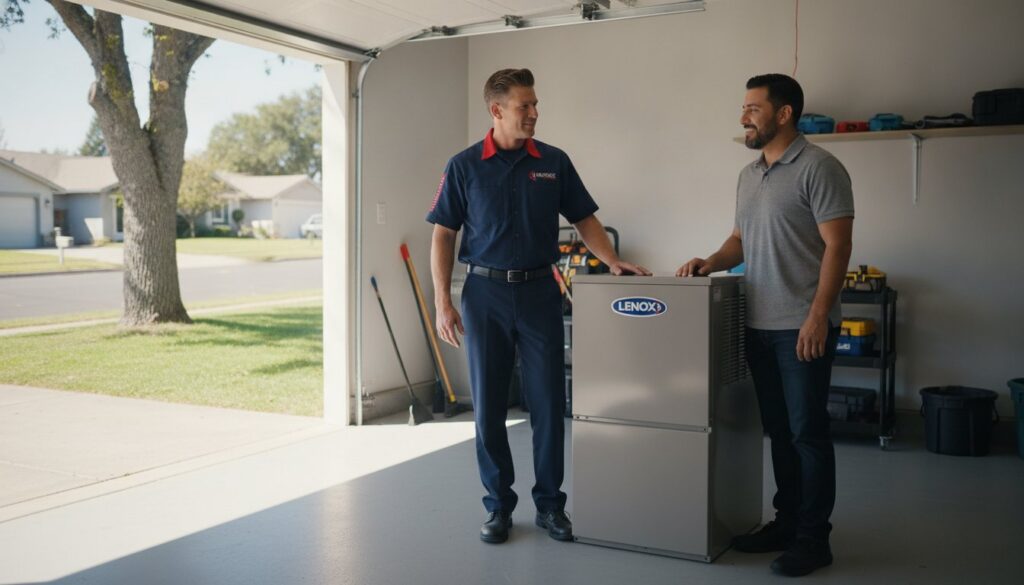
If your living room feels like the Arctic while your bedroom is a sauna, is your heating system actually doing its job? We understand the frustration of watching your monthly utility bills climb even as you struggle with uneven temperatures and drafty corners. You deserve a home that feels like a true sanctuary, yet the fear of carbon monoxide leaks or the complexity of 2026 California emissions standards can make anyone feel uneasy. It’s perfectly normal to feel caught between wanting a reliable gas furnace and being confused by the latest technical requirements.
We’ve helped our neighbors in Roseville and Sacramento stay comfortable since 2009, and we’re here to simplify the process for you. In this guide, you’ll discover exactly how modern heating systems function and how to choose the right efficiency level for our unique Northern California climate. We’ll also break down the math behind AFUE ratings and help you decide whether a simple repair or a full system replacement is the smartest investment for your family’s long-term comfort and safety.
Key Takeaways
- Understand how core components like the heat exchanger and blower motor work together to transform fuel into reliable warmth for your family.
- Learn how to navigate 2026 AFUE ratings to choose a gas furnace that balances upfront costs with long-term energy savings in Northern California.
- Compare the high-performance heating power of gas systems against modern electric heat pumps to find the most future-proof option for your home.
- Identify critical warning signs, such as a yellow pilot light or short cycling, that indicate whether your system needs a professional repair or a full replacement.
- Discover why professional “Manual J” load calculations are essential to ensure your new system is perfectly sized for maximum comfort and equipment longevity.
What Is a Gas Furnace and How Does It Heat Your Home?
We often think of our home as a sanctuary, and understanding What is a furnace? is the first step in maintaining that peace of mind. A gas furnace is the heart of your home’s heating system, working silently to keep your family comfortable during those damp Northern California winters. It’s more than just a metal box; it’s a precision-engineered tool designed to provide reliable warmth exactly when you need it.
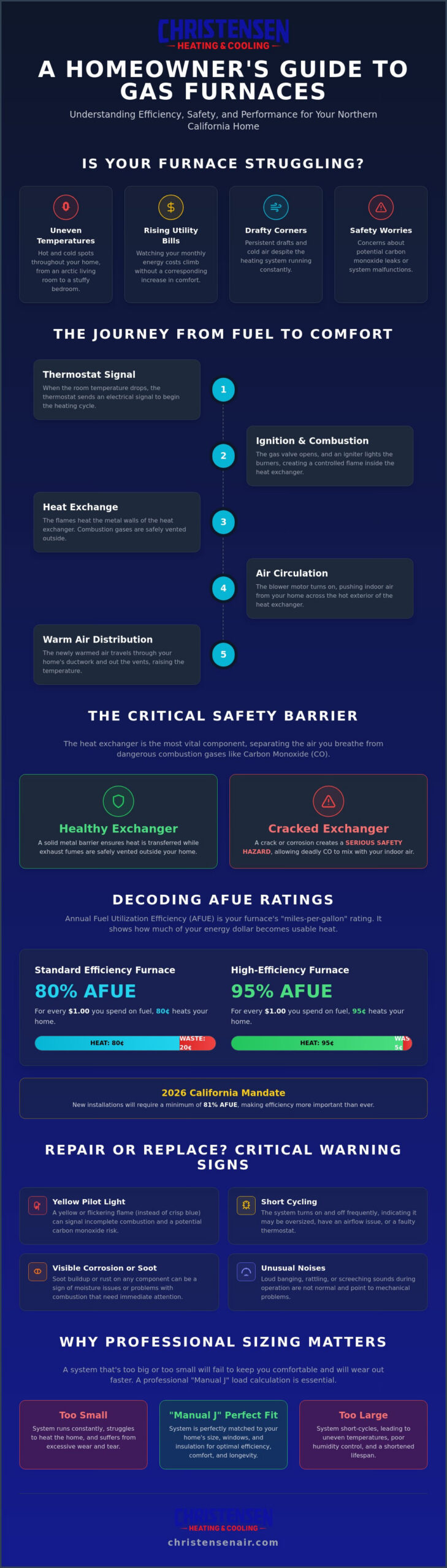
The heating process begins at the thermostat, which serves as the brain of the operation. When it senses a drop in temperature, it triggers the start of a gas furnace cycle by opening the gas valve and signaling the igniter to fire up the burners. These burners create intense heat inside the heat exchanger, while the blower motor pushes air over the outside of the exchanger to warm it up. This blower motor is actually a year-round hero; it doesn’t just work for your heater, it also circulates air for your air conditioner during our hot July afternoons. Finally, your ductwork acts as the distribution highway, carrying that warm air into every corner of your home.
To better understand this concept, watch this helpful video:
The Critical Role of the Heat Exchanger
This component is the most vital part of your system because it serves as a physical barrier. It allows heat to pass from the combustion chamber into your living space without letting dangerous exhaust gases, like carbon monoxide, mix with the air you breathe. If a heat exchanger develops a crack, it becomes a serious safety emergency. We always look for signs of corrosion or soot during our maintenance visits because a compromised exchanger is often the primary reason we recommend a full system replacement to protect your household sanctuary.
Natural Gas vs. Propane Furnaces
While most families in Roseville and the Sacramento suburbs rely on natural gas, those in more rural parts of Placer County often use propane. Both fuels are highly effective, though propane requires a specific conversion kit to ensure the burners operate safely and efficiently. A British Thermal Unit (BTU) is the standard measure of heating capacity, representing the amount of heat required to raise the temperature of one pound of water by one degree Fahrenheit. Whether you use gas or propane, choosing the right BTU output ensures your home stays warm without wasting energy or putting undue stress on your equipment.
Understanding AFUE Ratings: Choosing Your Efficiency Level
When you start shopping for a new gas furnace, you’ll quickly encounter a percentage known as the AFUE rating. This stands for Annual Fuel Utilization Efficiency. Think of it as the miles-per-gallon rating for your home’s heating system. It tells you exactly how much of the energy you pay for actually turns into heat for your living room versus how much escapes through the flue as waste. While older systems in our area might only operate at 60% or 70% efficiency, modern technology has significantly raised the bar for comfort and conservation.
For example, a standard 80% AFUE unit converts 80 cents of every dollar into heat, while 20 cents is lost. In contrast, a high-efficiency 95% unit only loses 5 cents. While the 2025 California Building Standards Code now mandates a minimum of 81% AFUE for new installations as of January 2026, many homeowners choose to go much higher. Selecting energy-efficient furnaces isn’t just about your wallet; it also reduces your household’s carbon footprint by burning less fuel to achieve the same level of warmth. This makes higher AFUE ratings a win for both your budget and the planet.
Is a High-Efficiency 95% AFUE Furnace Worth It?
In our Sacramento and Roseville climate, the return on investment for a 95% AFUE system depends on your specific needs. If your home is larger or has many windows, the monthly savings on winter utility bills add up fast. These systems often use “sealed combustion,” which pulls air from outside the home rather than from your garage or crawlspace. This design provides an extra layer of safety and makes the gas furnace run much quieter. While an 80% or 81% model might be the right choice for a budget-conscious upgrade, the 95% tier offers the best long-term value if you plan to stay in your home for many years.
The Impact of Variable-Speed Blower Motors
One of the biggest complaints we hear from families is the “cold blast” that happens when a heater first turns on. Older systems use single-speed motors that are either full blast or completely off. Modern high-efficiency systems often include variable-speed blower motors that ramp up gradually. This gentle start prevents that initial chill and maintains a more consistent temperature throughout the house without the noisy “whoosh” of air.
These motors are also incredibly efficient with electricity. Because the blower motor is the same part that moves air for your air conditioner, this upgrade helps lower your summer cooling bills too. Investing in this technology is a smart way to reduce wear and tear on your equipment, which is a key factor when you’re looking at how to make my HVAC system last longer. If you’re feeling overwhelmed by these technical options, our family at Christensen Heating and Cooling is always happy to help you find the perfect balance of comfort and cost.
Gas Furnace vs. Heat Pump: The Northern California Dilemma
Deciding between a traditional gas furnace and a modern heat pump is a common conversation we have with families throughout the Sacramento Valley. Our Mediterranean climate is unique; we don’t face the sub-zero temperatures of the Midwest, but our damp, 40-degree nights still require a robust heating solution. While a furnace offers that familiar, intense warmth through the vents, heat pumps have become incredibly efficient at moving heat rather than creating it. According to U.S. Energy Information Administration data on furnace efficiency, standards have evolved to ensure that even gas-powered options are significantly cleaner than they were a decade ago. If you’re curious about common misconceptions regarding these systems, we’ve put together a gas furnace myth-busting guide to help clear the air.
California is currently leading a strong push toward electrification, but gas remains a reliable and legal choice for Roseville and Sacramento homeowners in 2026. The repeal of the Sacramento electrification ordinance in late 2025 means you still have the freedom to choose the fuel source that best fits your home’s infrastructure. For many of our neighbors, the raw heating power of gas is hard to beat when the North winds pick up. However, the decision often comes down to your existing ductwork and your long-term goals for energy independence.
The Hybrid Solution: Dual-Fuel Systems
We often recommend a dual-fuel system for homeowners who want the ultimate peace of mind. This setup pairs a high-efficiency gas furnace with an electric heat pump, allowing them to work as a team. When it’s 50 degrees outside, the heat pump handles the job with incredible efficiency. Once the temperature drops into the low 30s, the system automatically switches to gas to provide that powerful, cozy heat. It’s a future-proof strategy that adapts to both shifting weather patterns and changing energy prices, ensuring your home remains a sanctuary regardless of the conditions outside.
Utility Rate Considerations: SMUD vs. PG&E
Your monthly costs often depend on which side of the county line you live on. Sacramento residents with SMUD typically enjoy lower electricity rates, which might make a heat pump more attractive. However, for our neighbors in Roseville or those in PG&E territory, the price of natural gas compared to electricity remains a major factor in their decision. No matter which path you choose, staying on top of maintenance through our Comfort Club ensures your system runs at peak performance. This proactive care protects your investment and helps you avoid the stress of a mid-winter breakdown.
Signs Your Gas Furnace Needs Professional Repair or Replacement
Knowing when your gas furnace needs professional attention can be the difference between a simple fix and a midnight emergency. In our community, we see systems work hard through shifting seasons, and eventually, they start to show their age. One of the most critical visual cues is the color of your pilot light or burner flame. A healthy flame is a steady, crisp blue. If you notice a flickering yellow or orange glow, it often indicates incomplete combustion, which can lead to dangerous carbon monoxide buildup. This is never a situation to ignore; it requires an immediate safety inspection to protect your household sanctuary.
Short cycling is another common red flag that homeowners often overlook. This happens when your furnace turns on and off every few minutes without ever reaching the temperature set on your thermostat. Not only does this leave your home feeling unevenly heated, but it also puts massive strain on the blower motor and heat exchanger. If you hear unusual banging, whistling, or rattling sounds coming from your ductwork, your system is likely struggling with loose components or restricted airflow. These mechanical cries for help usually mean a part is reaching the end of its lifespan.
When faced with a breakdown, we suggest using the “50% Rule” to decide your next move. If the cost of a single repair exceeds half the value of a brand-new unit, or if the system is over 15 years old and requiring frequent visits, a full replacement is usually the more financially sound choice. Investing in a new system at that point often pays for itself through lower utility bills and the elimination of constant repair costs.
Local Air Quality and Your Furnace
Our location in the Sacramento Valley presents unique challenges for any gas furnace. During heavy wildfire seasons, fine ash and dust settle into every crevice of your HVAC system. This debris clogs burners and coats sensitive sensors, which can lead to premature failure or reduced efficiency. We recommend a professional deep cleaning after any significant fire event to ensure your system can breathe properly. For more specific tips on protecting your family from outdoor pollutants, check out our guide on how to improve indoor air quality.
Carbon Monoxide Safety
Protecting your household from carbon monoxide (CO) is our top priority. Since CO is colorless and odorless, every Roseville home with gas appliances must have functioning detectors on every level of the house. Symptoms of exposure, such as sudden headaches, dizziness, or nausea, should be treated with extreme caution. Regular maintenance is the best way to prevent the microscopic cracks in the heat exchanger that allow these leaks to happen in the first place. If you’re worried about the health of your system, our team at Christensen Heating and Cooling is ready to provide a thorough safety evaluation and restore your peace of mind.
Professional Gas Furnace Installation in Roseville: What to Expect
Choosing the right equipment is only half the battle. Even the most sophisticated gas furnace won’t perform as intended if it isn’t sized and installed with precision. At Christensen Heating and Cooling, we’ve been serving our neighbors since 2009, and we’ve seen how a “one-size-fits-all” approach leads to higher bills and shorter equipment life. That’s why we perform a “Manual J” load calculation for every home we visit. This isn’t just a technical formality; it’s a deep dive into your home’s insulation, window placement, and square footage to ensure your new system is perfectly matched to your specific environment.
An oversized furnace is a common mistake that leads to “short cycling,” a problem that causes the unit to turn on and off too frequently. When a unit is too powerful for the space, it heats the air so quickly that it shuts off before it can properly balance the temperature in every room. Conversely, an undersized unit will run constantly, driving up your energy costs and wearing out the blower motor prematurely. Our goal is to find that perfect balance where your system runs efficiently and lasts for the 15 to 20 years you expect from a quality investment.
The Installation Day Process
On the day of your installation, our team arrives with a clear plan to protect your sanctuary. We use drop cloths and floor protectors to ensure we leave your home exactly as we found it. We’ll carefully remove your old unit and inspect your existing ductwork to ensure it can handle the airflow of a modern, high-efficiency system. After the new gas furnace is in place, we verify that the venting meets the 2026 California Building Standards and perform a rigorous safety check. We don’t leave until we’ve walked you through your new thermostat and answered every question you have about your new system’s operation.
Protecting Your Investment with the Comfort Club
Once your system is installed, the best way to protect that investment is through consistent, proactive care. Most manufacturers require annual professional maintenance to keep your factory warranty valid. We created our maintenance plan to make this easy for our Roseville and Sacramento families. Membership ensures you receive priority service during those peak winter weeks and provides the regular tune-ups needed to catch small issues before they become expensive repairs. Join the Christensen Comfort Club today for reliable year-round heating and the peace of mind that comes from having a dedicated, local team in your corner.
Securing Your Home’s Winter Comfort
Selecting the right heating system is a significant step toward protecting your family’s sanctuary and ensuring long-term peace of mind. We’ve explored how understanding modern AFUE ratings can lower your monthly expenses and why a perfectly sized installation is vital for the health of your equipment. Whether you opt for a high-efficiency model or a versatile dual-fuel setup, the goal is a safe, warm home that stands up to Northern California’s damp winters without the stress of unexpected breakdowns.
Since 2009, our family-owned team has treated every household in Roseville and Sacramento with neighborly care and professional expertise. We specialize in high-efficiency technology and provide the steady maintenance needed to keep your sanctuary secure. You don’t have to navigate the technical details of 2026 standards alone; we’re here to provide the clear guidance and dependable service you deserve. Schedule your gas furnace inspection or installation with Christensen Heating and Cooling today! We look forward to helping you keep your household cozy, safe, and efficient for many years to come.
Frequently Asked Questions
How long does a typical gas furnace last in Roseville?
A typical gas furnace in the Roseville and Sacramento area lasts between 15 and 20 years. This lifespan depends heavily on regular maintenance and the quality of the initial installation. We recommend annual tune-ups through our Comfort Club to catch small issues before they lead to a full system failure, ensuring your home remains a reliable sanctuary for decades.
Is it normal for my gas furnace to smell when I turn it on for the first time?
Yes, it is very common to notice a slight burning smell when you first turn on your heater for the season. This is usually just dust that has settled on the heat exchanger during the summer months. If the smell persists for more than an hour or if you detect the scent of rotten eggs, you should turn off the system and contact us immediately for a safety inspection.
How often should I change the air filter in my furnace during the winter?
You should check your air filter every month and replace it at least every three months during the peak winter season. In our part of Northern California, wildfire ash and local dust can clog filters much faster than in other regions. Keeping a clean filter ensures your blower motor doesn’t have to work harder than necessary, which protects your equipment and keeps your energy bills lower.
What is the average cost of a gas furnace installation in Northern California?
The total cost of a new installation depends on several factors, including the unit’s efficiency rating, the size of your home, and the condition of your existing ductwork. High-efficiency models often require a larger upfront investment but provide significant savings on monthly utility bills over time. We provide personalized evaluations to help you understand the specific technical requirements and comfort goals for your household.
Can I switch from an electric heater to a gas furnace?
Switching from electric to gas is possible, though it requires the professional installation of a gas line to your HVAC closet or attic. While many homeowners are currently exploring the move from gas to electric heat pumps due to state incentives, some still prefer the raw heating power of a gas furnace. We can evaluate your home’s infrastructure to see which fuel source makes the most sense for your long-term needs.
What should I do if my furnace pilot light goes out?
If your pilot light goes out, you should first check your owner’s manual for specific relighting instructions provided by the manufacturer. Most modern systems now use electronic ignition rather than a standing pilot light. If your flame won’t stay lit, it’s often a sign of a faulty thermocouple or a dirty burner that needs professional attention to ensure the continued safety of your home.
Does a gas furnace also provide air conditioning?
A furnace does not provide air conditioning on its own, but it plays a vital role in your home’s cooling system. The blower motor inside your heating unit is responsible for circulating the chilled air created by your air conditioner’s outdoor unit through your ductwork. This is why we often recommend replacing both systems at the same time to ensure they are perfectly matched for maximum efficiency and performance.
Are there rebates available for high-efficiency gas furnaces in 2026?
Rebates for energy-efficient systems are available in 2026 through local providers like Roseville Electric and SMUD. These programs are designed to encourage homeowners to upgrade to equipment that meets the latest California standards for emissions and efficiency. Because funding for these incentives can change quickly, we recommend checking with your specific utility provider or our team for the most current local availability.