





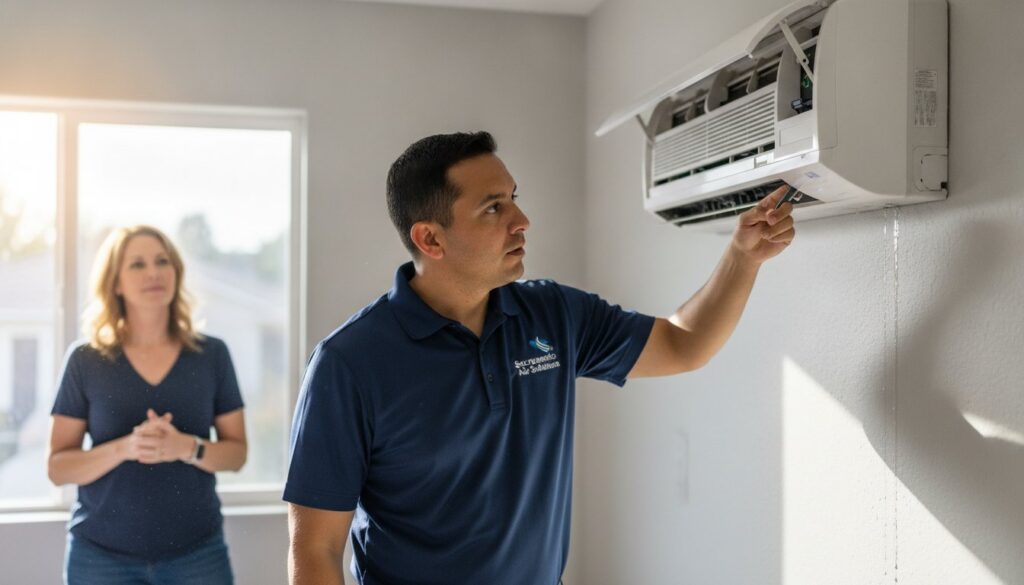
Imagine it is a 105-degree afternoon in Sacramento and you suddenly notice a steady drip running down your bedroom wall from your indoor unit. That sinking feeling of “my mini split is leaking water what to do” is something we have helped many of our neighbors through during our years serving this community. We understand that your home is your sanctuary, and seeing water where it shouldn’t be causes immediate stress about ruined drywall or unexpected repair bills. You shouldn’t have to worry about your cooling system becoming a liability to your property.
We are here to help you regain control and protect your space. In this guide, we’ll show you the immediate steps to take to stop the drip and prevent moisture from soaking into your floors or walls. We will also explore the five most common causes of these leaks, ranging from simple maintenance clogs to more technical airflow bottlenecks. By the end of this article, you’ll know exactly how to identify the source of the problem and what is required to restore your home’s comfort safely and reliably.
Key Takeaways
- Shut down your system at the first sign of moisture to stop condensation and protect your home’s drywall and flooring.
- We will help you identify if a simple clog in the condensate line is the reason my mini split is leaking water what to do to resolve it safely.
- Learn to spot the signs of frozen evaporator coils, which often point to more complex issues like low refrigerant levels or airflow restrictions.
- Understand how extreme 100°F+ Sacramento heatwaves can overwhelm unmaintained systems and why proactive care is essential for local comfort.
- Know exactly when to transition from DIY troubleshooting to professional repair to ensure your system’s long-term health and your family’s safety.
Immediate Steps: What to Do When Your Mini-Split Starts Leaking
Seeing water drip from your indoor unit is enough to make any homeowner anxious. Your first instinct might be to grab a bucket, but the most critical action you can take is to turn the system off immediately. When you are wondering my mini split is leaking water what to do, the answer starts with cutting the power at the thermostat or the circuit breaker. This stops the cooling cycle and prevents the unit from generating any more moisture while you assess the situation.
Once the power is off, you need to protect your belongings. Clear away any electronics, furniture, or decor sitting directly beneath the unit. Water can travel along the wall or drip straight down, potentially damaging expensive home office gear or family heirlooms. Place a shallow tray or a thick towel on the floor to catch the remaining drips that are still trapped inside the internal drain pan. We also recommend stepping outside to check the exterior drain exit. Sometimes, a simple obstruction like a bird’s nest or accumulated garden debris can back up the entire system.
To better understand why this is happening, watch this helpful video:
Why You Must Turn Off the Power
It’s about safety and protecting your investment. Understanding how air conditioners work helps clarify why the power must go off. When the unit is running, it pulls humidity from the air, which then turns into liquid water on the cold coils. If the drain is blocked, that water has nowhere to go but out of the casing. Keeping the system on just creates more “fuel” for the leak. Additionally, water and electricity are a dangerous mix. If moisture enters the internal wiring or the control board, it can cause an electrical short that turns a simple cleaning job into a total system replacement. Shutting down also helps if the leak is caused by frozen coils, as it allows the ice to melt slowly and safely.
Assessing the Extent of the Leak
After you’ve stopped the flow, take a moment to look for hidden damage. Gently check the wall behind and beneath the indoor unit for soft spots or discoloration. Water often seeps behind the mounting plate, soaking into the drywall before it ever hits your floor. If you have carpeting, feel for dampness several feet away from the unit, as water can travel along the subfloor. We suggest taking a few photos of where the water is coming from. This documentation is incredibly helpful for our team when we arrive for an AC repair Roseville visit. It helps us pinpoint the source of the failure much faster, ensuring we get your home back to a state of cool, dry comfort as quickly as possible.
Common DIY Culprits: Clogged Drains and Dirty Filters
While a leak might feel like a catastrophic mechanical failure, it often stems from a simple maintenance oversight. The condensate drain line is the most frequent culprit we encounter in the field. This small pipe is responsible for carrying away the moisture your unit pulls from the air. Because mini-split systems are designed to be compact, their drain lines are significantly narrower than those found in traditional central air systems. This makes them much more susceptible to blockages from even minor debris.
According to this U.S. Department of Energy guide, proper maintenance is the key to ensuring these efficient systems function correctly. When you are searching for my mini split is leaking water what to do, checking for a clog should be your first investigative step. However, we always advise against using high-pressure air or garden hoses to blow out these lines. The connections are often delicate. Too much pressure can easily pop a fitting loose inside your wall, turning a simple clog into a major renovation project.
The ‘Sludge’ Factor in Northern California
In our region, the combination of fine Sacramento Valley dust and indoor humidity creates a perfect recipe for what we call “HVAC sludge.” This is a thick, jelly-like substance formed when dust, pet dander, and skin cells mix with the condensation inside your unit. Over time, this buildup creates a bottleneck. You can often spot this by looking at the drain pan located behind the front louvers. If you see standing water or a slimy residue, the line is likely backed up. Regular check-ups through our Comfort Club Maintenance Plan can prevent this buildup before it starts dripping onto your floors.
How a Dirty Filter Causes a Leak
It might seem counterintuitive that a dry air filter could cause a water leak, but the physics are straightforward. Your mini-split needs a steady stream of warm room air to keep the evaporator coils from getting too cold. When a filter is caked with dust, that airflow is restricted. The coils eventually drop below freezing, causing the condensation to turn into a thick layer of ice. Once the unit cycles off or struggles to keep up, that ice melts rapidly. This sudden “flash melt” often produces more water than the drain pan can handle, leading to an overflow. Learning how to clean the indoor filter on a ductless mini split is the best way to keep your system breathing easily and your walls dry.
Deeper System Issues: Frozen Coils and Low Refrigerant
Sometimes the solution isn’t as simple as clearing a dusty filter or blowing out a clogged line. If you’ve tried the basic steps and are still left wondering my mini split is leaking water what to do, the issue might be hidden within the unit’s cooling components. Frozen evaporator coils are a frequent cause of unexpected leaks, and they often signal a need for professional intervention. When ice forms on these coils, it eventually melts in a way the system wasn’t designed to handle; this leads to water dripping down your walls rather than flowing out the drain.
We’ve found that homeowners often mistake these deeper mechanical issues for simple clogs. However, a frozen unit is a symptom of a larger problem with the refrigeration cycle that requires technical expertise to resolve. Ignoring these signs can lead to permanent damage to your compressor, which is a much more costly repair than addressing a leak early on.
Spotting the Signs of Frozen Coils
We often ask our customers to use their senses to diagnose a frozen unit. You might hear strange crackling or hissing sounds coming from the air handler as ice expands and shifts against the metal fins. If you lift the front cover and see a layer of white frost, you’ve found the problem. A major red flag is when the system starts blowing warm air even though it’s set to cool. This happens because the ice acts as an insulator, preventing the coils from absorbing heat from your room. When that ice eventually thaws, it creates a “flash melt” that quickly overwhelms the internal drain pan.
The Refrigerant Myth
There is a common misconception that refrigerant is something a system “uses up” over time, similar to gasoline in a car. In reality, your mini-split is a closed-loop system. If the refrigerant level is low, it means there is a leak somewhere in the copper lines or the coils themselves. Low refrigerant causes the pressure to drop, which in turn causes the coil temperature to plummet below freezing. We cannot simply “top off” a system without finding and sealing that leak. As of 2026, new regulations have shifted the industry toward more environmentally friendly refrigerants; this makes it even more important to have an EPA-certified technician handle these repairs. Attempting to fix a refrigerant leak yourself is not only dangerous, it’s also a violation of federal safety standards.
Finally, we occasionally see leaks caused by a cracked or damaged drain pan. These plastic pans sit beneath the coils to catch normal condensation. Over several years of Sacramento heat and cooling cycles, the plastic can become brittle and develop hairline fractures. If the pan itself is compromised, the water will bypass the drain line entirely and leak directly out of the bottom of the casing. Thawing out a frozen unit without addressing these underlying mechanical issues is only a temporary fix. The ice will return, and the water will continue to threaten your home’s interior until the root cause is resolved.

Preventing Leaks in the Roseville and Sacramento Climate
Living in the Sacramento Valley means our cooling systems face some of the toughest conditions in California. When temperatures regularly climb above 100°F, your mini-split works overtime to keep your sanctuary cool. This high-use period is exactly when most homeowners find themselves frantically searching my mini split is leaking water what to do. While we often think of our region as having a “dry heat,” late summer humidity spikes can catch a neglected drainage system off guard. When the air carries more moisture, your unit produces significantly more condensation, which can overwhelm a line already narrowed by debris.
Beyond the weather, the physical installation of your unit plays a vital role in preventing water damage. In many Placer County homes, slight foundation settling can actually shift the “pitch” or level of your indoor air handler. These systems rely on gravity to move water out of the house. If the unit isn’t perfectly level or tilted slightly toward the drain exit, water will pool in the corners of the pan and eventually overflow onto your drywall. We often find that a quick adjustment to the mounting bracket is all it takes to stop a recurring drip.
Local Environmental Factors
Our specific Northern California environment presents unique challenges that you won’t find in a standard owner’s manual. Wildfire smoke and ash, which have unfortunately become a seasonal reality, are incredibly fine particles that can bypass even decent filters. This ash mixes with moisture to create a stubborn, gritty paste inside your drain lines. Additionally, the majestic valley oaks in Roseville and Newcastle drop heavy amounts of pollen that can clog the exterior exit of your drain pipe. If you have indoor pets, their hair and dander act as a binding agent for this dust, making frequent inspections even more necessary for households with four-legged family members.
The Value of Preventative Maintenance
We believe that the best way to handle a leak is to prevent it from ever starting. Our Comfort Club maintenance plan is designed to do exactly that. During a professional visit, our technicians don’t just look at the unit; they perform a deep flush of the condensate lines to remove any budding debris or biological growth. This 21-point inspection ensures that every component, from the refrigerant levels to the drain pitch, is optimized for the upcoming heatwave. Taking these proactive steps is a key part of how to make my HVAC system last longer while keeping your home dry and comfortable. If you want to ensure your system is ready for the next 100-degree day, we invite you to join our Comfort Club Maintenance Plan today to protect your home and your peace of mind.
Professional Repair: When to Call Christensen Heating and Cooling
Sometimes, even with your best efforts, a stubborn drip persists. If you have already cleaned the filters and checked the exterior line but are still left asking my mini split is leaking water what to do, it is time to let a professional take a look. We don’t want you to risk your home’s integrity by attempting complex internal repairs that could lead to more trouble. For example, we often see cases where a homeowner tried to clear a line with high-pressure air and accidentally disconnected an internal pipe fitting behind the drywall. What started as a simple clog can quickly turn into a major wall restoration project without the right tools.
There are also specific red flags that require immediate expert attention. If you notice a foul, musty odor similar to “dirty socks” or see the display lights on your unit flickering, shut the power off and give us a call. These symptoms suggest that moisture has reached the internal electrical components or that biological growth has taken root deep within the evaporator fins. We take these situations seriously because they affect both your system’s lifespan and your family’s indoor air quality. Our team is dedicated to restoring your sanctuary to a state of dry, cool comfort as quickly as possible.
What to Expect During a Repair Visit
When we arrive at your home, we perform a comprehensive diagnostic to find the root cause of the moisture. We often find that the issue lies with a failing condensate pump, a small but vital component in systems where water must be pushed “uphill” to reach the exit. If this pump burns out, the reservoir will overflow almost immediately. Our technicians also use precision leveling tools to ensure your indoor air handler hasn’t shifted due to house settling. We believe in partnership and transparency. We will always explain the situation clearly and provide you with honest repair options without any high-pressure sales tactics or hidden fees.
Serving Our Northern California Neighbors
As a family-owned team rooted in the Sacramento region, we take personal pride in every task we perform for our neighbors in Roseville, Rocklin, and Folsom. We aren’t just technicians; we are members of the community who understand the unique demands our climate puts on your equipment. Our local expertise includes a deep understanding of California building codes, including the Title 24 energy standards that updated on January 1, 2026. This ensures that every Ductless Mini-Split repair we perform is safe, compliant, and built to last. We treat your home with the same care and respect we would give our own. If your system is struggling to stay dry, we are ready to help. Schedule your mini-split repair with Christensen today and let us take the stress out of your home maintenance.
Restore Your Home’s Comfort and Dryness Today
A leaking unit doesn’t have to mean the end of your summer cooling. By taking immediate action to shut down the power and clear the area, you have already done the most important work to protect your home’s interior. Whether the issue is a simple case of “HVAC sludge” in the drain line or a more complex refrigerant leak causing frozen coils, understanding my mini split is leaking water what to do gives you the power to prevent permanent damage to your walls and floors.
We have been family-owned and operated since 2009, specializing specifically in ductless mini-split repair and installation. Our team knows the unique challenges of the Greater Sacramento heat, and we are dedicated to providing the reliable, neighborly service you deserve. If your DIY troubleshooting hasn’t stopped the drip, let our experts in Roseville, Rocklin, and Sacramento take it from here. We will get your system back to peak efficiency so you can return to enjoying a cool, dry sanctuary.
Schedule Your Mini-Split Repair in Roseville Today and let us restore your peace of mind. We are here to help you keep your home safe and comfortable all year long.
Frequently Asked Questions
Is it safe to run my mini-split if it’s leaking water?
It is not safe to continue running your system while it is actively dripping. Water and electricity are a dangerous combination, and moisture can easily seep into the internal control boards or wiring. Beyond the electrical risk, a constant leak can lead to structural damage like mold growth and wood rot behind your walls. We always recommend shutting the unit off at the thermostat until the source of the moisture is resolved.
How much does it usually cost to fix a leaking mini-split in Roseville?
Repair costs vary depending on the severity of the issue and the parts required. Typical labor costs for HVAC repairs in 2026 range from $75 to $150 per hour in the Roseville area. A simple drain line flush is generally more affordable than replacing a failed condensate pump or repairing a refrigerant leak. We provide clear, upfront communication on all repair options so you can make the best decision for your home.
Why is my mini-split leaking water only when it’s humid outside?
High humidity forces your system to pull significantly more moisture from the air to keep you comfortable. If your condensate drain line is partially restricted by dust or “HVAC sludge,” it might handle dry days just fine but overflow when the humidity spikes. This is a common sign that your drainage system needs a professional cleaning to handle the increased workload during our occasional Northern California humidity surges in late summer.
Can a clogged air filter really cause a water leak?
Yes, a dirty filter is a very common cause of water leaks. When airflow is restricted, the evaporator coils can drop below freezing temperatures, causing a layer of ice to build up. When the unit finally cycles off, that ice melts rapidly and produces more water than the drain pan can catch. Keeping your filters clean is one of the simplest things you can do when asking my mini split is leaking water what to do.
How do I know if my condensate pump has failed?
You can often identify a failed condensate pump by checking the small reservoir tank located near the indoor unit. If the tank is full of water and the pump isn’t making its usual humming sound, the motor or the float switch has likely failed. Since these pumps are essential for moving water “uphill” to the exit, a failure will result in an immediate overflow. Our technicians can quickly test the electrical connections for you.
What happens if I ignore a small leak from my ductless unit?
Ignoring even a minor drip can lead to expensive property damage over time. Moisture trapped behind the unit creates a perfect environment for mold to grow on your drywall and studs. Additionally, a small leak often signals a growing problem, like a slow refrigerant leak or a worsening clog. Addressing the issue early prevents a minor inconvenience from turning into a major home restoration project that requires replacing sections of wall or flooring.
Can I use a shop-vac to unclog my mini-split drain line?
Many homeowners successfully use a wet/dry shop-vac to clear a blockage from the exterior end of the drain pipe. By creating a tight seal around the exit point, you can often pull out the debris causing the backup. However, you should never blow air into the line from the inside. This can easily disconnect the delicate internal fittings, causing the water to leak directly into your wall cavity rather than through the pipe.
How often should I have my mini-split professionally serviced to prevent leaks?
We recommend scheduling professional maintenance twice a year, ideally in the spring and fall. These seasonal check-ups ensure your system is prepared for the extreme Sacramento summer heat and the winter chill. During these visits, we flush the drain lines and inspect the “pitch” of the unit to prevent clogs and overflows before they start. Regular service is the most reliable way to avoid the stress of a sudden mid-summer leak.