





Most homeowners in Roseville expect their air conditioner to give out after a decade, but we believe your system should be just hitting its stride at year ten. We understand the pit in your stomach when the thermometer hits 105 degrees and you’re worried that a small rattle might turn into a major expense. It’s frustrating to deal with rising utility bills while trying to figure out how to make my HVAC system last longer amidst conflicting advice about filters and the new 2026 California energy regulations.
We want to help you turn that stress into steady confidence. In this guide, we’ll share the professional secrets that can help you extend your system’s lifespan to 15 or even 20 years while keeping your monthly costs manageable. We’ll walk you through the essential steps to master airflow, navigate the transition to new refrigerants, and establish a maintenance rhythm that protects your home’s comfort for the long haul. You deserve a system that works as hard as you do to keep your family safe and cool.
Key Takeaways
- Understand why a 15 to 20 year lifespan is the standard for well-maintained systems in the unique Sacramento Valley climate.
- Discover how to make my HVAC system last longer by focusing on the “Airflow Equation” to protect your compressor from premature failure.
- Learn how “set it and forget it” thermostat habits reduce mechanical strain and lower your monthly utility bills during 100-degree summers.
- Identify the specific limits of DIY care and what professional technicians look for during a comprehensive system tune-up.
- Explore how proactive maintenance plans provide peace of mind and ensure your home remains a sanctuary during extreme weather.
Understanding HVAC Lifespans in Northern California
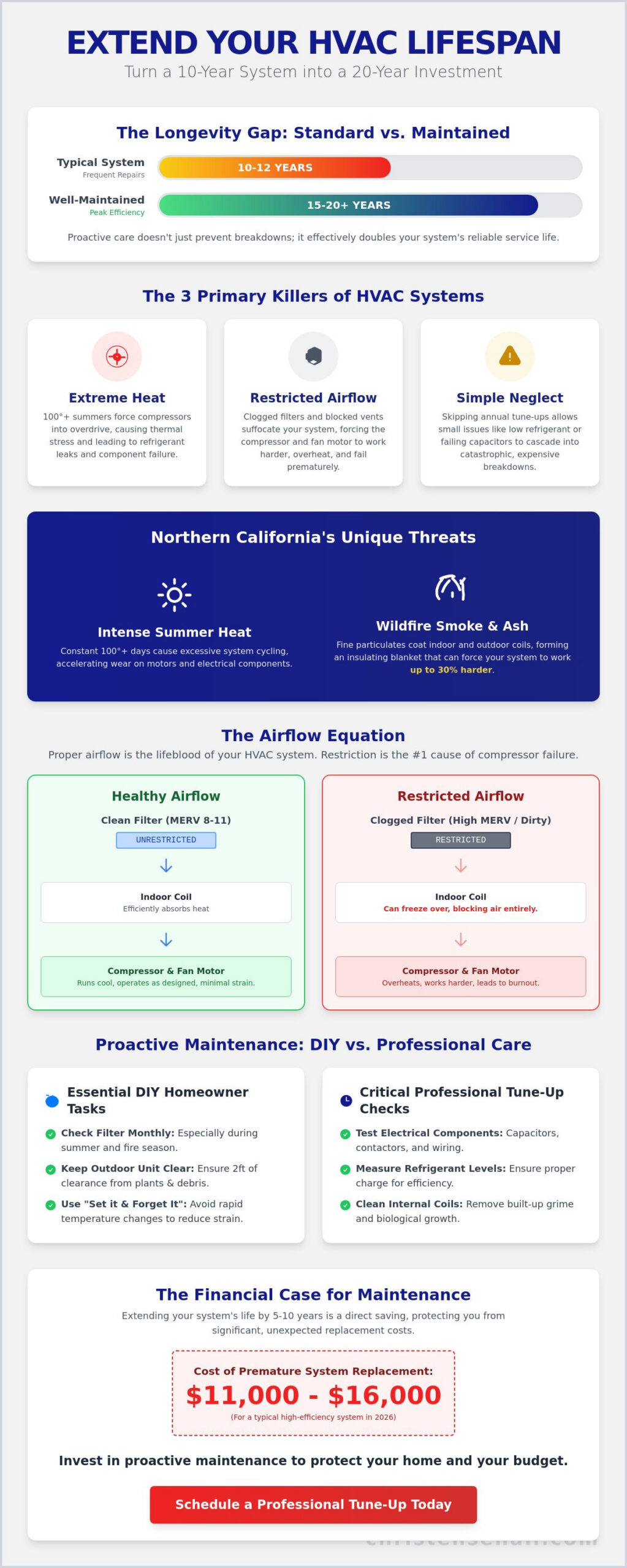
In a perfect world, your heating and cooling system would hum along quietly for two decades without a single hiccup. Most modern units are engineered to last between 15 and 20 years, but here in the Sacramento Valley, we often see systems “retire” much earlier. Premature failure occurs when a unit breaks down permanently before the 10 or 12-year mark, usually because the internal components have been pushed beyond their physical limits. When we talk about how to make my HVAC system last longer, we are really talking about reducing the three primary killers of mechanical equipment: extreme heat, internal friction, and simple neglect.
Taking a proactive approach isn’t just about being handy; it’s a strategic financial decision for your household. Replacing a full system in 2026 is a significant investment, with high-efficiency inverter systems often ranging from $11,000 to $16,000 for a typical home. By extending your current system’s life by just five years, you effectively save thousands of dollars in premature replacement costs and avoid the stress of an emergency breakdown during a July heatwave. We see it as protecting your home’s sanctuary through consistent, small actions rather than waiting for a total collapse of your comfort.
This proactive mindset extends to all parts of your home’s structure. For instance, ensuring your roof is in top condition with help from a professional like Trenick Roofing is another essential step in safeguarding your long-term property investment.
To better understand this concept, watch this helpful video:
The Impact of the Roseville Heat on System Wear
Our 100-degree summers are brutal on heavy machinery. When the outdoor temperature climbs, your compressor must run at maximum capacity for hours on end to dump heat from your home. This creates intense thermal stress, where the constant expansion and contraction of copper lines can lead to microscopic cracks and refrigerant leaks over time. System cycling refers to the process of an HVAC unit turning on and off to maintain a specific temperature, where excessive starts and stops increase wear on the motor and electrical components. If your system cycles too often because it’s struggling with the heat, it’s essentially running a marathon in a sauna every single day without a break.
Wildfire Smoke and Indoor Air Quality Challenges
Northern California’s fire season introduces a unique threat to HVAC longevity that many homeowners overlook. Fine particulate matter from smoke doesn’t just affect your lungs; it settles on your outdoor condenser coils and indoor evaporator coils, creating a sticky film of ash and dust. This film creates mechanical resistance, which is like trying to run while breathing through a heavy wool blanket. Some industry reports suggest that a system covered in wildfire residue can work up to 30% harder just to move the same amount of air. This extra strain leads to overheated fan motors and failed capacitors, cutting years off your equipment’s life before you even realize there’s a problem.
The Airflow Equation: Protecting Your Compressor
We often tell our neighbors that airflow is the lifeblood of their comfort. If your system can’t breathe, it can’t move heat effectively. When air movement is restricted, the compressor, which is the heart of your outdoor unit, has to work significantly harder to circulate refrigerant. This creates a dangerous cycle where the motor generates more internal heat than it can dissipate. If you are researching how to make my HVAC system last longer, you must prioritize unrestricted airflow to prevent your compressor from burning out years before its time.
Your system will often give you subtle warnings before a total mechanical failure occurs. You might notice short cycling, where the unit turns on and off every few minutes, or you may find that certain rooms stay warm while others are freezing. These aren’t just comfort issues; they are signs that your system is suffocating. Ignoring these symptoms puts immense strain on the electrical components and can lead to a surprise $15,000 replacement bill that no homeowner wants to face.
Filter Management: Beyond the Basic 1-Inch Pleat
Choosing the right filter is a balancing act between air purity and system health. While high MERV ratings (13 and above) are excellent for trapping tiny particles, they can act like a brick wall for older blower motors. We recommend a MERV 8 or 11 filter for most Roseville homes to ensure plenty of air reaches the internal coils. During our intense summer months and wildfire seasons, we suggest checking your filters every 30 days. A clogged filter doesn’t just block air; it can cause the evaporator coil to drop below freezing, leading to a solid block of ice that shuts down your entire system.
Duct Integrity and System Longevity
Leaky or undersized ducts are silent killers of HVAC efficiency. When cool air escapes into your attic through gaps or tears, your system must run for much longer periods to satisfy the thermostat. This extended run time accelerates the wear on every moving part in the cabinet. Investing in a professional duct system replacement or sealing service ensures that the static pressure remains within the manufacturer’s specifications. This allows the equipment to operate exactly as it was designed, which is the most reliable way to ensure a 20-year lifespan. If you are worried about your current airflow, our team at Christensen Heating and Cooling can perform a quick assessment to give you peace of mind.
Smart Usage Habits to Reduce Mechanical Strain
We often see homeowners try to save money by turning their AC off while they’re at work, only to return to an 85-degree house. Asking your system to recover from 85 to 72 degrees in a single hour is one of the hardest things you can do to the machinery. It forces the compressor and blower motor to run at maximum capacity for a sustained period, which generates excessive heat inside the cabinet. If you want to know how to make my HVAC system last longer, the answer often lies in consistency. A “set it and forget it” approach keeps the home at a stable temperature and prevents these high-stress recovery cycles.
Another simple habit involves your thermostat’s fan setting. While it might be tempting to leave the fan “On” to keep air moving, the “Auto” setting is much better for your system’s health. In “Auto” mode, the fan only runs when the system is actively heating or cooling. This reduces the total hours of operation on the blower motor and allows moisture on the evaporator coil to drain properly, preventing the humidity issues that can lead to biological growth. By letting the system rest between cycles, you reduce the overall mechanical wear on the bearings and electrical components.
Thermostat Optimization for Longevity and Savings
In our region, programming a smart thermostat for SMUD time-of-use rates is one of the most effective ways to protect your equipment and your wallet. We recommend “pre-cooling” your home in the morning when outdoor temperatures are lower. By dropping the temperature a few degrees before the afternoon peak-heat hits, you allow the system to coast through the hottest part of the day. This strategy prevents the unit from having to work at its absolute limit when the Roseville sun is at its most punishing, which significantly reduces the risk of a mid-afternoon capacitor failure.
Managing the “Heat Load” of Your Home
Your HVAC system doesn’t live in a vacuum; it reacts to the heat inside your home. You can act as a partner to your machinery by reducing the “heat load” it has to fight. Simple actions like using LED bulbs, which burn much cooler than old incandescents, or cooking on an outdoor grill during July evenings make a noticeable difference. We also suggest using ceiling fans to create a wind-chill effect, allowing you to feel comfortable even if the thermostat is set slightly higher. A 5-degree difference in your thermostat setting can significantly reduce the load on your compressor and add years to the life of your motor. When you combine these habits with proper attic insulation and window coverings, you create a sanctuary that stays cool without forcing your equipment to redline. To maintain your home’s thermal efficiency through expert window and glass care, visit A ACME Design.
Professional Maintenance vs. DIY Care
We believe in empowering our neighbors to take charge of their home comfort, but it’s vital to know where the DIY limit lies. While you can handle simple visual tasks, opening the electrical cabinet or handling refrigerant requires specialized training and tools. Professional maintenance isn’t just about a quick cleaning; it’s a deep diagnostic process that catches “penny” problems, like a fraying contactor or a weak capacitor, before they turn into “dollar” disasters like a fried compressor. Most manufacturers actually require documented professional service to keep your warranty valid, making these visits a necessary investment in your system’s future.
Think of professional care as an insurance policy for your mechanical equipment. When a technician visits your home, they are looking for signs of fatigue that the untrained eye might miss. They check for loose wiring that could cause a fire and ensure the system is operating within the specific safety parameters set by the manufacturer. If you are focused on how to make my HVAC system last longer, you must view maintenance as a partnership between your monthly habits and our technical expertise. This combined approach ensures your home remains a sanctuary during the most extreme Roseville heatwaves.
Your DIY Monthly Maintenance Checklist
Regular home care is a cornerstone of system health. Your monthly routine should include a visual inspection of the outdoor AC unit to ensure it remains a clean, efficient heat-exchanger. We recommend following these simple steps to protect your investment:
- Clear away leaves, tall grass, and mulch to keep a 2-foot “breathing zone” around the condenser.
- Check the condensate drain line for algae growth or standing water that could lead to a household flood.
- Inspect the outdoor insulation on the copper lines to ensure it hasn’t been damaged by the sun or local wildlife.
The Value of a Pre-Season Professional Check
A professional pre-season AC maintenance checklist covers the technical ground that homeowners can’t reach safely. We use precision instruments to test electrical connections for high resistance and measure refrigerant levels to the ounce. These checks are critical because even a slightly low charge can cause the system to run hotter and longer, wearing out the motor bearings prematurely. We also lubricate all moving parts to eliminate the friction that acts as a silent killer of HVAC motors. By reducing this internal resistance, we help your system run more quietly and efficiently for years to come.
If you’re ready to secure your home’s comfort for the upcoming season, you can schedule your professional tune-up with Christensen Heating and Cooling today.
The Long-Term Solution: Investing in Reliability
We believe that true comfort isn’t just about a cold blast of air in July. It’s about the quiet confidence that your system will actually turn on when you need it most. When you look at how to make my HVAC system last longer, the secret isn’t a one-time miracle fix. It’s a commitment to consistency over intensity. A system that receives steady, small adjustments every year will always outlast one that only sees a technician during a total breakdown. This proactive mindset protects your home’s sanctuary and ensures that your investment continues to serve your family for its full 20-year potential.
Choosing a local, family-owned partner for this journey makes a difference. Unlike large corporate entities that focus on high-volume transactions, we prioritize long-term relationships with our Roseville neighbors. We understand the specific strain our local climate puts on your equipment. Our goal isn’t to sell you a new unit every ten years; it’s to keep your current system running so efficiently that you forget it’s even there. This legacy-driven approach means we take personal pride in every task, treating your home with the same care we’d give our own.
Is a Maintenance Plan Right for You?
Many homeowners find that a recurring service agreement is the most cost-effective way to manage their home. When you look at the Christensen Comfort Club benefits, you’ll see that these plans often pay for themselves through improved energy efficiency and reduced repair costs. One of the biggest advantages is priority service during the height of summer. When it’s 110 degrees outside and every HVAC company in the valley is booked, knowing you’re at the front of the line provides incredible peace of mind. We also provide detailed health reports for your unit, creating a historical record that helps us spot trends and prevent failures before they happen.
Closing the Loop on Comfort
Protecting your HVAC system doesn’t have to be complicated. If you take three specific actions today, you’ll be well on your way to a longer-lasting system: check your filters monthly, keep your outdoor unit clear of debris, and schedule a professional inspection. We are dedicated to providing the regional expertise and neighborly care you need to keep your home comfortable year-round. Our team is ready to help you navigate the 2026 energy standards and ensure your equipment is running at peak performance. Contact Christensen Heating and Cooling for a professional longevity check today!
Securing Your Home’s Comfort for the Decade Ahead
We’ve explored how consistent airflow and smart thermostat habits can transform the way your equipment handles the Sacramento heat. By prioritizing monthly filter checks and reducing the internal heat load of your house, you’re taking the most important steps toward long-term reliability. The real secret for how to make my HVAC system last longer is simply treating your machinery with the same care you give the rest of your home. Consistent, proactive care always beats expensive emergency repairs.
Our team has been family-owned and operated since 2009, and we take personal pride in being the experts Roseville families trust for high-efficiency comfort. We don’t use high-pressure sales tactics because we believe in building relationships based on honesty and neighborly care. We want to help you avoid those surprise replacement costs and keep your sanctuary safe for years to come. You deserve a system that works reliably through every valley summer.
Protect your home investment with the Christensen Comfort Club today!
You have the power to extend your system’s life and lower your utility bills starting right now. We look forward to being your partner in home comfort and helping your family stay cool through every heatwave.
Frequently Asked Questions
How often should HVAC be serviced in California?
We recommend scheduling professional maintenance twice a year, once in the spring for your cooling system and once in the fall for your heating. Our local climate places heavy demands on equipment during both the 100-degree summers and the chilly valley winters. Regular visits ensure your system is prepared for these seasonal shifts and help prevent the mid-season breakdowns that cause so much stress for Roseville families.
Does changing my air filter really make my AC last longer?
Changing your filter is the most important DIY task you can perform to protect your equipment. A dirty filter forces the blower motor to work significantly harder to pull air through the system, which increases internal heat and electrical consumption. By keeping a clean filter in place, you reduce the mechanical strain on the motor and prevent the evaporator coil from freezing, which is a primary cause of compressor failure.
What is the average lifespan of an HVAC system in Roseville?
A well-maintained system in our region typically lasts between 15 and 20 years. However, many units in the Sacramento Valley fail prematurely around the 10 to 12-year mark because they haven’t been protected from the extreme summer heat. Understanding how to make my HVAC system last longer through consistent care can effectively double the life of your unit compared to a neglected one.
Can a smart thermostat help my HVAC system last longer?
Smart thermostats are excellent tools for extending system life because they prevent unnecessary cycling and high-stress “recovery” periods. By managing your home’s temperature more precisely and using features like pre-cooling, these devices ensure your system doesn’t have to run at maximum capacity during the hottest part of the day. This reduced workload directly translates to less wear on your compressor and fan motors.
Is it worth repairing a 15-year-old HVAC system?
Deciding whether to repair an older system depends on the cost of the fix and the unit’s overall health. If a major component like the compressor or heat exchanger fails at year 15, the investment in a new, high-efficiency system often makes more financial sense than a costly repair on an aging unit. We always provide honest guidance to help you choose the path that best protects your home’s comfort and your budget.
What are the signs that my HVAC system is struggling?
Keep an ear out for unusual grinding or squealing noises and watch for a sudden, unexplained spike in your monthly utility bills. If your system is cycling on and off every few minutes or if you notice that some rooms never quite reach the temperature on the thermostat, your unit is likely struggling with airflow or mechanical fatigue. Catching these signs early can prevent a small adjustment from turning into a total system collapse.
How much does professional HVAC maintenance cost?
While specific costs vary based on the level of service required, annual maintenance contracts in Northern California typically fall within a standard industry range that is far lower than the cost of a major repair. Investing in a recurring plan is a proactive way to manage your home’s budget. Most homeowners find that the energy savings and avoided repair fees more than cover the cost of the service visits.
Does wildfire smoke damage my HVAC unit?
Wildfire smoke carries fine ash and particulates that settle on your outdoor condenser coils and indoor components. This buildup creates a layer of “insulation” that prevents the system from releasing heat effectively, forcing it to run longer and hotter than it was designed to. After a significant smoke event, it is vital to have your coils inspected and cleaned to remove these corrosive particles and restore proper airflow.