





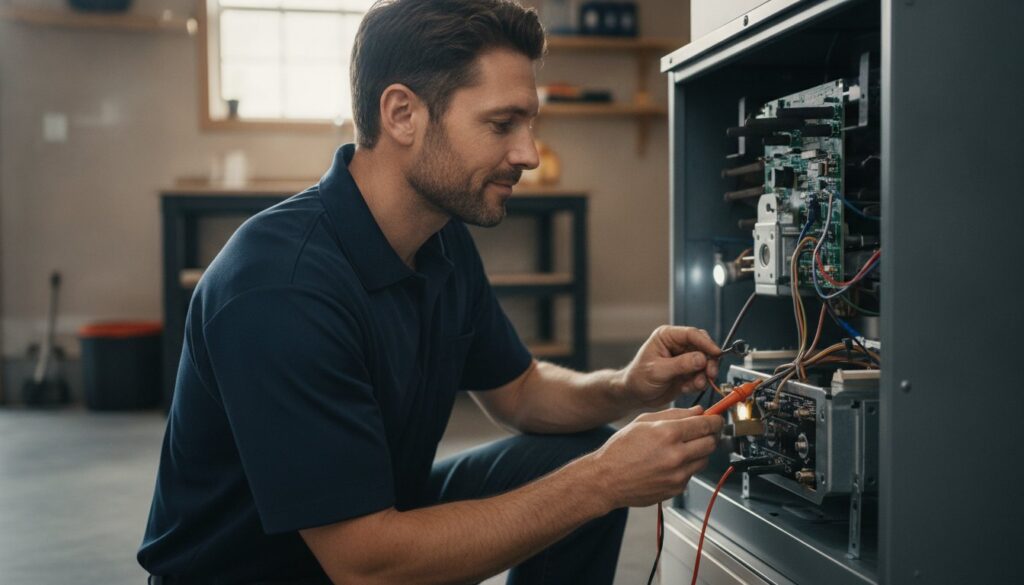
Imagine it is a chilly Northern California evening and you realize the house feels a bit too quiet and far too cold. You head to the garage or utility closet only to find that your pilot light keeps going out, leaving your family without the warmth they deserve. We know how stressful this situation can be, especially when concerns about gas safety and technical parts like thermocouples start to weigh on your mind.
We believe your home should always be a sanctuary of comfort and security. While many modern systems have moved toward electronic ignition, thousands of reliable older furnaces in the Sacramento area still rely on a standing pilot to stay functional. In this guide, we will help you identify exactly why your unit is struggling and show you how to safely restore your home’s heat. You will learn the difference between a simple DIY cleaning task and a situation that requires a professional hand. From troubleshooting the thermocouple to checking for drafts, we are here to provide the clear, honest guidance you need to get your system back in peak condition.
Key Takeaways
- Understand how the thermocouple acts as a vital safety guard to protect your household by managing gas flow.
- Identify mechanical issues like clogged pilot orifices or worn valves when your pilot light keeps going out.
- Discover how Sacramento’s unique environmental factors, such as high winds and dust, can impact your furnace’s performance.
- Learn the essential safety steps, including the mercaptan “sniff test,” to ensure your home remains a secure sanctuary.
- Recognize when a professional diagnostic is the most reliable way to maintain your family’s comfort and safety.
Understanding the Pilot Light: Your Furnace’s Flame of Comfort
The pilot light is the small, steady flame that serves as the primary ignition source for your furnace or water heater. While it might look like a simple flicker, Understanding the Pilot Light reveals its role as a sophisticated gatekeeper for your home’s gas supply. We often think of it as the heart of the system because it stays lit around the clock, ready to spark the main burners whenever your thermostat calls for heat. When your pilot light keeps going out, it is not just a minor inconvenience; it is a disruption to the sanctuary and security of your household.
We believe that every family in the Sacramento area deserves a home that feels safe and warm. A failing pilot light creates more than just a chill in the air. It often brings a sense of anxiety about gas leaks or potential carbon monoxide issues. This tiny flame acts as the first line of defense in a complex “safety loop” designed to protect your family. If the system detects that the flame is absent, it immediately halts the flow of gas. This prevents unburned fuel from accumulating in your utility closet or basement.
How the Pilot Light and Thermocouple Work Together
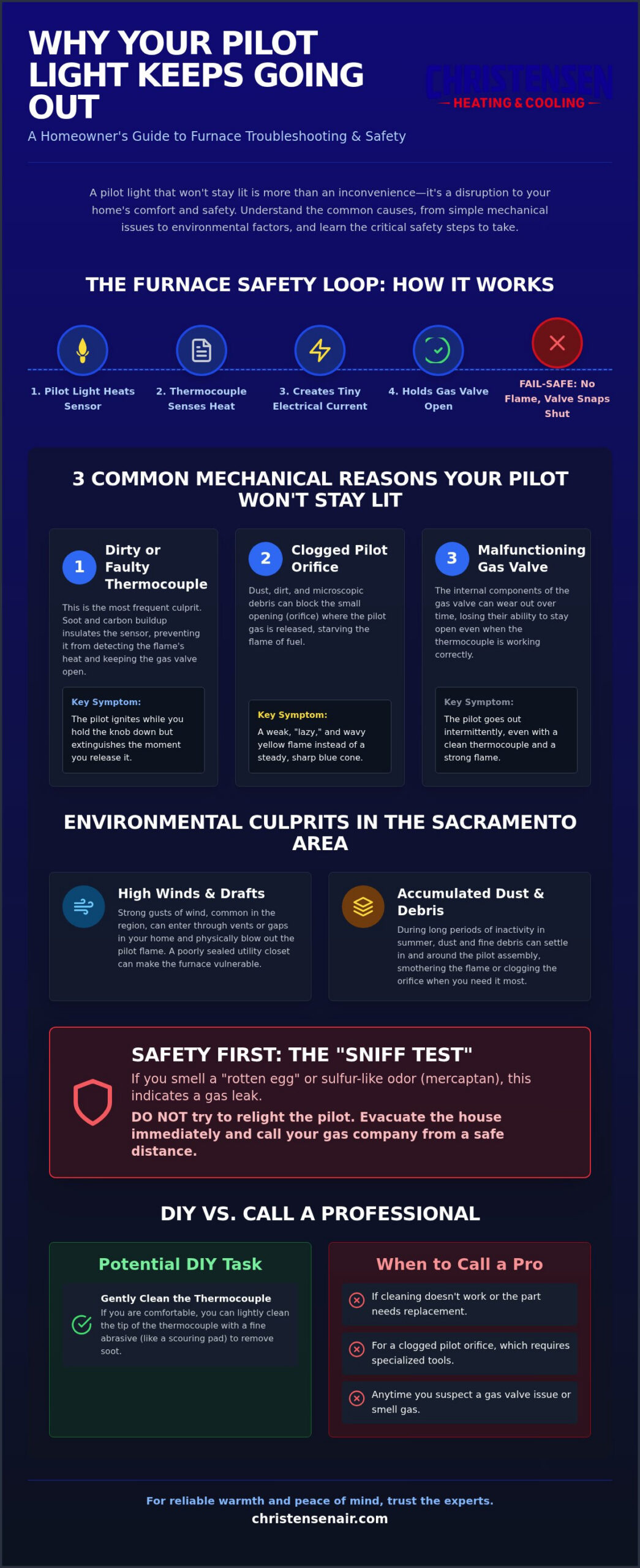
The thermocouple is a heat-sensing safety probe that sits directly in the path of the pilot flame. It acts as the brain of the safety loop by converting thermal energy into a tiny electric current. This millivolt signal provides just enough power to hold the gas valve in the “open” position. If your pilot light keeps going out, it is often because this safety loop has been broken. When the flame flickers or dies, the thermocouple cools down in seconds. This triggers a “fail-safe” mode that snaps the gas valve shut instantly to prevent any dangerous leaks. It is a simple yet brilliant mechanical partnership that prioritizes your safety over everything else.
Standing Pilot vs. Intermittent Pilot Ignition
The age of your home often determines which type of ignition system you have. Most older furnaces in Roseville rely on a standing pilot, which means the flame burns 24 hours a day. While reliable, these systems are less efficient because they consume a small amount of gas even when the furnace is not running. Modern high-efficiency units have largely moved toward intermittent pilot ignition or hot surface igniters. These systems only create a spark or heat up when the furnace needs to start. You can explore how gas furnace technology has evolved to provide better reliability and lower utility bills in our recent guide. Whether you have a legacy system or a modern unit, keeping that ignition source clean is the best way to ensure long-term comfort.
3 Common Mechanical Reasons Your Pilot Light Won’t Stay Lit
When the first real cold snap hits our established Sacramento neighborhoods, many older furnaces face their toughest test of the year. If your pilot light keeps going out during these chilly nights, it is rarely a random occurrence. Systems that have remained dormant throughout the warm summer months often struggle with what we call the “Big Three” mechanical failures. These include thermocouple issues, clogged pilot orifices, or malfunctioning gas valves. Understanding these components helps remove the mystery and anxiety from your furnace’s operation.
We see these mechanical issues peak every autumn. Wear and tear is a natural part of any mechanical system’s life, but it doesn’t have to mean your comfort is at risk. By paying attention to the color and shape of your flame, you can often diagnose the problem before it becomes a total system failure. A healthy pilot should look like a sharp, steady blue cone. If you see a “lazy” yellow flame that waves around, your system is signaling for help.
The Dirty or Faulty Thermocouple
The thermocouple is the most frequent culprit when a pilot won’t stay lit. Over years of service, soot and carbon buildup can coat this sensor, creating a layer of insulation that prevents it from sensing the flame’s heat. Understanding how a thermocouple works is vital for homeowners. If the sensor doesn’t get hot enough, it won’t send the electrical signal required to keep the gas valve open. You will know this is the problem if the pilot ignites easily while you hold the knob down, but dies the very second you release it. You can sometimes gently clean the tip with a fine abrasive like a scouring pad, but if the internal sensor has failed, a professional replacement is the only way to restore your peace of mind.
Clogged Pilot Orifice or Tube
Dust and debris are the enemies of a steady ignition source. Microscopic particles or even tiny spider webs can find their way into the pilot tube, restricting the flow of gas. This leads to the “lazy flame” mentioned earlier. A weak flame cannot generate enough heat to satisfy the thermocouple, causing the system to shut down as a safety precaution. Many people mistake a clogged orifice for a broken gas valve, but it’s often just a matter of precision cleaning. If you aren’t comfortable handling these delicate gas components, our team at Christensen Heating and Cooling can perform a thorough diagnostic to ensure every part of your ignition system is clear and safe. We treat every home with the same care we would give our own families, ensuring your furnace remains a reliable source of warmth all winter long.
Environmental Culprits: Why External Factors Blow Out Your Flame
Sometimes the reason your pilot light keeps going out has nothing to do with the furnace’s internal parts. Instead, it is a result of the environment where your unit lives. In the Sacramento Valley, our unique regional climate and geography introduce specific challenges that can disrupt even the most well-maintained systems. From sudden gusts of wind to the fine dust that settles across our landscape, external factors are frequently the hidden culprits behind a lost flame. We believe that understanding these local influences is the first step toward reclaiming the comfort of your home.
The health of your heating system is inextricably linked to the air it breathes. If the air surrounding your furnace is thick with debris or if the pressure in your utility room is constantly shifting, the pilot flame will struggle to stay lit. This isn’t just a mechanical issue; it is a matter of protecting the sanctuary of your household from the unpredictable elements of Northern California.
Drafts and Improper Flue Venting
A properly functioning flue is designed to carry exhaust gases safely out of your home. However, if a flue pipe is cracked, improperly sized, or the vent cap is damaged, it can allow outside air to rush back down the system. This phenomenon, known as backdrafting, can easily snuff out a standing pilot. Beyond the inconvenience of a cold house, backdrafting is a serious safety concern because it can introduce carbon monoxide into your living space. We recommend a quick visual check of your exterior vent caps to ensure they aren’t obstructed by bird nests or debris, which can create the pressure imbalances that lead to these drafts.
Sacramento Specific: Dirt, Dust, and Wildfire Residue
Living in our region means dealing with seasonal air quality issues that directly impact your HVAC system. We have found that fine particulate matter from wildfire season is a primary reason a pilot light keeps going out for our Roseville neighbors. This microscopic ash can settle deep within the pilot assembly, eventually clogging the small openings needed for a steady flow of gas. Because indoor air quality and furnace health are so closely linked, protecting one often helps the other. We encourage homeowners to be diligent about filter changes during the summer months to prevent dust from accumulating before the heating season begins. You can learn more about the connection between wildfire smoke and HVAC maintenance to keep your system breathing clearly.
Combustion air is another vital factor. If your furnace is tucked away in a cramped closet or a sealed basement, it might simply be starving for oxygen. A flame requires a constant supply of fresh air to burn correctly. If the space is too tight, the flame will struggle, flicker, and eventually die out. Ensuring your utility space has adequate ventilation is a simple way to maintain a reliable source of warmth.
Safety First: Troubleshooting a Pilot Light That Keeps Going Out
Safety is the foundation of every comfortable home. Before you ever reach for a lighter or touch the gas valve, we want you to pause and use your senses. Natural gas is naturally odorless, so utility companies add a chemical called mercaptan to give it a distinct “rotten egg” smell. We call this the “Sniff Test.” If you detect this scent near your furnace, do not attempt to relight the pilot. Instead, immediately leave the house, leave the door open, and call your gas provider or a professional from a safe distance. Your family’s safety is always the highest priority.
We understand that a cold house can cause a lot of anxiety, but rushing the troubleshooting process can be dangerous. If your pilot light keeps going out and you don’t smell gas, you can follow a specific safety protocol to try and restore your heat. However, it is important to know your limits. While homeowners can handle basic relighting and external cleaning, anything involving the internal gas train or electrical components should be left to a licensed expert.
The Proper Way to Relight a Pilot Flame
To safely relight your furnace, start by turning the gas valve to the “Off” position. You must wait at least five full minutes before proceeding. This allows any residual gas to dissipate completely, preventing a sudden flare-up when you introduce a spark. Once the time has passed, turn the knob to the “Pilot” setting. Press and hold the “Reset” button or the knob itself while applying a flame to the pilot burner. Continue holding the button for about 30 to 60 seconds to allow the thermocouple to heat up. If the flame won’t stay lit after three tries, a mechanical failure is present, and you should stop attempting to relight it. This “3-strike rule” prevents wear on the valve and ensures you don’t overlook a deeper safety issue.
Recognizing Signs of a Cracked Heat Exchanger
One of the most serious reasons a pilot light keeps going out is a cracked heat exchanger. When the metal in the heat exchanger develops a crack, the air from the furnace’s blower fan can leak into the combustion chamber. This creates a sudden burst of air turbulence that “flicks” the pilot flame out right when the system tries to start. This is a critical safety hazard because a crack can also allow carbon monoxide to enter your home’s ductwork. Identifying this issue requires specialized tools and training. Relying on professional AC and furnace repair is the only way to verify the integrity of your system and keep your household protected.
If you have followed the relighting steps and your furnace still won’t hold a flame, please don’t struggle in the cold. You can schedule a professional furnace diagnostic with our team today to get your home’s warmth and safety back on track.
Restoring Reliable Warmth with Christensen Heating and Cooling
We believe that when your pilot light keeps going out, you deserve more than a temporary patch; you deserve the peace of mind that comes from knowing your home is safe and functional. Our technicians don’t rely on guesswork or surface-level inspections. Instead, we use precision diagnostic tools to identify the exact root cause of the failure, whether it’s a microscopic crack in the heat exchanger or a subtle voltage drop in the thermocouple circuit. This meticulous approach is what we call “The Christensen Way.” We treat every home in Roseville with the same level of care, honesty, and attention we would give to our own families.
Addressing these ignition issues early is about more than just immediate warmth. Taking care of small repairs as they arise is one of the most effective ways to make my HVAC system last longer. When a pilot assembly is struggling, it can cause the gas valve to cycle unnecessarily, putting extra strain on your furnace’s internal components. By choosing timely, professional repairs, you are protecting your long-term investment and ensuring your household remains a sanctuary of comfort through the coldest Northern California nights.
Professional Furnace Repair in Roseville and Beyond
Since 2009, our family-owned and operated team has been a trusted fixture in the community. Our service area spans across the region, providing expert care to homeowners from Rocklin and Roseville down to Sacramento and Folsom. We specialize in a wide range of heating solutions, from traditional high-efficiency gas furnaces to modern inverter heat pumps. We understand that a heating failure is often an emergency, which is why we maintain a steady and dependable rhythm of service. Our goal is to provide quick response times that prioritize your family’s well-being without the high-pressure sales tactics found at larger corporate firms.
The Comfort Club: Preventing Pilot Failure Before It Starts
The most reliable way to handle a situation where a pilot light keeps going out is to prevent the buildup of dirt and soot before the winter season begins. We designed the Comfort Club Maintenance Plan to be the ultimate “set it and forget it” solution for our neighbors. This plan includes scheduled professional inspections where we specifically focus on pilot assembly cleaning and safety loop testing. By removing the fine Sacramento dust and wildfire residue that often clogs these delicate parts, we ensure your system is ready to perform when you need it most. Preventative care is the best way to avoid the anxiety of a cold home on a frosty morning. We invite you to Join the Comfort Club and ensure your peace of mind so you can focus on what matters most: the comfort of your home.
Secure Your Home’s Warmth for the Season Ahead
We’ve explored how a steady pilot flame is the heart of your home’s comfort. Whether the issue is a soot-covered thermocouple or the unique wind and dust of the Sacramento Valley, knowing why your pilot light keeps going out is the first step to a warm home. We believe that protecting your household’s sanctuary shouldn’t be a stressful experience. From the “3-strike rule” for relighting to identifying environmental drafts, you now have a clear framework for troubleshooting with confidence.
As a family-owned and operated team serving Roseville since 2009, we take personal pride in every repair. Our A+ rated HVAC expertise ensures that we don’t just fix a symptom; we provide a long-term solution. Members of our Comfort Club enjoy priority service and the peace of mind that comes from regular, professional inspections. Don’t let a failing ignition system disrupt your family’s peace. Schedule Your Furnace Inspection with Christensen Today and let us help you maintain a reliable, high-efficiency home. We look forward to being your trusted partner in comfort for years to come.
Frequently Asked Questions
Is it dangerous if my pilot light keeps going out?
It is generally safe because your furnace has a built-in safety loop. The thermocouple detects when the flame is gone and shuts off the gas valve to prevent fuel from leaking into your home. However, if your pilot light keeps going out frequently, it indicates a mechanical failure that needs professional attention. Ignoring the root cause could eventually lead to more significant safety risks or a complete loss of heat during a cold Roseville night.
Can I clean a furnace thermocouple myself?
You can perform a light external cleaning if you feel comfortable accessing the pilot assembly. Use a fine abrasive like a scouring pad to gently remove soot from the tip of the sensor. We recommend being extremely careful not to bend or snap the delicate wire. If a light cleaning doesn’t solve the issue, the internal sensor has likely failed, which requires a professional replacement to ensure your system operates safely and reliably.
How much does it cost to replace a thermocouple in Roseville?
The cost for a thermocouple replacement depends on your specific furnace model and the complexity of the installation. While the part itself is a standard component, the value of a professional repair lies in the precision diagnostic and safety testing that follows. Our technicians ensure the new sensor is perfectly positioned to prevent future failures. We provide clear, honest guidance before any work begins so you can make the best decision for your home’s comfort.
What color should my pilot light flame be?
A healthy pilot flame should always be a steady, bright blue color with a sharp cone shape. This indicates that the gas and oxygen are mixing perfectly for efficient combustion. If you see a yellow or “lazy” waving flame, it’s a sign of a clogged orifice or poor airflow. A yellow flame doesn’t burn hot enough to satisfy the thermocouple, which is often why your pilot light keeps going out.
Why does my pilot light go out when the wind blows?
High winds in the Sacramento Valley can create backdrafts if your flue venting is damaged or improperly sized. If air rushes down the chimney, it can physically blow the small flame out. We also suggest checking for physical obstructions like bird nests in your exterior vent caps. These blockages disrupt the pressure balance in your furnace, making the pilot flame unstable and susceptible to even minor gusts of air.
How long should a furnace pilot light last?
In an older standing pilot system, the flame is designed to burn continuously for the entire life of the furnace. However, the mechanical parts of the assembly, like the thermocouple, typically last between five and ten years. Regular maintenance through our Comfort Club is the best way to extend this lifespan. We clean the assembly during every tune-up to ensure the components don’t succumb to premature wear from dust or soot.
Does a pilot light going out mean I need a new furnace?
Most pilot issues are caused by minor mechanical failures that are easily repairable. A dirty sensor or a clogged tube doesn’t mean your entire system is failing. However, if your furnace is over 15 years old and experiences frequent ignition problems, it might be time to consider a modern high-efficiency unit. We focus on honest assessments and will never recommend a replacement if a simple repair can safely restore your home’s comfort.
What should I do if I smell gas near my furnace?
If you smell the rotten egg scent of mercaptan, don’t try to relight the pilot or touch any electrical switches. Immediately evacuate everyone from the home and leave the front door open to help ventilate the space. Once you are at a safe distance, call your local gas utility or an emergency HVAC professional. Your safety is our primary concern, and we treat every report of a gas odor with the highest level of urgency.