





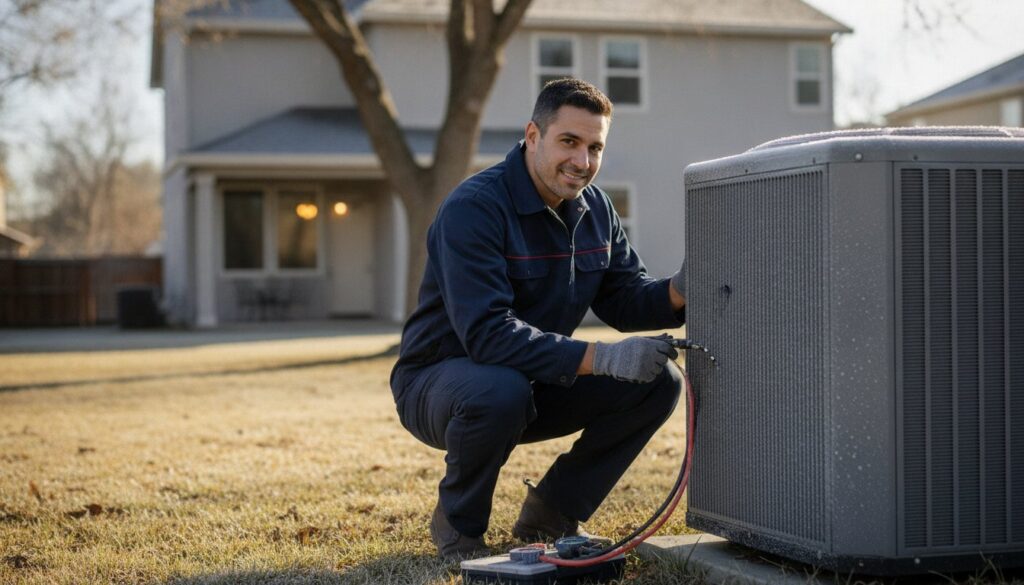
You wake up on a chilly Roseville morning, glance out the window, and see your outdoor unit coated in a thin layer of white. It is natural to feel a surge of anxiety and wonder, why is there frost on my heat pump in winter? We know that the fear of losing heat during a freezing night is enough to keep any homeowner awake. You might worry that a massive repair bill is just around the corner or that your system simply isn’t built for the cold.
We’ve spent years helping our neighbors in Placer and Sacramento counties understand that a little frost is often just a sign of your system doing its job. In this guide, we’ll help you distinguish between a normal, healthy defrost cycle and the dangerous ice buildup that threatens your home’s comfort. You will learn exactly when to relax and when it is time to call in a professional. By understanding how your high-efficiency inverter heat pump handles our local climate, you can protect your system’s longevity and keep your energy bills under control all season long.
Key Takeaways
- We’ll help you distinguish between a harmless layer of frost and dangerous ice buildup that can damage your system’s compressor.
- Understand the science behind why is there frost on my heat pump in winter and how the automated defrost cycle protects your home’s comfort.
- Identify five common causes for excessive icing, from simple airflow restrictions to more complex mechanical failures.
- Learn how regional factors like the Sacramento Tule Fog and leaking gutters can accelerate ice accumulation on your outdoor unit.
- Discover how modern inverter technology and our Comfort Club maintenance plan work together to prevent winter heating emergencies.
Is Frost on a Heat Pump Normal? Understanding Winter Operation
Seeing a layer of white on your outdoor unit during a cold morning can be startling. We often hear from concerned homeowners in Roseville and Sacramento asking, “why is there frost on my heat pump in winter?” While it looks alarming, frost is actually a normal byproduct of the heating process. It is essentially frozen condensation that forms when the temperature of the outdoor coil drops below the freezing point. Because your system is designed to extract thermal energy from the air, its coils must stay significantly colder than the environment around them to work effectively.
We want our neighbors to feel confident in their home’s comfort systems. A light, even coating of frost is usually a sign that your unit is operating exactly as intended. It means the system is successfully pulling heat from the outdoor air to warm your living room. However, there is a clear line between a healthy dusting and a system-threatening ice block. Understanding this distinction is the first step in protecting your equipment and your peace of mind. Our team focuses on helping you recognize these signs before they lead to high repair bills or a loss of heat.
The Science of Heat Extraction
Even when the thermometer dips to 30 degrees, there is still a surprising amount of thermal energy available in the air. To capture this energy, the system circulates a specialized refrigerant that is kept at a much lower temperature than the outside air. You can explore the technical details of How a Heat Pump Works to see how this refrigeration cycle moves heat from the cold outdoors into your home. When the humid air typical of our local winters hits these freezing coils, moisture naturally condenses and turns into frost. The dew point is the specific temperature at which the air becomes saturated and begins to deposit moisture onto the cold surfaces of your heat pump coils.
Frost vs. Icing: The Visual Difference
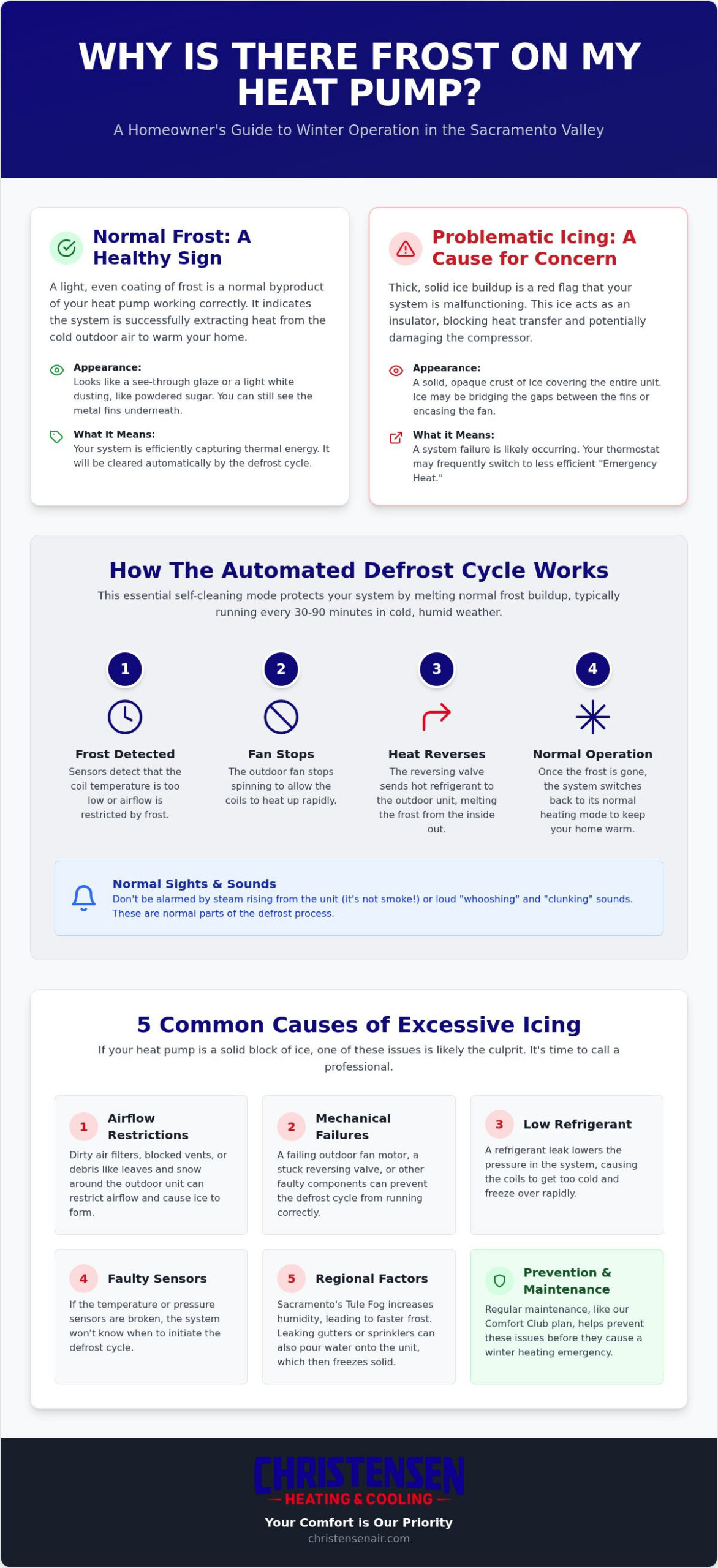
We recommend a simple visual check for our clients to help alleviate any winter anxiety. Normal frost should look like a see-through glaze or a light white dusting that still allows you to see the metal fins underneath. If the unit looks like it has been lightly powdered with sugar, it’s likely just fine. Problematic icing is much more obvious. Look for solid ice bridging the gaps between the fins or a thick, opaque crust that covers the entire unit. If your thermostat frequently switches into “Emergency Heat” or “Auxiliary Heat” mode, it may be a sign that the outdoor unit is too frozen to absorb heat, forcing the system to rely on less efficient backup heating elements to keep you warm.
How the Defrost Cycle Works to Protect Your Home
Think of the defrost cycle as your heat pump’s automated self-cleaning mode. It is a vital defense mechanism designed to keep your system running efficiently when the temperature drops. If you are wondering why is there frost on my heat pump in winter, the answer often lies in the balance between heat extraction and this protective cycle. Without it, the light frost mentioned earlier would quickly transform into a thick layer of ice. This ice acts as a stubborn insulator, blocking the transfer of heat and forcing your system to work much harder for less warmth.
In our Roseville and Sacramento winters, you might notice your unit entering this cycle every 30, 60, or 90 minutes depending on the humidity levels. The Tule fog we experience locally often accelerates frost buildup, making a functional defrost cycle even more critical. To melt the accumulated frost, the system uses a reversing valve to temporarily switch from heating mode to cooling mode. This redirecting of hot refrigerant to the outdoor coils is what clears the path for continued efficiency. Our Heat Pump Services can ensure your reversing valve and sensors are operating correctly before the first freeze hits.
The 4 Steps of a Standard Defrost Cycle
The transition into defrost mode is a precise sequence of events. First, a sensor detects that the coil temperature has dropped too low or that air pressure is restricted. Second, the outdoor fan stops spinning. This allows the outdoor coil to heat up rapidly without the cold wind cooling it back down. Third, the reversing valve shifts, sending hot gas directly to the outdoor unit to melt the frost. Finally, once the ice is gone and the sensor registers a safe temperature, the system returns to its normal heating mode to keep your family cozy.
Normal Sights and Sounds of Defrosting
We want to reassure you that some “scary” sights are perfectly normal during this process. You might see steam rising from the unit, which is often mistaken for smoke; it is actually just melting ice evaporating off the hot coils. You may also hear a loud “whooshing” or a sudden “clunking” sound as the reversing valve shifts positions. This is the sound of your system protecting itself. Finally, you will likely see water pooling around the base of the unit. We always check for proper drainage during our maintenance visits to ensure this water doesn’t refreeze and create a hazardous ice sheet around your home’s foundation.
5 Common Reasons for Excessive Heat Pump Icing
While we have established that a light glaze is part of normal operation, a unit that remains frozen solid is a cry for help. If you find yourself asking why is there frost on my heat pump in winter that won’t melt after a defrost cycle, it’s usually due to one of five specific culprits. These range from simple maintenance oversights to more complex mechanical failures that require a professional touch. Identifying the root cause early can prevent a total system shutdown during a freezing Sacramento night.
We see these issues frequently in our local community, and most are preventable with regular attention. When ice begins to bridge the fins or encase the entire unit, it creates a barrier that stops your home from getting the warmth it needs. This extra strain doesn’t just lower your comfort; it can significantly shorten the lifespan of your compressor if left unaddressed. We want to help you spot these red flags before they turn into an emergency.
Airflow and Maintenance Issues
The most frequent cause of icing is restricted airflow. Your heat pump needs to breathe to exchange heat effectively. If air cannot move freely across the outdoor coils, the temperature of those coils will plummet. This causes moisture to freeze instantly and build up rapidly. This often starts with a dirty indoor air filter. A clogged filter reduces the heat exchange efficiency of the entire system, which can manifest as heavy ice on the outdoor unit. We recommend checking your filters every month during the peak heating season to ensure clear passage for air.
Outside, your unit needs a clear “breathing room” perimeter of at least two feet. Leaves, tall grass, or winter debris can act as a wall that traps cold air around the coils. In Placer County, falling oak leaves are a common offender that can quickly choke a unit. Keeping the area clear is a simple way to protect your investment and maintain efficiency. For more tips on keeping your system in peak condition, read our guide on how to make my HVAC system last longer.
Component Failures and Leaks
When the physical environment is clear but the ice remains, the issue is likely internal. The “brain” of the defrost process is the defrost control board. If this board or its connected sensors fail, the system essentially forgets to enter defrost mode. It will continue trying to pull heat through a block of ice, which only makes the problem worse. Similarly, a stuck reversing valve can prevent the system from switching into the temporary cooling mode necessary to warm the outdoor coils and melt the frost.
Finally, low refrigerant levels are a major red flag. It might seem counterintuitive, but a leak actually causes the remaining refrigerant to operate at a much lower pressure and temperature. This makes the coils much colder than they should be, leading to a unit that is frozen solid from the inside out. Environmental factors, such as a leaking gutter dripping water directly onto the fan or coils, can also overwhelm the system. We often see units in Roseville that are perfectly healthy but are being “rained on” by a broken gutter, leading to a massive ice block that no standard defrost cycle can handle alone.
Troubleshooting and Prevention for Sacramento Valley Homeowners
Living in the Sacramento Valley presents unique challenges for HVAC systems that homeowners in drier climates rarely face. If you find yourself asking why is there frost on my heat pump in winter, the answer often involves our infamous Tule fog. This thick, ground-level moisture creates a high-humidity environment that provides ample fuel for frost formation. When the air is saturated with moisture, your heat pump must work double time to keep those coils clear. Understanding these local environmental factors helps you manage your system’s performance without unnecessary stress.
Beyond the weather, simple home maintenance issues often masquerade as mechanical failures. We always suggest our neighbors perform a quick “look up” test. Inspect the gutters directly above your outdoor unit. If they are leaking or overflowing, they can pour a steady stream of water onto the fan and coils. This extra water overwhelms the standard defrost cycle, leading to a massive ice block that no amount of internal heat can melt. Additionally, check if your unit is still level. Over time, the soil in Placer County can shift, causing the unit to tilt. A tilted heat pump traps meltwater in the base pan instead of letting it drain away, which leads to ice buildup that can eventually damage the fan blades.
Northern California Winter Maintenance Tips
- Clear debris after wind storms: Our Valley wind storms often dump leaves and twigs into the unit. Clear these out immediately to maintain the “breathing room” your system needs.
- Monitor the base pan: Ensure the drainage holes at the bottom of the unit are clear of dirt or ice. Standing water in the base pan is a leading cause of frozen fan motors.
- Avoid thermostat “cranking”: If your home feels chilly, resist the urge to jump the thermostat up five degrees at once. This can trigger the less efficient auxiliary heat and put more strain on a unit that might already be struggling with frost.
When to Call Christensen Heating and Cooling
While we encourage proactive care, some situations require a professional eye to protect your home’s sanctuary. If you notice ice remaining on the coils for more than three hours or through several consecutive cycles, the system’s “brain” may be malfunctioning. Another red flag is if your indoor vents are blowing cold air while the outdoor unit is running in heat mode. Most importantly, if you hear any metal-on-metal grinding or loud vibrating noises, shut the system off immediately. This often indicates that ice has reached the fan blades, and continuing to run it could cause a total compressor failure. For peace of mind and professional care, you can schedule our Heat Pump Services to ensure your system is ready for the next cold snap.
Long-Term Reliability: Inverter Technology and Maintenance
We believe that a warm home shouldn’t be a source of stress. While understanding why is there frost on my heat pump in winter helps alleviate immediate anxiety, long-term comfort comes down to the quality of your equipment and the consistency of your care. Since 2009, our family-owned team has served Placer and Sacramento counties with a focus on honesty and technical excellence. We’ve seen firsthand how the right technology can transform a household’s winter experience from one of constant worry into one of steady, dependable warmth.
Our commitment to your sanctuary is why we specialize in high-efficiency inverter heat pumps. These systems represent a significant leap forward in how we handle the chilly, humid mornings of the Sacramento Valley. By choosing modern technology and proactive service, you aren’t just fixing a mechanical issue; you are protecting the well-being of your household and ensuring that your heating system remains a silent, reliable partner through the coldest months of the year.
The Inverter Advantage
Inverter heat pumps are the gold standard for our local climate because they operate differently than traditional “on-off” units. Standard systems blast at full capacity and then shut down, which can lead to sudden temperature drops on the coils and rapid “flash-freezing” during high-humidity events. In contrast, an inverter system uses a variable-speed compressor to run for longer cycles at lower speeds. This steady approach maintains a more consistent coil temperature, which significantly reduces the frequency and severity of frost accumulation.
If you are considering an upgrade to address recurring icing issues, now is an excellent time to explore your options. As of February 2026, SMUD has increased its incentives to help homeowners transition to this technology. You may be eligible for rebates of up to $3,000 when converting a gas HVAC system to a high-efficiency heat pump. To learn more about how these systems handle our local winters, read our detailed guide on what is an inverter heat pump and how does it work.
Join the Comfort Club
The most effective way to prevent problematic icing is to catch small issues before they turn into solid blocks of ice. Our Comfort Club Maintenance Plan is designed to provide this exact peace of mind. During our bi-annual inspections, we don’t just look at the unit; we perform deep cleanings of the outdoor coils to ensure maximum heat transfer. Clean coils are much less likely to trigger unnecessary defrost cycles, which lowers your energy bills and reduces wear on your compressor.
Our technicians check the “brain” of your system, including the defrost sensors and reversing valves, to ensure everything is communicating correctly. We take personal pride in every task, treating your environment with the same care we would apply to our own homes. This proactive approach is the best way to ensure that when you ask why is there frost on my heat pump in winter, the answer is always “because it’s working perfectly.” We invite you to Join the Comfort Club for peace of mind this winter and experience the difference that dedicated, local expertise can make for your home.
Keep Your Home Cozy and Your System Protected
Your home should be a sanctuary, especially when the cold Sacramento Valley fog rolls in. We’ve explored the difference between a normal dusting of frost and the thick ice that signals a mechanical problem. Understanding why is there frost on my heat pump in winter helps you spot early warning signs like restricted airflow or sensor failures before they lead to a total loss of heat. By keeping your outdoor unit clear and trusting the automated defrost cycle, you can maintain high efficiency and lower energy bills all season long.
Since 2009, our family-owned and operated team in Roseville has helped neighbors across Placer and Sacramento counties stay warm. As specialists in high-efficiency inverter heat pump systems, we take personal pride in providing the 5-star rated service your family deserves. Whether you need a quick checkup or a complete system upgrade, we’re here to partner with you for long-term comfort. Schedule your winter heat pump inspection with Christensen today to ensure your system is ready for the next freeze. We look forward to helping you protect your home and your peace of mind.
Frequently Asked Questions
Should I scrape the ice off my heat pump with a shovel?
No, you should never use a shovel or any sharp tool to scrape ice from your unit. The aluminum fins on the outdoor coil are extremely delicate and can be crushed or punctured with very little force. Damaging these fins will significantly reduce the system’s ability to transfer heat and can lead to expensive repairs. If you’re worried about why is there frost on my heat pump in winter and feel the need to clear it, use a garden hose with room-temperature water instead.
How long should a heat pump stay in defrost mode?
A standard defrost cycle typically lasts between 5 and 15 minutes. Your system is designed to run just long enough to melt the frost and clear the coils before switching back to heating mode. If your unit stays in defrost mode for more than 30 minutes, or if it seems stuck in a loop, a sensor or control board may have failed. We recommend calling for a professional inspection if the cycle doesn’t conclude naturally within a reasonable timeframe.
Why is my heat pump blowing cold air inside during the winter?
Your heat pump may blow cooler air for a few minutes when it enters its protective defrost mode. This happens because the system temporarily reverses its operation to send heat to the outdoor unit instead of your living room. Most modern systems use auxiliary heat strips to temper this air so you don’t feel a draft. It’s a normal part of winter operation and the air should return to its usual warmth as soon as the cycle ends.
Does a frozen heat pump use more electricity?
Yes, a frozen unit is much less efficient and will drive up your monthly energy bills. When ice coats the coils, the system has to run longer and work much harder to pull heat from the outside air. Additionally, if the outdoor unit is too frozen to function, your system will rely heavily on auxiliary electric heat. This backup heat source can use significantly more electricity than the heat pump’s standard, high-efficiency operation.
Can I pour hot water on my heat pump to melt the ice?
You should avoid pouring boiling or very hot water on a frozen heat pump. The extreme temperature difference can cause the metal components or the refrigerant lines to crack due to thermal shock. If you feel the need to melt the ice manually, use a garden hose with cool or lukewarm water. This is a much safer way to clear the unit without risking a major mechanical failure or a refrigerant leak.
What happens if my heat pump fan is hitting ice?
If you hear your fan blades hitting ice, you should turn the system off at the thermostat immediately. That sound usually indicates that ice buildup has reached the internal housing or the fan shroud of the unit. Continuing to run the system can bend the fan blades or burn out the fan motor entirely. Shutting it down prevents a manageable icing issue from turning into a much more expensive mechanical replacement.
Is it normal for my heat pump to smoke in the winter?
It is perfectly normal to see what looks like smoke rising from your unit during a defrost cycle. This is actually steam created as the outdoor coils heat up to melt the accumulated frost. You might also notice a “whooshing” sound as the reversing valve shifts. As long as there is no smell of burning plastic or electrical components, the “smoke” is just a sign that your system is successfully clearing itself to maintain your home’s comfort.