





It is 2:00 AM on a chilly Roseville night, and a sudden, metallic bang from your hallway closet jolts you awake. We know that sound brings instant anxiety, making you wonder if you are facing a total system breakdown or a dangerous gas leak. It is stressful to feel like your home’s sanctuary is at risk, especially when technical HVAC jargon makes the problem even harder to understand. You aren’t alone in asking why is my furnace making a loud noise, as the average HVAC repair in Roseville currently costs about $431 according to May 2026 market data.
We believe you deserve a home that is both quiet and safe. Our team at Christensen Air wants to help you decode these sounds so you can decide if a simple fix or a professional repair is needed. This guide will walk you through common furnace sounds, from whistling to booming, and explain how they relate to the 2026 California Title 24 energy codes. You will learn exactly when to call for help to protect your family’s comfort and keep your heating system running efficiently all winter long. By the time you finish reading, you will have the clarity needed to restore peace and warmth to your household.
Key Takeaways
- Learn to identify why is my furnace making a loud noise by distinguishing between natural system vibrations and serious mechanical warning signs.
- Discover the specific meanings behind common sounds like banging, squealing, or grinding to help you communicate effectively with your technician.
- Determine if your heater requires an emergency repair by checking for accompanying smells or persistent metallic noises that signal safety risks.
- Follow our simple troubleshooting checklist to see if a dirty air filter or blocked register is the hidden culprit behind your system’s struggle.
- Understand how professional maintenance protects your home’s sanctuary and ensures your Roseville heating system operates within 2026 energy code requirements.
Decoding the Sounds: Why Your Roseville Furnace is Getting Loud
Every furnace makes a bit of noise as it cycles on, but when a new rattle or bang echoes through your Roseville home, it’s natural to feel a surge of worry. We understand that your heating system is the heart of your home’s comfort during the winter months. These sounds are often your system’s way of communicating mechanical stress before a complete breakdown occurs. By paying attention now, you’re acting as a guardian of your family’s peace and safety. Validating that initial sense of anxiety is the first step toward a solution; those noises are early warning signs that shouldn’t be ignored.
To better understand this concept, watch this helpful video:
Living in the Sacramento Valley means our air conditioners often run for six or seven months straight, typically from early May through late October. During this long cooling season, your furnace components sit dormant. This period of inactivity allows dust to settle on burners and lubrication to dry out on blower motor bearings. When you finally flip the thermostat to “heat” in November, those components are forced back into action. We define abnormal furnace noise as any sound that is loud enough to interrupt your normal dinner conversation or wake you from sleep.
The ‘First-Fire’ Phenomenon in Northern California
Many homeowners in Placer County experience the “first-fire” phenomenon during the initial cold snap of the season. You might notice a faint smell of burning dust or hear a few light clicks as the burners ignite. This is often just the system clearing out debris that accumulated over the summer. Another common sound in Roseville homes is “oil-canning.” This happens when the metal walls of your ductwork expand or contract rapidly due to temperature changes, creating a popping sound. While these are usually harmless, it’s helpful to understand How a Furnace Works to distinguish these temporary start-up sounds from persistent mechanical failures that require our attention.
When Silence Isn’t Golden: The Importance of Awareness
Ignoring a strange sound today can lead to much larger headaches tomorrow. We’ve seen cases where a minor mechanical issue was ignored until it caused a total system failure. This can significantly impact the new hvac system cost Granite Bay homeowners might face if a full replacement becomes necessary. Proactive listening is one of the best forms of preventative maintenance you can perform. We’re here to help you listen to your home. If you’re asking why is my furnace making a loud noise, it’s always better to be safe and have a neighborly expert take a look before a minor rattle turns into a cold winter night without heat.
The 7 Most Common Furnace Noises and What They Mean
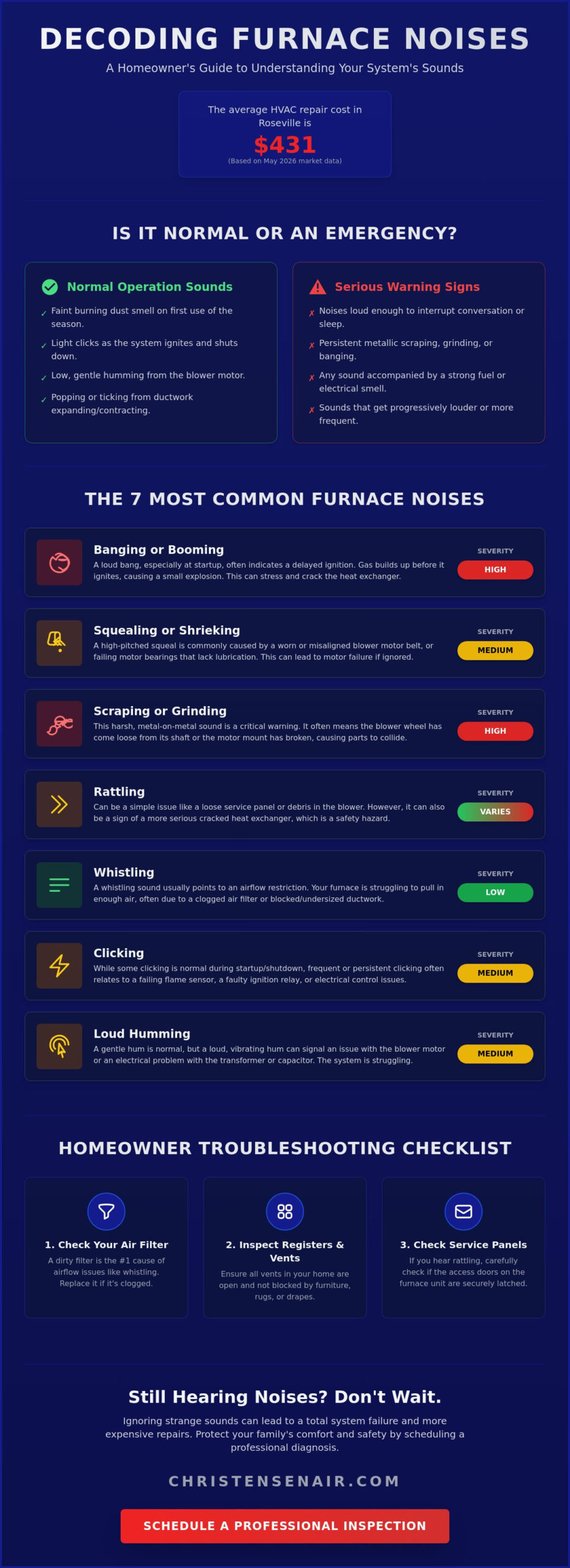
When you are lying awake wondering why is my furnace making a loud noise, identifying the specific sound is the best way to start finding a solution. We’ve found that most noises in Roseville homes fall into seven distinct categories. Each one tells a story about what is happening inside your system cabinet, and our family-owned team at Christensen Heating and Cooling is here to help you translate them.
- Banging or Booming: This often signals a delay in the ignition process.
- Squealing or Shrieking: These high-pitched sounds usually point to blower motor belts or bearings that have dried out.
- Scraping or Metal-on-Metal: A clear sign that the blower wheel has come loose or is physically damaged.
- Rattling: This could be a simple loose service panel or a more serious cracked heat exchanger.
- Whistling: Typically indicates airflow restrictions, often caused by a dirty filter or undersized ducts.
- Clicking: Frequent clicking often relates to a failing flame sensor or a faulty ignition relay.
- Humming: A low hum is normal, but a loud buzz usually means a failing transformer or blower motor capacitor.
Banging and Delayed Ignition Risks
A loud bang or boom when your furnace kicks on is often caused by delayed ignition. This happens when gas builds up inside the combustion chamber before the spark finally catches, creating a small explosion. This isn’t just a noise issue; repeated booming can actually crack your heat exchanger over time. If you notice your system struggling to start, you might also want to look into why your pilot light keeps going out, as these ignition problems are often linked. We recommend addressing this quickly to protect your home’s safety.
Squealing Belts and Grinding Bearings
Older units in the Sacramento area often sit dormant for months, which can lead to dry bearings or brittle blower belts. A high-pitched squeal is usually a sign of friction from a belt that is slipping or fraying. If you hear a grinding sound, the bearings in your blower motor are likely failing. While it’s tempting to try “just oiling it” as a DIY fix, this can often mask a deeper mechanical failure. We take pride in performing thorough inspections to ensure these moving parts are properly lubricated and tensioned to restore your peace of mind.
Whistling and Airflow Restrictions
If your furnace sounds like it is trying to whistle a tune, it’s likely gasping for air. A clogged air filter is the most common culprit, creating a “vacuum” effect that pulls air through tiny gaps in the cabinet. In older Rocklin homes, we often see ductwork issues where air hisses through gaps or disconnected joints. Before calling for a professional repair, we suggest troubleshooting a noisy furnace by checking your air filter first. If the whistling continues after a filter change, our team can perform a full system evaluation to ensure your ductwork is properly sealed and sized for your home’s needs.
Is it Normal or an Emergency? Evaluating Your Heater
Every heating system has its own unique personality, and that includes a certain level of operational sound. We want to help you distinguish between the comforting rhythm of a working furnace and the warning signs of a serious problem. Knowing the difference provides peace of mind and keeps your family safe during our chilly Northern California winters. If you are currently asking why is my furnace making a loud noise, start by comparing what you hear to the common sounds of a healthy system.
Normal sounds typically include light clicks at the start of a cycle as the burners ignite. You should also hear a low, steady hum from the blower motor and occasional quiet pops from your ductwork as the metal expands. These are part of the daily life of a heater. However, emergency sounds are much more aggressive. If you hear persistent booming, loud metal-on-metal grinding, or anything accompanied by a strange odor, you need to pay attention. The “smell test” is your most reliable tool; if a noise comes with a sulfur or rotten egg scent, you must act immediately. This odor is added to natural gas to alert you to leaks, and it requires an instant response to protect your household.
Safety is our top priority at Christensen Air. If you notice ignition sounds that seem off, you might also be wondering is it dangerous if the pilot light goes out. While a pilot light issue is common, it can sometimes be a precursor to the more violent ignition sounds we discussed earlier. We always recommend erring on the side of caution when gas and fire are involved.
The Danger of Cracked Heat Exchangers
A rattling sound might seem like a minor nuisance, but it can sometimes signal a crack in your heat exchanger. This component is the most critical part of your furnace because it keeps combustion gases separate from the air you breathe. A crack here is a serious carbon monoxide risk for your family. Because carbon monoxide is odorless and colorless, we strongly advise every Sacramento homeowner to have working CO detectors on every floor. If a rattle is persistent and metallic, it is time for a professional inspection to ensure your system’s integrity.
The ‘Turn It Off’ Rule
We tell our neighbors a simple rule: if the sound makes you feel unsafe, shut the system down. You should immediately turn off your furnace if you hear screeching that sounds like a car crash, smell gas, or hear loud, repeated booming. Shutting it off prevents more expensive mechanical damage and keeps a small problem from spiraling out of control. We take personal pride in being there for our community, which is why we offer 24/7 emergency support for these exact moments. Restoring your quiet, warm home environment is what we do best, and we treat every client’s home as if it were our own.
Homeowner Troubleshooting: Safety Steps in Placer County
Before you pick up the phone, there are a few safe steps you can take right now to investigate the issue. We want you to feel empowered in your own home while keeping safety as the top priority. If you’ve been wondering why is my furnace making a loud noise, these four checks can sometimes reveal a simple fix that doesn’t require a full repair visit. These steps are designed to be performed without opening the unit cabinet or handling any mechanical parts.
- Check your air filter: A dirty or clogged filter is the primary cause of “struggling” noises. When the blower motor can’t pull enough air, it creates a whistling or heavy humming sound. Replace your filter if it looks gray or dusty.
- Inspect registers and vents: Walk through your home and ensure that furniture, rugs, or heavy curtains aren’t blocking the airflow. Blocked vents cause pressure to build up in the ducts, leading to popping or whistling sounds.
- Listen for the location: Try to pinpoint where the sound is coming from. Is it echoing through the vents in the bedrooms, or is it coming directly from the furnace unit in your garage or attic? Knowing this helps us diagnose the problem faster.
- Check the thermostat: Ensure your batteries are fresh and the settings are correct. Sometimes a thermostat with low power can cause the system to “short-cycle,” which leads to frequent, loud clicking as the burners try to engage.
What NOT to Do: DIY Hazards
While we encourage checking filters, we must emphasize that some parts of your system are strictly off-limits for anyone without professional training. Never attempt to open the combustion chamber or adjust gas lines yourself. We’ve seen homeowners try to use “fix-it-all” lubricant sprays on blower motors, but these can actually be flammable or damage sensitive electronic sensors. Every gas furnace system requires specialized tools and calibrated instruments to be repaired safely. Taking risks with gas and high-voltage electricity isn’t worth the danger to your family.
Preparing for a Technician Visit
If your troubleshooting doesn’t solve the problem, our team is ready to step in. You can help us by being prepared with a few details. Try to describe the sound using specific words like thumping, screeching, or chirping. It’s also helpful to clear a three-foot path around your furnace unit so our technicians can work safely and efficiently. If you have your maintenance history or the date of your last tune-up ready, please let us know. We value the long-term relationship we have with our Roseville neighbors and want to get your home back to its quiet, comfortable state as quickly as possible. If these steps don’t quiet the system, schedule a professional inspection with our team today.
Restoring Quiet and Comfort with Christensen Heating and Cooling
We know how much your home’s sanctuary matters to you and your family. As a family-owned and operated business, we treat every Roseville household with the same care and attention we would give our own. Whether you’re located in the heart of the city or up in the surrounding foothills, our team is committed to providing reliable solutions that put your needs first. We don’t believe in high-pressure sales tactics or confusing technical jargon. Instead, we focus on clear, informative guidance and honest diagnostics to ensure your family stays warm and safe throughout the winter months.
Our Professional Diagnostic Process
When we arrive at your door, we bring technical proficiency and advanced diagnostic tools to identify exactly why is my furnace making a loud noise. We don’t just guess at the problem; we solve it. Our technicians perform a comprehensive evaluation of your system’s mechanical health, checking everything from the blower motor bearings to the integrity of the heat exchanger. We make it a priority to explain the technical “why” behind every repair recommendation we make. This transparency builds trust and ensures you feel confident in the safety of your home. With the average HVAC repair in Roseville currently costing approximately $431 as of May 2026, we work hard to provide efficient, long-lasting fixes that respect your household budget.
Join the Comfort Club for Peace of Mind
The best way to handle a noisy furnace is to prevent the sound from starting in the first place. Our Comfort Club Maintenance Plan is designed specifically for this purpose. For a one-year plan that averages around $99 in the Roseville area, you receive regular inspections that catch loose components or dry bearings before they turn into expensive, loud breaks. These tune-ups are also essential for staying in compliance with the 2026 California Title 24 Energy Code, which mandates that heating systems operate at peak efficiency. Membership also grants you priority service. If an unexpected noise does wake you up in the middle of the night, you won’t have to wait long for a friendly, local expert to arrive and restore your peace of mind.
We take personal pride in every job we complete for our Sacramento area neighbors. Protecting the well-being of your household is our mission, and we’ve built our reputation on honesty and the value of long-term relationships. You deserve a quiet, warm home environment where you can relax without the stress of mechanical failures. If your heater is speaking up, don’t let the anxiety linger any longer. Contact us today for a “Quiet Home” furnace inspection and let our family take care of yours.
Secure Your Home’s Peace and Warmth This Winter
We have explored how to decode those startling bangs and whistles, from the common “first-fire” sounds to serious emergency warnings like delayed ignition. You now know that checking your air filter and clearing your registers are simple steps that can resolve many minor issues. Understanding these signals is the best way to prevent a small rattle from turning into a major system failure during a cold snap. Protecting your home’s sanctuary starts with being an informed and proactive homeowner.
Since 2009, our family-owned and operated team has been dedicated to protecting the well-being of homes from Roseville to Placerville. We don’t want you to spend another night wondering why is my furnace making a loud noise while worrying about potential safety risks. Our expert technicians are ready to provide honest diagnostics and reliable repairs that put your family’s needs first. Our Comfort Club members even receive priority emergency service to ensure their households stay quiet and cozy all season long.
Schedule your professional furnace inspection with Christensen Air today; we’ll restore the quiet comfort of your home. We are here to help you enjoy the warmth and peace of mind you deserve.
Frequently Asked Questions
Is it normal for my furnace to make a clicking sound when it turns on?
Light clicking is a normal part of the ignition sequence as your system starts a new cycle. However, if the clicking is persistent and the furnace fails to ignite, it often points to a dirty flame sensor or a faulty ignition relay. We recommend a professional inspection if the sound continues for more than a few seconds without the heat kicking on.
What should I do if my furnace sounds like a jet engine taking off?
You should shut your system down immediately if you hear a loud roaring or “jet engine” sound. This intense noise usually indicates a significant issue with the blower motor or an imbalance in the gas pressure. Continuing to run the unit in this state can lead to a total system failure or create a safety hazard for your household.
Can a dirty air filter really cause my furnace to be loud?
Yes, a clogged air filter is the most common reason homeowners ask why is my furnace making a loud noise. When air cannot pass through the filter easily, the blower motor works significantly harder, creating a loud humming or whistling sound. Replacing your filter every 30 to 90 days is the easiest way to ensure your system runs quietly and efficiently.
How much does it cost to fix a noisy furnace in Sacramento?
Repair costs vary based on the specific mechanical issue, but licensed technicians in the Roseville area typically charge between $50 and $80 per hour for labor. In early 2026, job materials and supplies for common furnace repairs often range from $198 to $215. We provide clear, honest diagnostics so you understand the exact work needed to restore your home’s comfort.
Why is my furnace making a high-pitched whistling noise?
High-pitched whistling is almost always a sign of restricted airflow within your HVAC system. This happens when the blower motor tries to pull air through a clogged filter or through ductwork that is too small for the unit. We suggest checking that all your registers are open and that no furniture is blocking the return air vents to stop the whistling.
Is a banging noise in the furnace always a sign of an explosion?
A loud bang is usually a sign of delayed ignition, which is a small burst of gas rather than a dangerous explosion. It occurs when gas accumulates in the combustion chamber before the igniter catches, creating a sudden boom. While it may not destroy the unit instantly, these small bursts can eventually crack the heat exchanger, which is a serious safety concern.
What happens if I ignore a rattling sound in my heater?
Ignoring a rattle can turn a minor, inexpensive fix into a major mechanical breakdown. A simple loose screw or panel can eventually cause the blower wheel to become unbalanced, leading to a much more costly repair. We believe in catching these small sounds early during regular maintenance to protect your peace of mind and your wallet.
How can I tell if the noise is coming from my ducts or the furnace itself?
You can identify the source by listening near the furnace unit and then at the vents in different rooms. Popping or “oil-canning” sounds usually come from the metal ducts expanding as they heat up. Grinding, screeching, or heavy thumping sounds that are loudest at the main unit in your garage or attic indicate a mechanical problem within the furnace itself.