





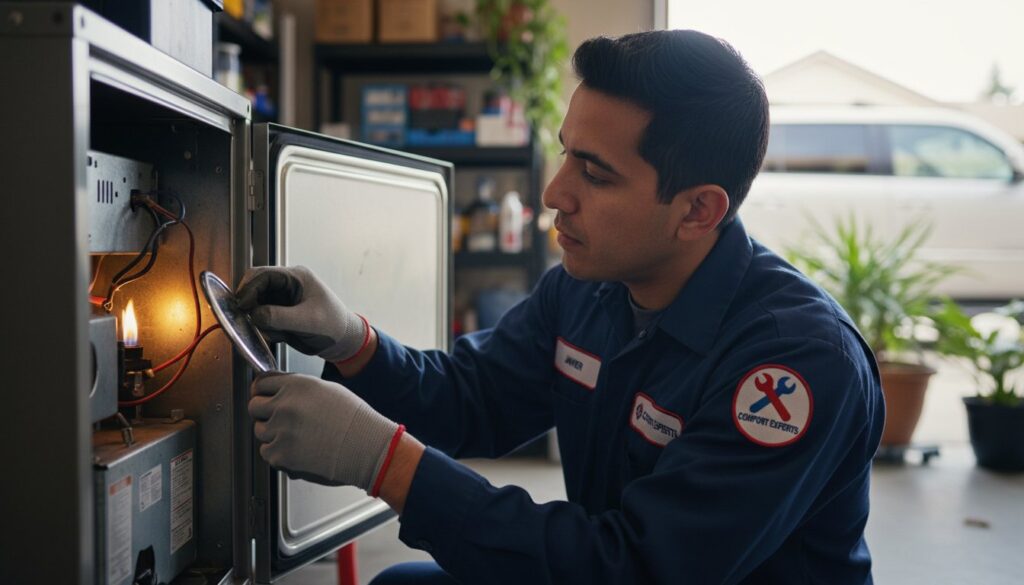
Imagine waking up at 5:30 AM on a December morning in Roseville only to realize the thermostat is set to 72, but your breath is visible in the hallway. It’s a frustrating reality for many of our neighbors when a pilot light keeps going out without warning. You might find yourself huddled in a blanket, staring at your furnace and wondering if that faint smell of gas is normal or a sign of something dangerous. We know that a freezing home causes immediate stress, especially when you’re worried about safety or the cost of a surprise repair.
At Christensen Air, we believe every family deserves to feel safe and warm in their own sanctuary. You’ll discover the most common causes for a failing furnace pilot light and learn how to safely restore reliable heat to your Sacramento area home. We’ll walk you through simple maintenance steps, safety protocols, and the clear indicators that tell you it’s time to call in a professional for a lasting fix. Our goal is to provide the peace of mind that comes with a functioning heating system and a clear plan of action.
Key Takeaways
- Understand the critical role of the thermocouple and why your pilot light keeps going out, ensuring your furnace stays ignited when you need it most.
- Identify the five most common mechanical and environmental factors that disrupt your heating cycle and learn how to distinguish myths from reality.
- Discover the essential tools and safety protocols required to safely clean your pilot assembly and restore reliable heat to your home.
- Learn about the built-in safety features of modern furnaces that protect your Sacramento household from gas leaks during a pilot failure.
- Explore how proactive care through professional maintenance can prevent emergency breakdowns and keep your family cozy all season long.
Understanding Why Your Furnace Pilot Light Keeps Going Out
We know the frustration that hits when a Sacramento winter morning starts with a shivering house instead of a warm kitchen. When the temperature drops toward the 39 degree average we see in January, your furnace becomes the heart of your home. If that heart stops beating because your pilot light keeps going out, it creates an immediate sense of stress for your family. We’ve helped thousands of neighbors in Roseville and the surrounding areas restore their peace of mind by identifying these exact issues. Our team believes that a comfortable home is a safe home, and we take personal pride in keeping your system running reliably.
Think of the pilot light as the tiny, dedicated flame that stands ready to ignite your main burners whenever the thermostat calls for heat. To understand the mechanics, you might ask, What is a pilot light? and how does it stay lit? It relies on a delicate balance of gas flow and heat sensing. If your pilot light goes out once, it might be a fluke caused by a sudden draft. If it happens twice or more, it’s a clear symptom of an underlying mechanical problem. We’ve seen that ignoring these early signs can lead to more costly repairs during the peak of the cold season.
To better understand why this component is so vital to your furnace, watch this helpful video:
How the Pilot Assembly Works
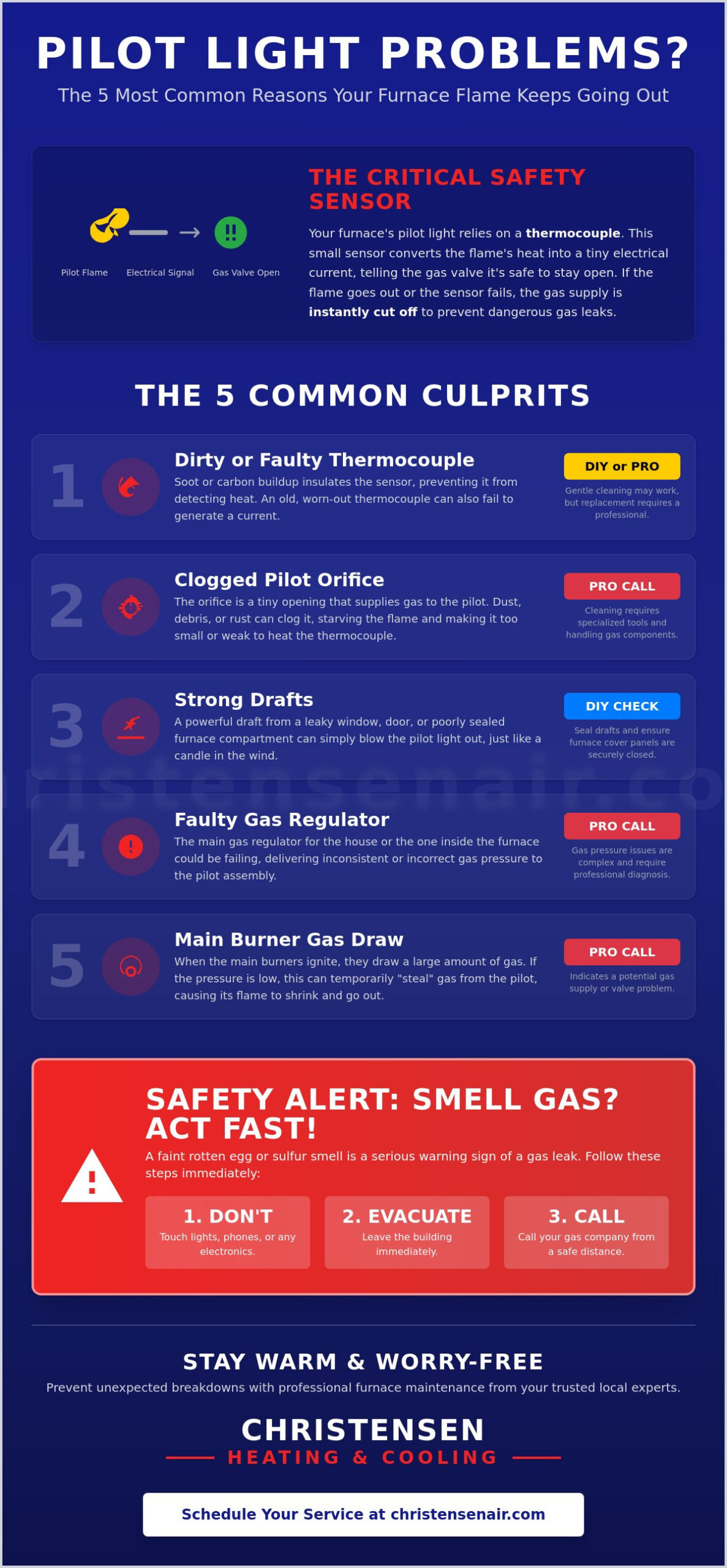
The relationship between the gas valve and the flame is a critical safety loop. Your furnace is designed to prevent unburned gas from leaking into your home, which is why the sensor mechanism is so sensitive. If the flame disappears, the system immediately shuts off the gas supply to prevent a hazardous buildup. The thermocouple is a thermoelectric sensor that converts heat into an electrical signal to hold the gas valve open. We often find that when this signal fails, the entire system shuts down as a protective measure for your property. This small part acts as the primary safety guard for your entire heating system.
Standing Pilot vs. Electronic Ignition
Before we dive into troubleshooting, we need to identify which system you have. Older homes built before the 1990s in established neighborhoods like Citrus Heights or Fair Oaks often feature “standing pilot” models. These units maintain a constant blue flame 24 hours a day throughout the winter. Newer high-efficiency furnaces typically use electronic ignition, which only sparks when heat is needed. This guide focuses on those traditional standing pilot units where a persistent flame is required for operation. If your pilot light keeps going out on one of these older systems, the cause is usually found within the pilot assembly, a dirty orifice, or a failing thermocouple. Identifying your furnace type is the first step toward restoring your family’s comfort.
The 5 Most Common Culprits Behind a Flickering Flame
When your pilot light keeps going out, it’s rarely a sign of a total system collapse. Usually, it’s a specific mechanical or environmental factor disrupting the ignition cycle. In our Gas Furnace Myth-Busting guide, we explain that modern systems are designed with safety as the priority, which means they’ll shut down at the first sign of a hiccup. Intermittent issues are often harder to diagnose than total failures because the system might work perfectly for three days before suddenly quitting again.
In the dusty Sacramento Valley, dirt is the primary enemy of HVAC health. Fine particles from local agriculture and construction settle into the delicate parts of your furnace, leading to clogs and sensor errors. Understanding these five common culprits helps you determine if you need a simple cleaning or a professional repair.
The Dirty or Faulty Thermocouple
The thermocouple is a small copper rod that acts as a safety sensor. It must stay hot to tell the gas valve to remain open. You can learn more about how a thermocouple works to see how it serves as a gatekeeper for your home’s safety. Over time, carbon soot builds up on this rod, insulating it from the heat. If the sensor doesn’t get hot enough, it assumes the flame is gone and cuts the gas. In many California homes, a thermocouple has a lifespan of about 10 years. If yours is older, it may simply be worn out. Look for a “lazy” flame that doesn’t fully wrap around the tip of the sensor; this is a clear sign of a struggle.
Clogged Pilot Orifice
The pilot orifice is the tiny opening where gas exits to create the standing flame. Because this opening is so small, it doesn’t take much to cause a blockage. We often find dust, spider webs, or even small bits of debris inside the tube. A healthy flame should be a steady, sharp blue color. If you notice a weak, flickering yellow or orange flame, the orifice is likely restricted. This weak flame cannot generate enough heat for the thermocouple, leading to the system shutting down repeatedly. Keeping your furnace closet clean helps prevent these clogs from forming in the first place.
Sacramento Winds and Draft Issues
Living in the Placer County area means dealing with seasonal high winds that can wreak havoc on your ventilation. Strong gusts can create a downdraft in the flue, literally blowing out the small pilot flame. It’s also important to check your chimney cap or vent termination for obstructions like bird nests or fallen leaves. On a more serious note, a cracked heat exchanger can create internal drafts. When the main blower turns on, air can leak into the combustion chamber and extinguish the pilot. If you’ve checked for drafts and the problem persists, our team can perform a detailed safety inspection to ensure your heat exchanger is intact and your family is protected.
How to Safely Clean and Troubleshoot Your Pilot Assembly
We want you to feel confident and secure in your home. When your pilot light keeps going out, it often signals a build-up of soot or dust that disrupts the system’s delicate balance. Before you begin any maintenance, we must emphasize that safety is our top priority. You should always follow established Natural gas safety protocols by turning the gas control valve to the “Off” position. Wait at least 15 minutes for any residual gas to dissipate and for the components to cool down before you touch them.
Gathering the right tools will make this job much easier. You’ll need a flashlight to see into the dark corners of the furnace cabinet, a can of compressed air, and a small wire brush or a piece of fine-grit sandpaper. Avoid using any harsh chemical cleaners, soaps, or flammable sprays near the gas assembly. These substances can cause corrosion or create a fire hazard once the system is relit. If you ever feel uneasy about handling these components, our family-owned team at Christensen Air is ready to help with professional furnace repair services that prioritize your family’s comfort.
Step-by-Step Cleaning Process
Once the system is cool, use your flashlight to locate the pilot tubing and the thermocouple. Start by using the compressed air to blow out the pilot orifice. This small opening can easily become clogged with household dust or spider webs. Next, look at the thermocouple, which is the small metal rod that sits in the flame. Use your wire brush or fine-grit sandpaper to gently rub the tip. You’re looking to remove the thin layer of carbon buildup that can “insulate” the sensor and trick it into thinking the flame is out. This simple cleaning often solves the issue when a pilot light keeps going out unexpectedly.
Relighting the Pilot Light
To relight the unit, turn the gas valve from “Off” to “Pilot.” You’ll need to press and hold the knob down to allow a small amount of gas to flow to the pilot burner. While holding the knob, use a long-reach lighter to ignite the flame. We recommend following the “30-second rule.” Continue holding the knob for a full 30 seconds after the flame appears. This duration allows the thermocouple to reach a temperature high enough to send a steady electrical signal to the gas valve. If the flame lights but dies the moment you release the knob, it’s a clear sign the thermocouple is either still dirty or has worn out and needs a professional replacement.
Is a Failing Pilot Light Dangerous? Safety Risks to Consider
We understand the immediate sense of worry when you realize your furnace isn’t working properly. The most common question we hear from Sacramento families is whether a failing pilot light could lead to a house explosion. While that fear is valid, modern furnace designs include robust safety features to protect your household. The primary hero here is the thermocouple, a small sensor that detects heat from the flame. If your pilot light keeps going out, this sensor cools down and signals the gas valve to snap shut. This mechanical fail-safe prevents unburned gas from leaking into your living space. For a deeper look at what these situations mean for your household, our detailed guide on whether it is dangerous if the pilot light goes out walks you through exactly how your furnace’s built-in protections work and the specific warning signs that require immediate attention.
However, a simple blown-out flame is different from a mechanical failure. In systems older than 15 years, these safety switches can wear out or become bypassed by improper past repairs. We treat every service call as a safety check because your peace of mind is our priority. According to the National Fire Protection Association, heating equipment caused 13% of all reported home fires between 2016 and 2020. If you notice your pilot light keeps going out repeatedly, it’s often a sign that the system is struggling to maintain a safe combustion environment. A draft from a poorly sealed window might blow the light out once, but a recurring issue usually points to a failing component that needs a professional eye. During a thorough inspection, our technicians also listen carefully for any unusual sounds from your system, since a furnace making a loud noise can signal related mechanical problems that compound pilot light failures.
The Risk of Carbon Monoxide (CO)
A healthy pilot light should always burn a crisp, steady blue. If you see a yellow, flickering flame, it indicates incomplete combustion. This process can produce carbon monoxide, a colorless and odorless gas. California Senate Bill 183 requires all single-family homes to have functional CO detectors installed. We recommend testing your units every 30 days to ensure they’re ready to protect your family. Any persistent yellow flame should be treated as a potential CO hazard that requires immediate professional inspection.
When the Smell of Gas is Present
Natural gas is naturally odorless, so utilities add a chemical called mercaptan to give it a distinct rotten egg scent. If you smell this in your home, don’t try to investigate the furnace yourself. Leave the house immediately. Don’t flip light switches, use your phone inside, or start your car in the garage. These actions can create a spark. Once you’re at a safe distance, call PG&E at 800-743-5000 or contact our team for emergency support. We’ve served the Sacramento community for years, and we know that acting fast is the best way to keep your home the sanctuary it should be.
Preventing Future Failures with Professional Maintenance
Dealing with a furnace where the pilot light keeps going out is a major stressor during a cold Sacramento night. Most homeowners wait for a total breakdown before calling for help, but we want to change that mindset. Shifting from reactive repairs to proactive maintenance saves you money and keeps your family safe. Our team focuses on finding the small issues before they turn into midnight emergencies.
The Benefits of the Comfort Club
Joining the Comfort Club is how we look out for our local neighbors. Seasonal tune-ups aren’t just a quick glance at your unit. We perform a deep cleaning of the entire burner and pilot assembly to prevent the carbon buildup that often leads to failure. This ensures your system stays reliable when the temperature drops in December and January. Members also receive priority service during the peak winter months. As a family-owned and operated business, we treat your home like our own. We don’t believe in high-pressure sales; we believe in steady, dependable service that protects your sanctuary.
During these inspections, our technicians look for more than just dirt. We carefully examine the heat exchanger for any signs of wear. Catching a cracked heat exchanger early is vital because these fractures can allow dangerous carbon monoxide to enter your living space. We take personal pride in every job, ensuring your equipment operates safely and efficiently all season long.
When It Is Time for a System Upgrade
If your furnace is over 15 years old, it likely uses a standing pilot light. These older systems are less efficient because the flame stays lit every hour of every day. Modern electronic ignition systems provide a major upgrade in reliability. They only spark the burner when your thermostat calls for heat, which reduces gas waste. If you’re wondering about the investment, you can review our guide on New HVAC System Cost in Granite Bay for transparent pricing information.
You might also explore energy-efficient options like inverter heat pumps. These systems offer precise temperature control and can qualify for various local rebates. We provide no-pressure consultations for homeowners in Folsom or El Dorado Hills. We’ll help you weigh the cost of repairs against the long-term savings of a new system. Our goal is your peace of mind, not just a transaction.
Restore Your Home’s Warmth and Peace of Mind
A furnace that won’t stay lit is more than a minor inconvenience; it’s a disruption to your family’s comfort. We’ve explored how common issues like a clogged pilot tube or a worn-out thermocouple are usually the reason a pilot light keeps going out. While basic cleaning can help, persistent issues often point to deeper mechanical needs that require a professional eye to ensure your system operates safely. Your safety is always our priority. Since 2009, our family-owned and operated team has focused on providing honest, reliable HVAC solutions to our neighbors across the Greater Sacramento area. We believe every homeowner deserves a dependable heating system that provides total peace of mind during the coldest months. If you’re tired of troubleshooting on your own, our expert technicians are ready to help. Our Comfort Club members even receive priority emergency service to keep their homes cozy year-round.
Get your furnace back in shape with Christensen Heating and Cooling; schedule your repair today!
We look forward to serving your family and making your home comfortable again.
Frequently Asked Questions
Is it dangerous if the pilot light goes out on my furnace?
It isn’t usually dangerous because modern furnaces built after 1990 include a safety valve that automatically shuts off the gas flow when the flame disappears. We recommend checking for a faint smell of gas near the unit. If you detect an odor like rotten eggs, leave your home immediately and call PG&E at 1-800-743-5000. Our team prioritizes your family’s safety by verifying these sensors during every maintenance visit. You can also review our complete Sacramento homeowner’s safety guide on whether it is dangerous if the pilot light goes out for a thorough breakdown of the risks and protective steps involved.
Can I relight the pilot light myself, or do I need a pro?
You can often relight the pilot yourself if your furnace has a manual ignition button and you follow the instructions printed on the unit’s access panel. We suggest using a long-reach fireplace lighter to keep your hands safe from the burner assembly. If the pilot light keeps going out after you light it, it’s time to call our technicians for a professional inspection. We’ll ensure the components are clean and functioning correctly.
How much does it cost to replace a thermocouple in Sacramento?
According to 2024 data from HomeAdvisor, the national average cost to replace a furnace thermocouple ranges from $150 to $250. This price includes both the replacement part and the professional labor required for a safe installation. While local Sacramento rates vary based on the furnace model, we focus on providing honest, transparent pricing for every neighbor. We believe in building long-term trust through fair service rather than high-pressure sales.
Why does my pilot light go out only when it is windy outside?
Strong wind gusts exceeding 30 miles per hour can create a downdraft in your furnace flue, which physically blows the flame out. This often happens if the vent cap on your roof is damaged or missing its protective shielding. We can inspect your chimney or flue terminal to ensure it meets current Sacramento building codes. Fixing a drafty vent protects your home’s comfort and prevents the pilot light from failing during winter storms.
What color should my furnace pilot light be?
A healthy furnace pilot light should be a steady, crisp blue color with a small yellow tip at the very top. This indicates that the gas is burning efficiently with the correct amount of oxygen. If you see a flickering yellow or orange flame, it usually means the burner is dirty or lacks enough air. Our family-run team can clean the pilot orifice to restore that efficient blue flame and your peace of mind.
How often should I have my furnace pilot assembly cleaned?
We recommend having your furnace pilot assembly cleaned once every 12 months during a professional tune-up. Dust and soot naturally build up on the thermocouple and pilot tube over a year of operation. Regular cleaning prevents carbon deposits from blocking the gas flow, which is a common reason why a pilot light keeps going out. This simple annual step extends the life of your system and ensures reliable warmth for your household.
What happens if the pilot light wont stay lit after several attempts?
If the flame won’t stay lit after three attempts, the thermocouple is likely worn out or covered in heavy soot. This copper rod acts as a safety sensor, and if it’s broken, it won’t signal the gas valve to stay open. Stop trying to relight it to avoid wear on the ignition components. We’ll arrive quickly to diagnose the issue and replace any faulty parts so your family stays warm and cozy.
Does a pilot light going out mean I need a new furnace?
A pilot light issue rarely means you need a full furnace replacement, as it’s typically caused by a small part or a simple cleaning. However, if your unit is over 18 years old and requires frequent repairs, we might discuss more efficient options with you. We treat every home like our own, so we’ll always recommend the most cost-effective path to keeping your sanctuary comfortable. Most pilot problems are fixed in a single visit.