





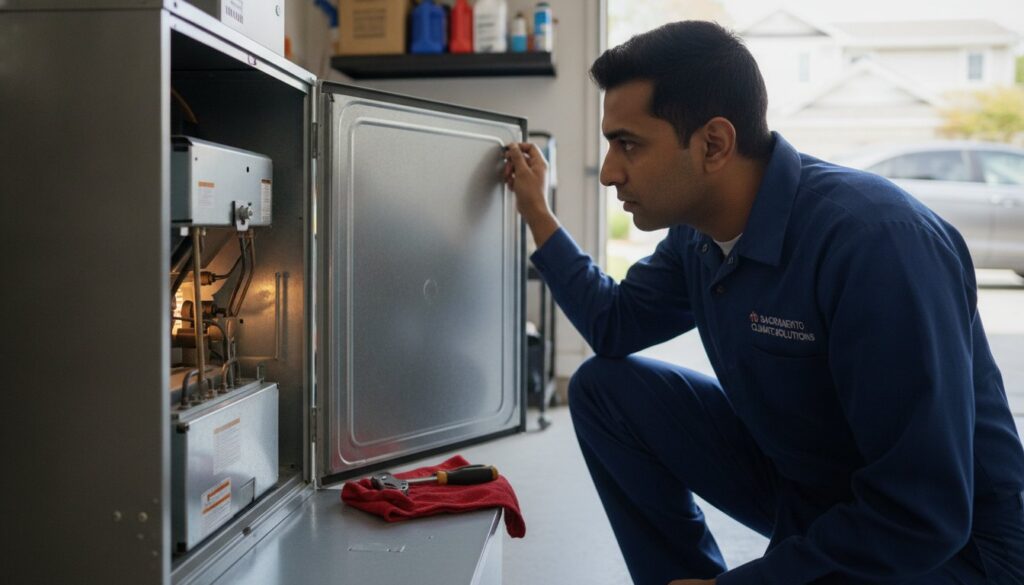
A pilot light that won’t stay lit is usually a safety feature working correctly rather than a simple malfunction; it’s your furnace doing its job to prevent a gas leak. While it’s frustrating when your furnace pilot light won’t stay lit in Carmichael, understanding this safety mechanism can help ease the worry that comes with a cold house. We know how unsettling it is to deal with a failing heater when the Delta breeze kicks in, especially when you’re concerned about potential gas leaks or the cost of an unexpected repair.
We believe every neighbor deserves to feel secure and warm in their own sanctuary. It’s why we’ve put together this guide to help you understand exactly what’s happening behind the service panel. You’ll discover the primary reasons your pilot keeps going out and learn the safe steps to restore your home’s comfort. We’ll walk through five common causes, ranging from a dirty thermocouple to draft issues, so you can decide with confidence whether a DIY fix is safe or if it’s time for a professional assessment of your system.
Key Takeaways
- Learn the critical “smell test” and safety precautions to take before you attempt to relight your unit.
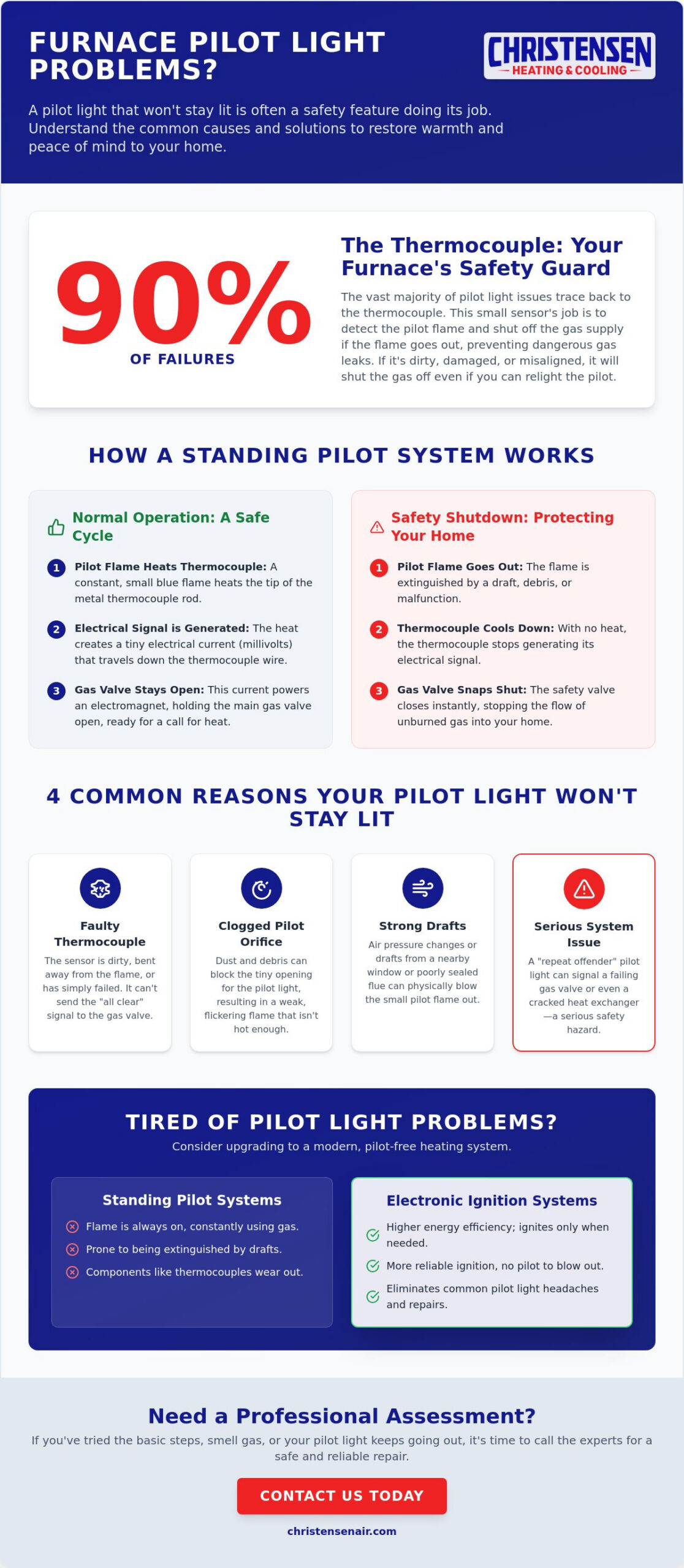
- Understand why your furnace pilot light won’t stay lit Carmichael, starting with the thermocouple, which accounts for nearly 90% of these common failures.
- Follow a clear, step-by-step guide to safely relight your pilot flame and clear away dust or debris that might be blocking the gas flow.
- Identify the warning signs of “repeat offender” pilot lights that signal more serious issues, such as a cracked heat exchanger.
- Explore how upgrading to modern electronic ignition systems can eliminate pilot light headaches while improving your home’s energy efficiency.
Understanding the Standing Pilot Light in Carmichael Homes
A pilot light is a small, constant flame that serves as the ignition source for your heating system. In Carmichael, many homes in established neighborhoods near the American River or Marconi Avenue were built during the 1960s and 70s. These houses often still rely on their original furnaces, which utilize “standing pilot” technology. It is a simple, mechanical system designed to ensure your heater is always ready to provide warmth the moment your thermostat calls for it.
The science behind this is straightforward but vital for your safety. The flame constantly heats a metal sensor called a thermocouple. As this probe stays hot, it generates a tiny electrical charge known as a millivolt signal. This current is just strong enough to hold the gas safety valve open. If that flame flickers out, the cooling thermocouple cuts the signal, and the valve snaps shut to prevent gas from entering your home. This safety loop is often why a furnace pilot light won’t stay lit Carmichael families find themselves dealing with on a cold night.
To better understand this concept, watch this helpful video:
How to Identify Your Ignition Type
Identifying your system doesn’t require a professional toolkit. Open your furnace’s front access panel and look at the gas assembly. A standing pilot system features a distinct control knob with three marked positions: On, Off, and Pilot. You will also see a small, constant blue flame tucked near the main burners. In contrast, modern “hot surface” igniters don’t have a constant flame. Instead, they use a silicon carbide element that glows bright orange like a toaster filament only when heat is needed. Knowing which one you have is the first step in troubleshooting, as a glowing igniter requires an entirely different repair approach than a traditional flame.
The Role of the Pilot Light in Your Home’s Comfort
Carmichael’s unique weather plays a surprisingly large role in your furnace’s operation. The Delta Breeze is famous for cooling our summer nights, but those same shifting air pressures can create backdrafts in older chimney flues during the winter. If the burner orifice is clogged or the flame is weak, the furnace pilot light won’t stay lit Carmichael drafts can easily extinguish it. While these standing pilots are reliable workhorses, they are also inefficient relics. Because the flame never stops, it’s constantly burning a small amount of fuel. This “always-on” nature is why many neighbors eventually choose to upgrade to electronic systems that only consume gas when the home needs active heating.
4 Reasons Your Furnace Pilot Light Won’t Stay Lit
When your furnace pilot light won’t stay lit Carmichael winters feel much longer and more uncomfortable. Usually, this issue isn’t a random breakdown; it’s a safety mechanism doing exactly what it was designed to do. We’ve found that nearly 90% of these calls involve one of four primary culprits that prevent your heating system from operating safely.
The Thermocouple: Your Furnace’s Safety Guard
The thermocouple is a small copper rod that sits directly in the pilot flame. It operates based on the Seebeck Effect, where the heat from the flame is converted into a tiny electrical current. This millivolt signal tells the gas valve that it’s safe to stay open. If the thermocouple is covered in soot, oxidized, or bent away from the heat, that signal vanishes. You can learn more about the delicate balance of how a pilot light works to see why even a small amount of buildup causes a shutdown. Because this is a safety device, it’s built to “fail safe,” cutting off all gas flow the moment it can’t confirm a flame is present.
Many Carmichael residences have furnaces tucked away in attics or crawlspaces where dust is a constant neighbor. Over time, microscopic debris can clog the tiny pilot orifice. This results in a weak, flickering flame that simply isn’t hot enough to satisfy the thermocouple’s requirements. A quick cleaning often solves this, but it requires a steady hand to avoid damaging the sensitive components.
Environmental Factors and Drafts
Sometimes the problem isn’t inside the furnace, but in the environment surrounding it. Utility closets in older Carmichael homes often lack proper sealing against outside air. If a nearby dryer vent is poorly installed or a garage door is left ajar, the resulting air pressure changes can snuff out the pilot. Watch the flame’s behavior carefully. A healthy flame is steady and blue. If you see a “lazy” yellow flame that dances around, your burner is likely struggling with poor oxygen levels or excessive air movement from a draft.
If the thermocouple is clean and the room is still, the gas valve itself may be the issue. The internal mechanical components, such as the solenoid, can wear down after decades of service. If you suspect the valve is failing to hold the safety signal, it’s best to have an expert provide a formal assessment. We offer professional furnace repair to ensure your heating system remains both safe and dependable for your family throughout the season.
Troubleshooting Steps: How to Safely Relight Your Pilot
When you realize your furnace pilot light won’t stay lit Carmichael homes can get chilly fast. Before you reach for a lighter, we want to ensure you follow the proper safety protocols. Your furnace handles combustible gas, so a cautious approach protects your family and your property. If at any point you feel unsure about these steps, it is always better to pause and call for professional assistance.
The very first thing you must do is perform a “smell test.” Natural gas is odorless, but utilities add a chemical called mercaptan that smells like rotten eggs. If you detect this scent, do not attempt to light the pilot. Don’t even turn on a light switch. Leave the house immediately and call your gas provider or a technician from a safe distance. If there is no odor, you can proceed by turning your thermostat down to its lowest setting and rotating the gas valve knob to the “Off” position.
We cannot stress the “5-minute rule” enough. After turning the valve to off, you must wait at least five full minutes before attempting to relight the flame. This allows any residual gas that may have collected in the combustion chamber to dissipate safely. Skipping this step is dangerous and can lead to a sudden flare-up when you introduce a flame. Use this time to gather a long-reach multipurpose lighter so you can keep your hands at a safe distance from the burner assembly.
Step-by-Step Relighting Guide
- Set to Pilot: Once the five minutes have passed, rotate the gas valve knob from “Off” to the “Pilot” position.
- Engage the Gas: Press and hold down the “Reset” button or the knob itself. This manually bypasses the safety valve to send a small stream of gas to the pilot burner.
- Ignite: While holding the button down, bring your lighter to the pilot burner. Once the flame catches, continue holding the button.
- The 30-Second Hold: Keep the button pressed for 30 to 60 seconds. This gives the thermocouple enough time to heat up and generate the electrical signal needed to hold the safety valve open.
- Final Activation: Slowly release the button. If the flame stays lit, rotate the knob to the “On” position. You should hear the main burners ignite shortly after you turn the thermostat back up.
What a ‘Healthy’ Pilot Flame Looks Like
Once lit, take a moment to inspect the quality of the flame. A healthy flame is steady, blue, and strong enough to resist minor air movement. The tip of the flame should be wrapped around the top of the thermocouple rod. If the flame appears yellow or orange, it’s a sign of incomplete combustion or a lack of oxygen. A flickering or “lazy” flame is a warning sign that the burner is dirty or that your furnace pilot light won’t stay lit Carmichael drafts are still an issue. These discolored flames can produce carbon monoxide, so if the blue color doesn’t return, turn the system back off and seek an expert’s eyes.
When Troubleshooting Fails: Identifying Serious Furnace Issues
If you’ve followed the safety steps to relight your system and the furnace pilot light won’t stay lit Carmichael winters can quickly become a safety concern rather than just a minor inconvenience. While a dirty thermocouple is a common fix, a pilot that repeatedly fails is often a symptom of a much more significant mechanical breakdown. We recommend that if you have to relight your furnace more than once in a week, you should stop attempting DIY fixes. Constant relighting can mask dangerous conditions that eventually lead to system failure or serious health risks for your family.
One of the most complex issues involves fluctuating gas pressure. Your furnace requires a precise, steady stream of fuel to maintain a healthy flame. If the supply from the utility line or the internal regulator is unstable, the pilot will flicker and die. Diagnosing this requires specialized tools like a digital manometer to measure gas pressure in inches of water column. Most homeowners don’t have access to this equipment, making it a clear sign that expert help is needed to ensure the gas valve is receiving the correct pressure.
Electrical safety components also play a silent but vital role. Modern furnaces are equipped with safety switches, such as the flame rollout switch or the high-limit switch. These are designed to “trip” and shut off the gas if they detect unsafe temperatures or blocked exhaust flues. If these switches are failing, or if they are reacting to a genuine safety threat, your pilot won’t stay lit because the system is actively protecting you from a fire or carbon monoxide build-up. Bypassing these is never an option, as they are the primary line of defense for your household.
The Hidden Danger of Cracked Heat Exchangers
A cracked heat exchanger is perhaps the most serious reason a pilot flame won’t hold. When the furnace blower turns on to circulate air through your home, it can push air through even the smallest crack in the metal combustion chamber. This creates an internal draft that snuffs out the pilot flame immediately. Beyond the loss of heat, this is a critical safety hazard because a crack allows carbon monoxide to leak directly into your living spaces. For more information on how to keep your family safe from these invisible threats, check out our gas furnace myth-busting guide.
The Limits of DIY: When to Call Christensen Heating and Cooling
Safety should always be your first priority when dealing with gas appliances. You should never attempt to bypass a safety switch or modify gas lines on your own. Our team uses advanced combustion analyzers and manometers to find the root cause of why your pilot keeps failing. Our deep understanding of Carmichael HVAC repair allows us to provide honest assessments and same-day solutions that prioritize your home’s sanctuary. If your heater is acting like a “repeat offender,” we are here to help. You can schedule a professional furnace repair today to ensure your system is safe and dependable for the rest of the season.
Upgrading to a Modern, Pilot-Free Heating System
If you have reached the point where your furnace pilot light won’t stay lit Carmichael winters can quickly become a source of anxiety rather than comfort. While repairs often extend the life of an older unit, there’s a distinct moment when a mechanical relic becomes more of a liability than an asset. Moving away from standing pilot technology isn’t just about convenience. It’s about embracing a level of safety and efficiency that simply wasn’t possible when many of our local homes were first built decades ago.
Electronic Ignition vs. Standing Pilot
Modern heating systems have largely abandoned the “always-on” flame in favor of advanced electronic ignition. Intermittent Pilot (IP) systems only spark the pilot when your thermostat actually calls for heat. Hot Surface Ignition (HSI) systems go a step further by using a high-resistance probe that glows to ignite the main burners directly. These systems eliminate the constant waste of fuel that occurs with a traditional standing flame. Because they don’t rely on a tiny, flickering flame to stay active 24/7, they’re far less likely to be snuffed out by the shifting air pressures common during Northern California storms. This shift ensures your home stays warm without the need for manual intervention or the fear of a safety valve failing to close.
Is it Time for a Replacement?
We generally suggest the 15-year rule for assessing your system’s future. If your furnace was installed more than 15 years ago, it likely lacks the advanced safety sensors and high-efficiency blowers found in today’s models. State regulations are also changing the way we heat our homes. As of January 1, 2026, California Title 24 standards require higher energy efficiency for residential HVAC systems. The state has also established a 2030 deadline to phase out the sale of new gas furnaces to meet carbon neutrality goals. We specialize in helping neighbors transition to high-efficiency Furnace Installation or modern Heat Pump Services that meet the new 15.2 SEER2 requirements.
Choosing to upgrade offers a significant return on investment through lower monthly utility bills and the peace of mind that comes with a reliable warranty. If you aren’t quite ready for a full change, we can help you understand how to make your HVAC system last longer through our Comfort Club maintenance plan. However, if your current unit is a “repeat offender” that frequently leaves you in the cold, we’ll provide an honest assessment of whether a modern, pilot-free system is the right choice for your family’s long-term sanctuary.
Restore Your Home’s Warmth and Safety
We understand the stress that comes with a freezing house when your furnace pilot light won’t stay lit Carmichael. Whether it’s a simple case of attic dust clogging the orifice or a worn-out thermocouple failing to hold the safety valve open, your comfort is our priority. We’ve explored how to safely relight your system and when to recognize the warning signs of serious issues like cracked heat exchangers that require an expert’s eye.
As a family-owned and operated team since 2009, we’ve dedicated ourselves to providing reliable heating solutions for our neighbors in Carmichael and the Greater Sacramento area. We specialize in high-efficiency furnace and heat pump solutions designed to keep your sanctuary safe and your utility bills manageable. If your heater is acting up, don’t stay in the cold. Schedule your Carmichael furnace repair with Christensen Heating and Cooling today! We are here to ensure your home remains the warm, dependable haven your family deserves.
Frequently Asked Questions
Is it dangerous if my furnace pilot light goes out?
It is generally not dangerous because your furnace is equipped with a safety shut-off valve. When the flame goes out, the thermocouple cools down and signals the gas valve to close. This prevents unburned gas from flooding your home. However, it’s always wise to perform a smell test before attempting to relight it. If you ever smell rotten eggs, you should evacuate and call for help immediately.
Can I clean my own furnace thermocouple to keep the pilot lit?
You can often restore a flickering flame by gently cleaning the thermocouple with a piece of fine-grit sandpaper or a soft cloth. Over time, soot and oxidation build up on the metal rod, which insulates it from the heat. This is a frequent reason why a furnace pilot light won’t stay lit Carmichael homeowners face. Just be sure to handle the component gently so you don’t snap the copper lead.
Why does my pilot light go out when the wind blows in Carmichael?
Carmichael is known for the Delta Breeze, and these shifting winds can create pressure imbalances in your home’s venting system. If a strong gust travels down your chimney flue, it can physically blow out the small pilot flame. This often happens if the flue cap is missing or damaged. Ensuring your utility closet is well-sealed against drafts can also help maintain a steady, protected flame during stormy weather.
How much does it cost to have a professional fix a pilot light issue?
The cost for a professional repair depends on the specific cause, such as a simple cleaning versus a full gas valve replacement. While we don’t list specific service fees here, a professional diagnostic provides an honest assessment of your system’s health. Investing in a qualified technician ensures that your gas lines are secure and that your furnace operates at peak safety for your entire household.
What should I do if I smell gas near my furnace?
If you detect the scent of rotten eggs near your furnace, you must evacuate your household immediately. Natural gas is naturally odorless, but the added mercaptan serves as a vital warning sign of a leak. Do not operate any electrical switches or use your cell phone until you are a safe distance from the property. Once safe, contact your local gas company or an emergency HVAC professional to inspect the lines.
Can a dirty air filter cause my pilot light to go out?
A dirty air filter won’t usually blow out a pilot light, but it can cause your furnace to cycle off prematurely. When airflow is restricted, the heat exchanger can reach dangerous temperatures, causing the high-limit safety switch to trip. This switch cuts power to the gas valve as a fire prevention measure. Regularly changing your filter every 30 to 90 days helps maintain the delicate balance of your heating system.
How long should a pilot light last before it needs to be relit?
A standing pilot light is designed to burn continuously as long as your gas supply is active. In a perfectly functioning system, you should never need to relight it during the winter months. If the flame disappears frequently, it indicates a mechanical failure or a significant environmental draft. We recommend a professional inspection if you have to relight the unit more than once a season to ensure your home’s security.
Does a pilot light that won’t stay lit mean I need a new furnace?
A failing pilot light doesn’t always signal the end of your furnace’s life. Many problems are solved by replacing inexpensive components like the thermocouple or cleaning the burner orifice. However, if your system is more than 15 years old and experiences recurring ignition failures, it may be time to look at modern upgrades. Newer units use electronic ignition, which removes the need for a constant flame and improves your home’s energy efficiency.