





Did you know that up to 30% of the air you pay to heat or cool might never actually reach your living room? In many of our local homes, the “lungs” of the house are quietly failing, forcing your HVAC system to work overtime just to keep up. If you’ve noticed your utility bills climbing or certain rooms staying stubbornly warm, it’s time to look for the specific signs you need new ductwork Granite Bay homeowners often miss. We know how frustrating it is to deal with dusty furniture and uneven temperatures when you’re just trying to maintain a healthy, cozy sanctuary for your family.
We agree that your home should be a place of total comfort, not a source of constant maintenance stress. Our team believes you deserve a system that runs efficiently and keeps your air clean. Discover how to identify failing air ducts and why replacing them is the key to lower energy bills and better air quality in Granite Bay. We will walk you through ten critical indicators, from visible wear to the industry’s “15-year rule,” so you can make the best decision for your household’s well-being and long-term comfort.
Key Takeaways
- Learn how extreme attic temperatures in our region can degrade your home’s “hidden lungs” and force your HVAC system to work harder than it should.
- Recognize the performance red flags and the common signs you need new ductwork Granite Bay residents often encounter when their systems begin to fail.
- Understand the connection between leaky return ducts and poor indoor air quality, which often pulls attic dust and insulation into your family’s sanctuary.
- Discover why the 15-year rule is a vital benchmark for flexible ducts and how aging materials can compromise your home’s comfort and safety.
- Explore how precise custom duct design and professional airflow calculations can restore balance and efficiency to every corner of your household.
The Hidden Lungs of Your Home: Why Ductwork Integrity Matters in Granite Bay
We often think of our HVAC system as just the metal box sitting outside or the furnace tucked away in the garage. However, that equipment is only half of the comfort equation. To understand why your home might feel stuffy or expensive to cool, we have to look at the distribution system. In our industry, we often say ducts are the conduits that act as the “lungs” of your home. They carry the conditioned air to every room and return the stale air to be filtered and re-treated. If these lungs are compromised, the rest of the system simply cannot breathe.
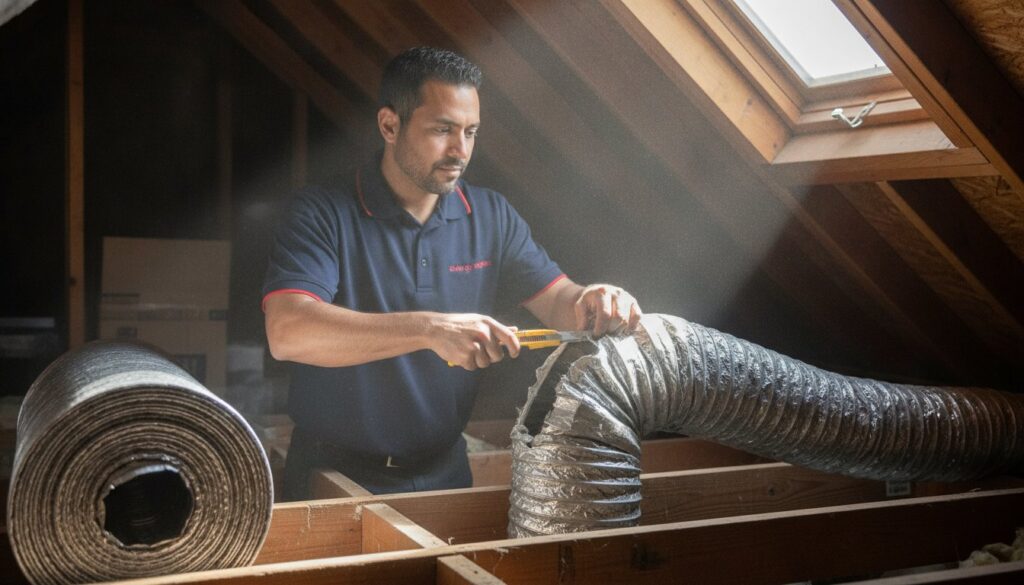
Living in Granite Bay presents unique challenges for these air pathways. During our scorching summers, attic temperatures can easily exceed 140°F. This intense heat creates a brutal environment for your ductwork. While many older homes use rigid metal ducting, most modern local builds rely on flexible “flex” ducting. Flex ducting consists of a wire coil covered by a plastic vapor barrier and fiberglass insulation. Over time, that extreme attic heat causes the plastic to become brittle and the insulation to lose its R-value. Even if you invest in a brand-new air conditioner, it won’t perform correctly if it’s pushing air through collapsed, crushed, or leaky channels.
To better understand why your air distribution system might be struggling, watch this helpful overview of common failure points:
The Role of Ductwork in System Longevity
When your ducts are restricted or undersized, your entire HVAC system pays the price. Restricted airflow forces the blower motor to work much harder to move air through the house. This extra strain leads to higher energy consumption and faster mechanical wear. This is especially critical for modern high-efficiency systems like inverter heat pumps. These advanced units rely on precise airflow to maintain their efficiency ratings. If the static pressure is off because of poor duct health, you risk premature component failure and lose the very comfort you paid for. We prioritize proper duct design to ensure your equipment lives its longest possible life.
Ductwork vs. Duct Cleaning: Understanding the Difference
We often get asked if a simple cleaning can solve airflow problems. At Christensen Heating and Cooling, we focus on structural integrity through replacement because cleaning has its limits. A vacuum cannot repair a tear in the vapor barrier or reconnect a joint that has pulled apart in the attic heat. If your insulation has degraded or the inner liner has collapsed, cleaning is just a temporary bandage on a structural wound. Recognizing the signs you need new ductwork Granite Bay families should watch for ensures you aren’t spending money on maintenance when a replacement is the only way to restore your home’s sanctuary.
Performance Red Flags: How Your Home Tells You the Ducts are Failing
Your home often communicates its needs through subtle shifts in comfort and performance. When we visit families in Granite Bay, we frequently hear about “Hot Room Syndrome.” This is especially common in our local two-story homes where the upstairs bedrooms feel significantly warmer than the downstairs living areas. While it’s tempting to blame the air conditioner, the culprit is usually found in the attic. When air distribution channels pull apart or collapse, the conditioned air you pay for never reaches its destination. This is one of the most reliable signs you need new ductwork Granite Bay residents can identify without even climbing a ladder.
You can perform a simple “Airflow Test” yourself to check the health of your system. Walk through your home and place a hand near each supply register while the system is running. If you notice a sharp difference in pressure between rooms, or if the air feels like a faint whisper rather than a steady breeze, your ducts are likely failing. A system that runs constantly without ever reaching the temperature set on your thermostat is another major red flag. In our experience, this often means your AC is cooling the attic space instead of your sanctuary because of disconnected joints or massive tears in the flex ducting.
Uneven Temperatures and Hot Spots
The rooms furthest from your indoor unit usually suffer the most. As air travels through the system, any small breach allows pressure to drop. The physics of air loss are unforgiving. Even a small 1/2-inch gap in a connection can dump up to 20% of your total cooling capacity directly into your crawlspace or attic. We find that a comprehensive duct system replacement is often the only way to balance whole-home comfort. By restoring the sealed integrity of these pathways, we ensure that every room receives the exact amount of airflow it was designed to handle.
The Financial Toll of Leaky Ducts
Leaky ducts are more than just a comfort issue; they are a significant financial burden. With the rising cost of energy in Northern California, every cubic foot of wasted air impacts your PG&E or SMUD utility statements. When air escapes, your system must work longer cycles to compensate, leading to a phenomenon called “short-cycling” where the unit turns on and off too frequently. This inefficient operation wears out expensive components and keeps your meter spinning unnecessarily, contributing to higher energy bills year after year. Duct leakage is a direct tax on home comfort. If you suspect your system is working harder than it should, we recommend you schedule a professional inspection to protect your household budget and your peace of mind.
Health and Hygiene: Signs Your Ducts are Impacting Indoor Air Quality
Your home’s ductwork doesn’t just transport air; it acts as a filter for your entire living space. When the structural integrity of these “hidden lungs” fails, your family’s health often feels the impact first. We frequently see homes where the return ducts, which are under negative pressure, have developed tears or disconnected joints in the attic. Instead of pulling air from your living rooms to be filtered, these leaks act like a high powered vacuum, sucking in fiberglass insulation particles, attic dust, and outdoor pollutants. This cycle keeps debris wreaking havoc on indoor air quality despite your best efforts to keep the house clean.
Recognizing these health related signs you need new ductwork Granite Bay families should watch for is essential for maintaining a safe sanctuary. If you notice that allergy symptoms like sneezing or itchy eyes seem to worsen the moment the AC kicks on, your ducts are likely circulating more than just cold air. This is a critical step in improving indoor air quality. While many people assume a simple cleaning will fix the issue, cleaning cannot seal a structural tear or replace degraded insulation that has become a breeding ground for allergens.
The “Never-Ending Dust” Phenomenon
Do you find yourself dusting your coffee table every single morning only to find a fresh layer by the afternoon? This is a classic sign of leaky supply or return ducts. In the Sacramento Valley, we deal with significant amounts of oak pollen and seasonal wildfire smoke. If your ducts aren’t sealed, these fine particles settle in your attic and get pulled directly into your airflow. You might even see a visual cue known as “ghosting.” These are dark, soot like marks that appear on the ceiling or walls around your vents. They aren’t smoke stains; they are concentrated deposits of attic dust and pollutants that your failing ducts are dumping into your home.
Odors, Pests, and Contaminants
Strange smells are another warning sign that shouldn’t be ignored. A persistent musty or “dirty sock” odor often indicates that moisture has compromised the duct insulation, leading to biological growth inside the lining. Additionally, older flexible ducting is a favorite nesting spot for local rodents. Once they chew through the vapor barrier, they leave behind contaminants that are then blown through every room in your house. While a UV light installation is an excellent tool for neutralizing airborne pathogens, it works most effectively when paired with a clean, newly sealed duct system that keeps the “outside” where it belongs.

Age and Material Decay: The 15-Year Rule for Granite Bay Homes
Time is the one thing we can’t stop, and it’s particularly hard on your attic. We often discuss the 15-year rule because it marks the point where the cost of frequent repairs usually outweighs the benefit of a full upgrade. In Granite Bay, our intense summer heat accelerates the breakdown of the materials used in flexible ducting. While the metal components of your HVAC system are built for the long haul, the plastic and fiberglass distribution lines have a definitive shelf life. Identifying these signs you need new ductwork Granite Bay residents encounter can save you from a major system failure during a mid-summer heatwave.
The outer vapor barrier of flex ducting is essentially a thin plastic sleeve. After 15 or 20 years of being baked in a 140 degree attic, this plastic undergoes “plastic rot.” It becomes brittle and flakes away at the slightest touch. Once that barrier is gone, the fiberglass insulation is exposed to moisture and the air inside the duct begins to leak out. This physical breakdown is one of the most undeniable signs you need new ductwork Granite Bay homeowners should look for. We also find that old tapes and mastic sealants have an expiration date. In older local homes, we often see adhesives that have literally turned to dust, leaving joints held together by little more than gravity.
Even if your ducts look okay, they might be technologically obsolete. Older homes were often designed with smaller duct diameters. When you upgrade to a modern, high-efficiency AC or heat pump, these “skinny” ducts act like a bottleneck. They strangle the system and cause it to run loudly and inefficiently because they weren’t built for the airflow requirements of today’s equipment.
The Evolution of Duct Insulation Standards
Standards have changed for a reason. Older ducts typically used R-4.2 insulation, which is quite thin by today’s requirements. Modern California standards now call for R-8 insulation to minimize energy loss in unconditioned spaces. If your ducts are under-insulated, they can actually “sweat” during the humid parts of the summer. This condensation leads to water spots on your ceilings and can even cause structural damage over time. Older ducts were never designed for today’s high-efficiency SEER2 ratings.
Visible Damage and Physical Inspections
If you feel comfortable looking in your attic, keep an eye out for “fallen” ducts that have slipped off their hangers. You might see kinks or tangles where the duct looks like a pinched garden hose. These restricted areas force your blower motor to work harder and reduce the comfort in the rooms they serve. If you see ducts resting on top of each other or crushed under storage boxes, it’s time to call in the experts. We recommend a professional assessment to determine if your system is meeting current safety and efficiency standards. You can schedule a duct system replacement consultation with our team to ensure your home remains the comfortable sanctuary you deserve.
The Path to Comfort: Professional Duct Replacement in Granite Bay
Once you’ve identified the signs you need new ductwork Granite Bay homes often display, the next step is moving toward a permanent solution. We don’t believe in quick fixes that leave you with the same old problems. Instead, we take a holistic approach to your home’s distribution system. Our team uses industry-standard “Manual D” calculations to determine the exact cubic feet per minute (CFM) of air each room requires. This technical rigor ensures that the master bedroom stays just as cool as the kitchen, regardless of how far it sits from the indoor unit. It’s about using math to guarantee your comfort.
When installation day arrives, we treat your household with the same care we would give our own families. We begin by protecting your floors and furniture before removing the old, degraded materials that have been harboring dust and allergens for years. Our technicians then install a custom-engineered system designed specifically for your floor plan. You’ll notice immediate benefits after the job is done. The whistling or banging noises from your vents will vanish, your monthly energy bills will start to drop, and you’ll finally enjoy balanced air in every corner of your house.
Custom Design vs. Cookie-Cutter Replacement
We never just swap old tubes for new ones. A true duct system replacement is an opportunity to fix original design flaws that may have existed since your home was built. Many older Granite Bay homes suffer from undersized return air vents, which essentially chokes the system and leads to mechanical strain. We redesign these pathways so your unit can “breathe” freely. This careful planning is especially important when paired with a new AC installation. It ensures your high-efficiency investment reaches its full potential rather than being held back by outdated distribution lines.
Getting Started with Christensen Heating and Cooling
As a local, family-owned team, we understand that your house is more than just a building; it’s your sanctuary. We take personal pride in every joint we seal and every hanger we place. We want to alleviate the stress of home maintenance by providing clear, honest guidance. Once your new system is in place, our Comfort Club maintenance plan helps you protect that investment for decades to come. We’re here to build a long-term relationship based on reliability and neighborly care. Schedule your ductwork evaluation with Christensen today and let us help you restore the comfort and air quality your family deserves.
Secure Your Home’s Comfort and Efficiency Today
Your home’s ductwork is the silent engine that drives your daily comfort. We’ve explored how aging materials and structural decay can lead to skyrocketing utility costs and compromised air quality. If you’ve noticed persistent dust or rooms that simply won’t stay cool, these are the clear signs you need new ductwork Granite Bay families often encounter. Addressing these hidden issues is the most effective way to protect your HVAC system and ensure your household remains a healthy, balanced sanctuary.
At Christensen Heating and Cooling, we’ve been family-owned and operated since 2009. We are specialists in high-efficiency inverter systems and bring neighborly care and expert reliability to every job we perform. Our team is dedicated to building long-term relationships based on honesty and quality results. Don’t let failing ducts compromise your family’s well-being or your monthly budget. It’s our mission to ensure your equipment runs at peak performance for years to come.
Restore your home’s comfort with a professional duct evaluation from Christensen Heating and Cooling. We take pride in helping our neighbors breathe easier and live more comfortably in every season.
Frequently Asked Questions
How long does ductwork typically last in Granite Bay?
Ductwork in our region typically lasts between 15 and 20 years. After this point, the materials often begin to degrade due to the extreme attic temperatures we experience in Granite Bay. While metal ducts may last longer, the flexible “flex” ducting common in local homes has a definitive shelf life. Keeping an eye out for the signs you need new ductwork Granite Bay homeowners often ignore will help you avoid a total system failure.
Can I just repair a few sections of my ducts instead of a full replacement?
You can repair small sections of damaged ducting, but it isn’t always the most cost-effective choice. If the rest of the system is over 15 years old or showing signs of “plastic rot,” patching one area won’t stop leaks from developing elsewhere. We recommend a full evaluation to see if a structural repair is enough or if a complete duct system replacement is necessary to restore your home’s sanctuary and efficiency.
Will new ductwork really lower my PG&E bill?
Yes, installing new, sealed ductwork can significantly reduce your monthly PG&E or SMUD statements. Industry data suggests the average home loses 20% to 30% of its conditioned air through leaks and poor connections. By eliminating these breaches, your HVAC system won’t have to run as long to maintain your desired temperature. This efficiency translates directly into lower energy costs and less mechanical wear on your expensive equipment over time.
How do I know if the noise in my vents means I need new ducts?
Unusual noises like whistling, rattling, or loud “booming” often indicate that your ducts are undersized or have become disconnected. Whistling usually happens when too much air is forced through a restricted space, while rattling can mean a joint has pulled apart. These sounds are common signs you need new ductwork Granite Bay residents should listen for to prevent the blower motor from burning out due to high static pressure.
Does my homeowners insurance cover ductwork replacement?
Homeowners insurance typically does not cover ductwork replacement if the cause is normal wear and tear or age. Most policies are designed to cover sudden and accidental damage, such as fire, lightning, or specific types of water damage. It is always a good idea to review your specific policy or speak with your agent. We focus on providing clear guidance so you can plan for these essential maintenance upgrades before they become emergencies.
Is duct replacement a messy process for my home?
Duct replacement is a clean and organized process when handled by an experienced team. We take great care to protect your home by using drop cloths and ensuring all old materials are hauled away immediately. Most of the work happens in the attic or crawlspace, so your daily routine remains largely undisturbed. Our technicians treat your living space with the same respect we would show our own homes throughout the entire installation.
What is the best time of year to replace ductwork in Northern California?
The best time to replace your ductwork in Northern California is during the “shoulder seasons” of spring and fall. During these months, the attic temperatures are much safer for our technicians, and you won’t have to go without your AC or furnace during extreme weather. Planning your replacement in March, April, October, or November ensures your home is fully prepared for the upcoming summer heat or winter chill.
Can failing ducts cause my AC unit to freeze up?
Failing ducts are a common cause of frozen AC coils because they restrict the necessary airflow across the evaporator. When air cannot move freely through the system due to crushed or collapsed ducts, the temperature of the coil drops below freezing, causing ice to build up. If you notice ice on your outdoor lines or indoor unit, it’s a strong indicator that your distribution system is struggling to breathe and needs professional attention.