





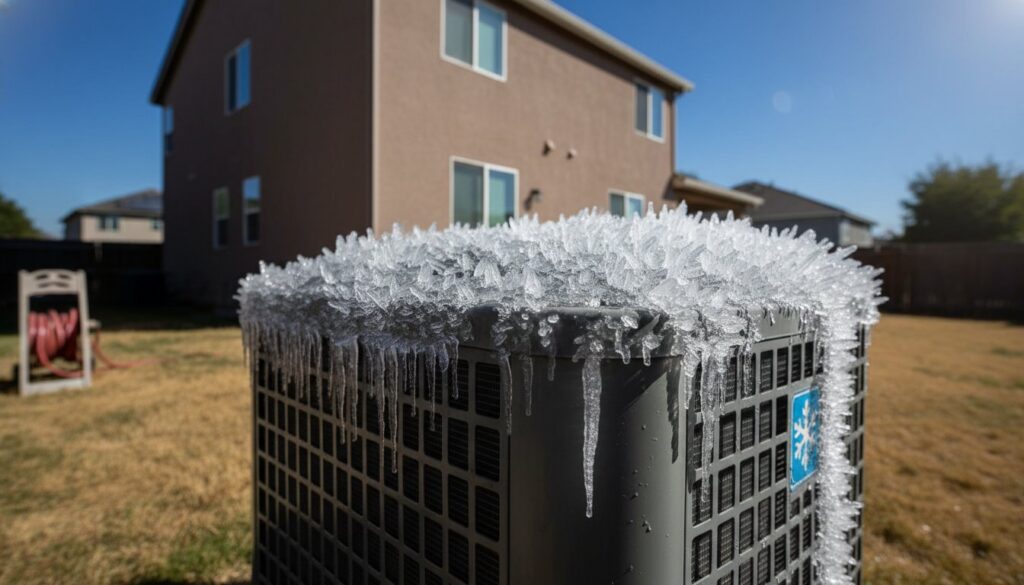
Imagine walking out into the 100-degree heat of a July afternoon only to find your air conditioner covered in a thick layer of white frost. If you discover your AC unit freezing up in summer Citrus Heights heat, it feels like a total contradiction. We know how unsettling it is to find ice on your system while the sun is blazing. You’re likely worried about the safety of your family’s sanctuary and the potential for a costly compressor failure; it’s a stressful situation that no neighbor should have to face alone.
We agree that your home should be a reliable escape from the sun, not a place where you’re troubleshooting mechanical mysteries in a sweltering living room. This guide will show you exactly why your system is turning into an ice block and what steps you can take to restore your home’s comfort today. We’ll walk through common causes like restricted airflow or refrigerant issues, help you decide if the fix is a simple DIY task, and explain how we can help ensure your cooling system stays dependable all season long.
Key Takeaways
- Discover why a disruption in the heat exchange balance causes your evaporator coil to freeze even during a blistering 100°F afternoon.
- Learn how to identify the signs of an AC unit freezing up in summer Citrus Heights so you can tell if the issue is a simple airflow restriction or a technical refrigerant problem.
- Master the immediate “Off and On” technique to safely thaw your system without causing damage to your compressor or other vital components.
- Understand how our local “Triple Threat” of high heat, low humidity, and evening dust puts extra strain on your cooling equipment.
- Protect your home’s sanctuary and prevent future breakdowns by pairing monthly homeowner tasks with the proactive support of our Comfort Club maintenance plan.
The Summer Ice Paradox: Why Your Citrus Heights AC is Freezing Up
It feels like a trick of physics. Outside, the pavement is hot enough to fry an egg, yet your indoor unit is encased in a block of arctic frost. This phenomenon, often called the “Summer Ice Paradox,” is a frequent occurrence during our intense local heatwaves. While it looks like your system is working overtime, finding your AC unit freezing up in summer Citrus Heights actually means the cooling process has broken down. It’s a frustrating sight, but we want you to know it’s a common symptom of system stress that we can help you resolve.
Understanding how air conditioning works is the first step to staying calm when you see ice. Most homeowners think an AC creates “cold,” but it actually removes heat. Your system uses a specialized chemical called refrigerant to pull warmth out of your living room and dump it outside. When this cycle works correctly, your home stays crisp and cool. When it fails, that heat removal stops, and the temperature of your internal components plummets.
To better understand this concept, watch this helpful video:
How Your AC Actually Cools Your Home
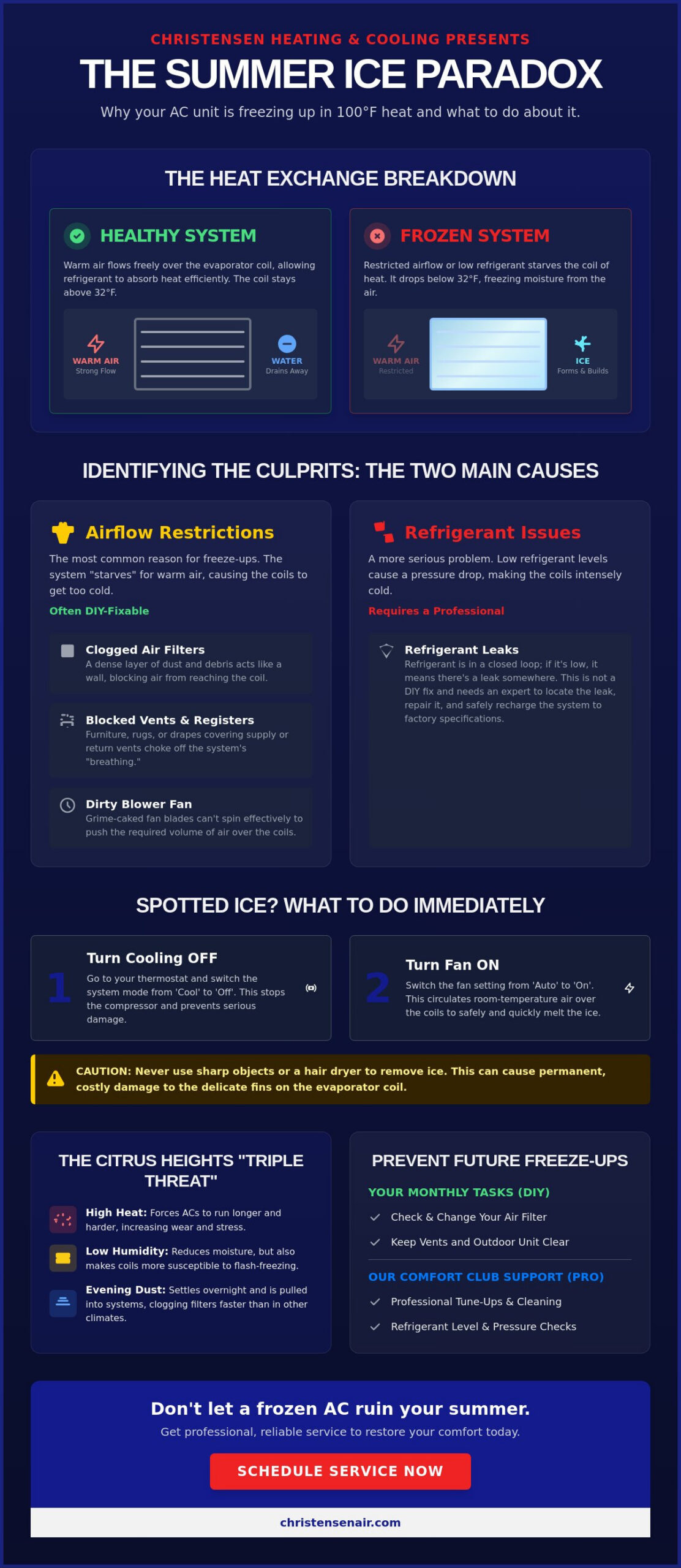
Inside your home sits the evaporator coil, the heart of the cooling process. As warm air from your house blows over this cold coil, the refrigerant inside evaporates, changing from a liquid to a gas to soak up that heat. For this to work effectively, the coil must stay above the freezing point of 32°F. We define heat exchange balance as the delicate equilibrium between the volume of warm air blowing over the coil and the sub-zero temperature of the refrigerant inside. If this balance shifts, the coil gets too cold, and the moisture in your air has nowhere to go but to freeze solid.
The Science of the Freeze
Even in our dry climate, there is still moisture in the air. As your system pulls this humidity out, it condenses into water droplets on the coil. Under normal conditions, this water simply drains away into a pan. However, if the heat transfer is interrupted, those droplets turn into layers of ice. This creates a dangerous feedback loop because ice acts as a powerful insulator. This means even less heat can reach the refrigerant, making the coil even colder. The more ice that forms, the more it chokes off airflow, eventually stopping the cooling process entirely and putting your compressor at risk.
Identifying the Culprits: Airflow Restrictions vs. Refrigerant Issues
When we visit a home with an AC unit freezing up in summer Citrus Heights, we usually find one of two primary culprits. Think of your air conditioner like a pair of lungs. To keep you cool, it needs to breathe in warm air and exhale the heat outside. When that breath is cut off, we call it the “Starvation” effect. On the other hand, if the internal pressure is off due to a leak, we see the “Pressure” effect. Both lead to a block of ice, but they require very different solutions. Identifying which one is affecting your sanctuary is the first step toward lasting comfort.
Airflow: The Most Common Cause of Ice
Airflow issues are the most frequent reason a system turns into an igloo. If your evaporator coil can’t “breathe” in enough warm air, it has no heat to absorb. This causes the refrigerant inside to stay extremely cold, eventually freezing the condensation on the outside of the coil. Common causes include:
- Clogged air filters: These act like a brick wall for air. A thick layer of dust prevents the heat exchange necessary to keep the coil warm.
- Blocked return vents: Furniture or heavy drapes pushed against registers can choke the system.
- Dirty blower fans: If the fan blades are caked in grime, they can’t push enough air volume over the coil.
Following basic AC maintenance tips can often prevent these simple airflow blocks from escalating into a total system shutdown. We recommend checking your filters every thirty days during our peak summer months.
Refrigerant and Mechanical Failures
While airflow is a common DIY fix, refrigerant issues are a different story. It seems backwards, but low refrigerant levels actually cause the remaining liquid to boil at a much lower temperature than normal. This “Pressure” effect drops the coil temperature well below freezing. You might have a leak if you hear a faint hissing sound or see oily residue around the copper lines. Mechanical parts like the Thermostatic Expansion Valve (TXV) can also fail, restricting the flow of cooling agents and causing a localized freeze.
Because the symptoms of a dirty filter and a refrigerant leak look nearly identical, guessing can be expensive. Adding refrigerant to a system that actually has an airflow problem can lead to a flooded compressor and a total system failure. If you’ve changed your filter and the ice keeps coming back, our team can provide a precise Air Conditioning Repair diagnostic to find the true root cause and protect your equipment.
Immediate Steps: What to Do When You Spot Ice on Your Unit
Discovering a block of ice on your cooling system is a stressful moment for any homeowner. Your first instinct might be to let the system keep running in hopes that it will eventually “push through” the frost and start cooling again. We want to help you avoid a much larger headache. The very first thing you must do when you notice your AC unit freezing up in summer Citrus Heights is walk to your thermostat and turn the system from “Cool” to “Off.” This stops the cooling cycle immediately and prevents further ice accumulation from choking the life out of your equipment.
Once the cooling is off, switch your fan setting from “Auto” to “On.” This simple step is vital. It forces the relatively warm air from inside your home to circulate over those frozen coils. Think of it as a gentle hair dryer for your HVAC system. This speeds up the melting process significantly without the risks associated with external heat sources. While you wait, keep a close eye on your condensate drain pan. A large block of ice can hold several gallons of water. If your drain line is partially blocked, that melting ice can quickly overflow the pan and cause water damage to your flooring or attic. We recommend keeping a few towels nearby just in case.
The 24-Hour Thaw Protocol
Patience is your best friend during a freeze-up. We typically advise a full 24-hour thaw protocol before attempting to run the system again or having a technician perform a diagnostic. If a professional arrives and the unit is still a solid block of ice, they won’t be able to check refrigerant levels or inspect the delicate fins of the evaporator coil. Use this waiting period to perform a quick home inspection. Check your air filter immediately. If it looks gray, dusty, or “furry,” it’s likely the primary cause of your trouble. Also, take a walk outside. Ensure your outdoor unit isn’t buried under dry summer weeds or blocked by debris that could be restricting the heat release process.
When to Call Christensen Heating and Cooling
If you’ve replaced a dirty filter and cleared away debris, but the system freezes again within hours of being turned back on, the problem is likely mechanical. This often points to a refrigerant leak or a failing expansion valve. Continuing to run a frozen unit is dangerous for your home’s budget. It puts immense strain on the compressor, which is the most expensive component in the entire system. If the ice returns, it’s time for professional ac repair roseville services. We can identify if your system needs a simple leak repair or a more complex component replacement to restore your sanctuary’s comfort.
Why Citrus Heights Summers Are Especially Tough on HVAC Systems
Living in the Sacramento Valley brings a unique set of challenges to your cooling system. We call it the “Triple Threat” of Citrus Heights: relentless 100-degree heat, extremely low humidity, and that fine evening dust that settles over everything. These factors combine to create a perfect storm for an AC unit freezing up in summer Citrus Heights. When temperatures climb into the triple digits, your system often runs 24/7 without a break. This constant operation accelerates wear and tear, pushing even well-maintained units to their absolute limit as they struggle to keep up with the outdoor environment.
Beyond the heat, our local environment is filled with fine particulate matter. Agricultural dust from surrounding farms and heavy pollen counts frequently clog air filters much faster than the manufacturer’s suggestions. We also have to consider the legacy of previous wildfire seasons. Ash and smoke residue can settle deep within your system, impacting your indoor air quality and creating a sticky film on your evaporator coils that traps even more dust. This buildup acts as a barrier to heat exchange, forcing the coil temperature down until it eventually freezes over.
Local Environmental Factors
Citrus Heights has a mix of beautiful older neighborhoods and newer developments. In areas like the 95610 and 95621 zip codes, many homes were built with ductwork that may be undersized for today’s high-efficiency systems. When you pair older ducting with a high-MERV filter during fire season, you might accidentally choke the system’s airflow. While high-efficiency filters are vital for health, they require a system that can handle the increased resistance. Without that balance, the coil temperature drops and the freezing cycle begins.
The Importance of Duct Health
Your ducts are the veins of your home’s comfort system. If they are leaky or collapsed, your AC has to work twice as hard to cool the same space. This extra strain is a leading cause of system icing. In many two-story Citrus Heights homes, zoning issues often occur where the upstairs stays hot while the downstairs freezes. This imbalance often leads homeowners to crank the thermostat down even further, which only worsens the icing problem. If your ductwork is over 15 years old, considering a duct system replacement could be the key to ending the freeze-thaw cycle for good.
We take personal pride in helping our neighbors navigate these local challenges. If your system is struggling to keep up with the valley heat, our team is ready to help with a professional Air Conditioning Repair diagnostic to get your home back to being a cool, safe sanctuary.
Preventing Future Freeze-Ups: The Path to Reliable Home Comfort
Stopping an AC unit freezing up in summer Citrus Heights is about more than just a quick fix; it is about building a foundation of reliability for your home. We believe that your cooling system should be a silent partner in your family’s comfort, not a source of seasonal stress. While emergency repairs are sometimes necessary, shifting toward a proactive mindset can save you from the discomfort of a sweltering afternoon. Our Comfort Club Maintenance Plan is designed to provide this exact peace of mind, ensuring your system is prepared for the valley’s most intense heatwaves before they arrive.
The Homeowner Maintenance Checklist
You play a vital role in protecting your home’s sanctuary. Simple, consistent habits are the best defense against a frozen evaporator coil. We recommend focusing on these three areas:
- Filter Consistency: Set a recurring reminder on your phone to check your air filter every 30 to 90 days. During high-pollen or smoke-heavy months, checking it every 30 days is best.
- Outdoor Clearance: Walk around your outdoor condenser unit and ensure there is at least a 3-foot clearance from shrubs, weeds, or stored items. Your system needs to “exhale” heat efficiently to keep the indoor cycle balanced.
- Thermostat Wisdom: Use a smart thermostat to avoid drastic temperature drops. Cranking the dial down to 65 degrees in the middle of a 105-degree day doesn’t cool the house faster; it only increases the likelihood of the coil temperature dropping below freezing.
Professional Preventative Care
While homeowner tasks are essential, some technical checks require a professional touch. Some companies treat maintenance as a simple cleaning, but we dive much deeper into the “vitals” of your equipment. During a professional tune-up, our technicians measure “superheat” and “subcooling.” These technical readings tell us exactly how the refrigerant is behaving inside your lines. If these levels are off, we can adjust them before they lead to a block of ice. We also take the time to clean the indoor evaporator coil thoroughly, ensuring it can absorb the maximum amount of household heat.
We also test the blower motor capacitor. If this component is weak, your fan might spin slower than required, leading to the restricted airflow issues we discussed earlier. If your current system is aging and continues to struggle despite regular care, it might be time to consider a modern upgrade. A high-efficiency inverter heat pump uses variable-speed technology to match your home’s cooling needs precisely. This steady, consistent operation nearly eliminates the “all-or-nothing” cycles that lead to coil icing. Whether you need a simple tune-up or a new installation, our team is dedicated to keeping your Citrus Heights home a cool and comfortable haven all summer long.
Restore Your Home’s Summer Sanctuary
Dealing with an AC unit freezing up in summer Citrus Heights doesn’t have to be a season-long struggle. By following the thaw protocol and staying diligent with monthly filter checks, you can handle many common airflow issues on your own. However, if the ice persists or your system is struggling to keep up with our intense valley heat, it is often a sign of a deeper mechanical imbalance that requires a professional touch. Guessing at the cause can lead to expensive compressor damage, so taking action early is the best way to protect your investment.
Our family-owned team has served this community since 2009, and we take personal pride in protecting the comfort and safety of your household. Whether you need an expert look at a potential refrigerant leak or you are interested in the precision of high-efficiency inverter systems, we are here to help. We treat every home with the same neighborly care we would apply to our own. Schedule your professional AC diagnostic in Citrus Heights today and let us help you get back to enjoying a crisp, cool home. You deserve a reliable escape from the heat, and we are committed to ensuring your system provides exactly that.
Frequently Asked Questions
Can I just scrape the ice off my AC coils to make it work faster?
No, you should never use a knife, screwdriver, or any tool to scrape ice off your evaporator coils. These aluminum fins are incredibly delicate and can be punctured or crushed with even slight pressure. Damaging the coils can lead to a permanent refrigerant leak or necessitate an expensive component replacement. The safest way to melt the ice is to turn the cooling off and let the fan run to circulate warm air naturally over the unit.
How long does it take for an AC unit to thaw out completely?
It typically takes a full 24 hours for a frozen system to thaw completely. While a thin layer of frost might melt in a few hours, a solid block of ice hidden deep within the air handler requires much more time to turn back into water. We recommend waiting the full day to ensure the coils are dry before we perform a diagnostic. This allows us to get accurate pressure readings and inspect the system’s vital components without ice blocking our view.
Is it okay to run my AC if only a little bit of ice is showing?
No, you should shut down the system as soon as you see any signs of frost on the lines or the coil. Ice acts as an insulator, which means even a small amount will quickly snowball into a massive blockage that stops all cooling. Running a system that is starting to freeze puts immense pressure on the compressor. It is much better to address the AC unit freezing up in summer Citrus Heights early rather than waiting for a total mechanical failure.
Why does my AC freeze up at night but work during the day?
This usually happens because the outdoor temperature drops at night, which reduces the “heat load” on your system. When the air coming in is already cooler, the refrigerant inside the coil can easily drop below the freezing point if there is even a minor airflow restriction. During the hot Citrus Heights day, there is enough heat to keep the coil just above freezing. This nighttime icing is often a warning sign that your system is on the verge of a total breakdown.
Will a dirty air filter really cause my whole AC to freeze?
Yes, a dirty air filter is the single most common cause of a frozen air conditioner. When the filter is caked with dust, it chokes the airflow that the evaporator coil needs to stay warm. Without that constant stream of warm household air, the coil’s temperature plummets below 32 degrees. This causes the moisture in the air to flash freeze on the metal surfaces, eventually turning the entire internal unit into a solid block of ice.
How much does it usually cost to fix a frozen AC unit in Citrus Heights?
Repair costs vary significantly depending on the root cause of the freeze. If the issue is a simple dirty filter, the fix is just the price of a replacement and a professional service call to ensure no other damage occurred. However, if the freeze was caused by a refrigerant leak or a failed blower motor, the repair will be more involved. We provide a transparent diagnostic assessment to identify the exact problem so you can make an informed decision for your home’s budget.
What happens if I keep running my AC while it is frozen?
Continuing to run a frozen system can lead to liquid slugging, which happens when liquid refrigerant reaches your compressor. Compressors are designed to pump gas, not liquid; this can cause the motor to burn out or the internal valves to shatter. A compressor replacement is one of the most expensive repairs in the HVAC industry. Shutting the system down immediately is the best way to protect your equipment and ensure your family’s long term comfort.
Does a frozen AC mean I have a refrigerant leak?
A frozen unit can be a sign of a refrigerant leak, but it is not the only possibility. Low refrigerant levels cause the internal pressure to drop, which in turn drops the temperature of the coil below freezing. However, simple airflow issues like a blocked vent or a dirty coil can produce the exact same icy result. A professional technician needs to check the system’s pressures and airflow balance to determine if a leak is truly the culprit or if the system just needs a cleaning.