





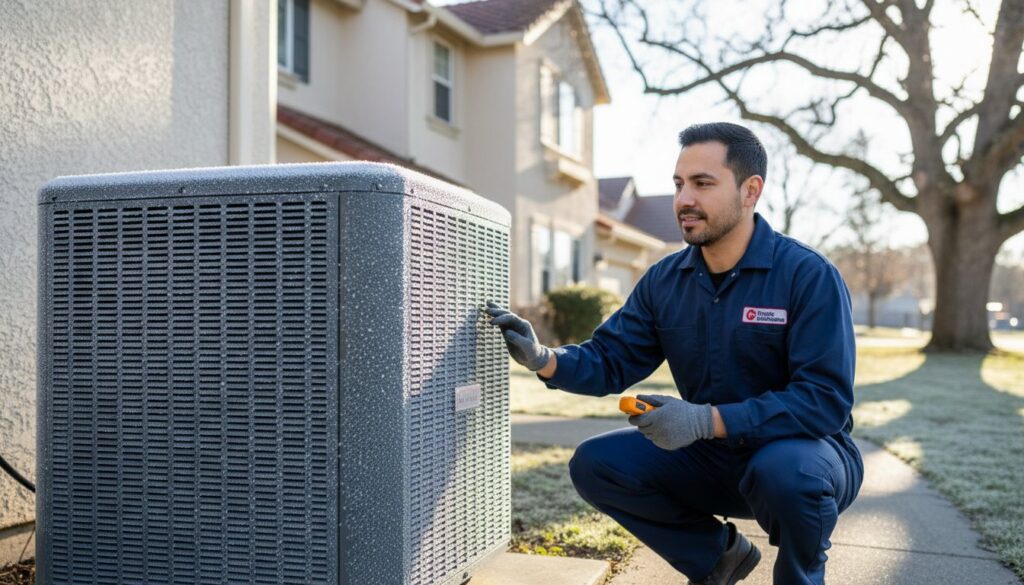
Last Tuesday, a neighbor in Fair Oaks stepped onto her porch and discovered her outdoor unit looked more like an ice sculpture than a heater. It’s a sight that sends a shiver down any homeowner’s spine, especially when you’re worried about your family’s comfort and your next utility bill. You might wonder if your heat pump freezing up in winter Fair Oaks is a sign of a total system failure or just a normal part of how these machines work in our damp climate.
We understand the anxiety that comes with seeing “steam” or heavy ice on your equipment. It’s frustrating to feel like your home’s sanctuary is at risk just as a cold snap hits. This guide will help you distinguish between a harmless defrost cycle and a dangerous ice buildup that could lead to significant mechanical issues. We’ll show you exactly how to protect your system, when it’s safe to clear frost yourself, and how our family at Christensen Heating and Cooling helps you prevent these icy headaches through regular maintenance.
Key Takeaways
- Learn how to distinguish between a light, healthy layer of frost and a heavy ice buildup that could damage your system.
- Understand why a heat pump freezing up in winter Fair Oaks homeowners often see is caused by restricted airflow or low refrigerant levels.
- Discover the truth about the “steam” coming off your unit so you can tell the difference between a normal defrost cycle and an emergency.
- Get a simple, two-step action plan to follow immediately if your unit stops heating to help prevent costly compressor repairs.
- Find out how proactive maintenance through a Comfort Club plan keeps your family warm by verifying your system’s defrost timing and efficiency.
Is Frost on Your Heat Pump Normal or a Problem?
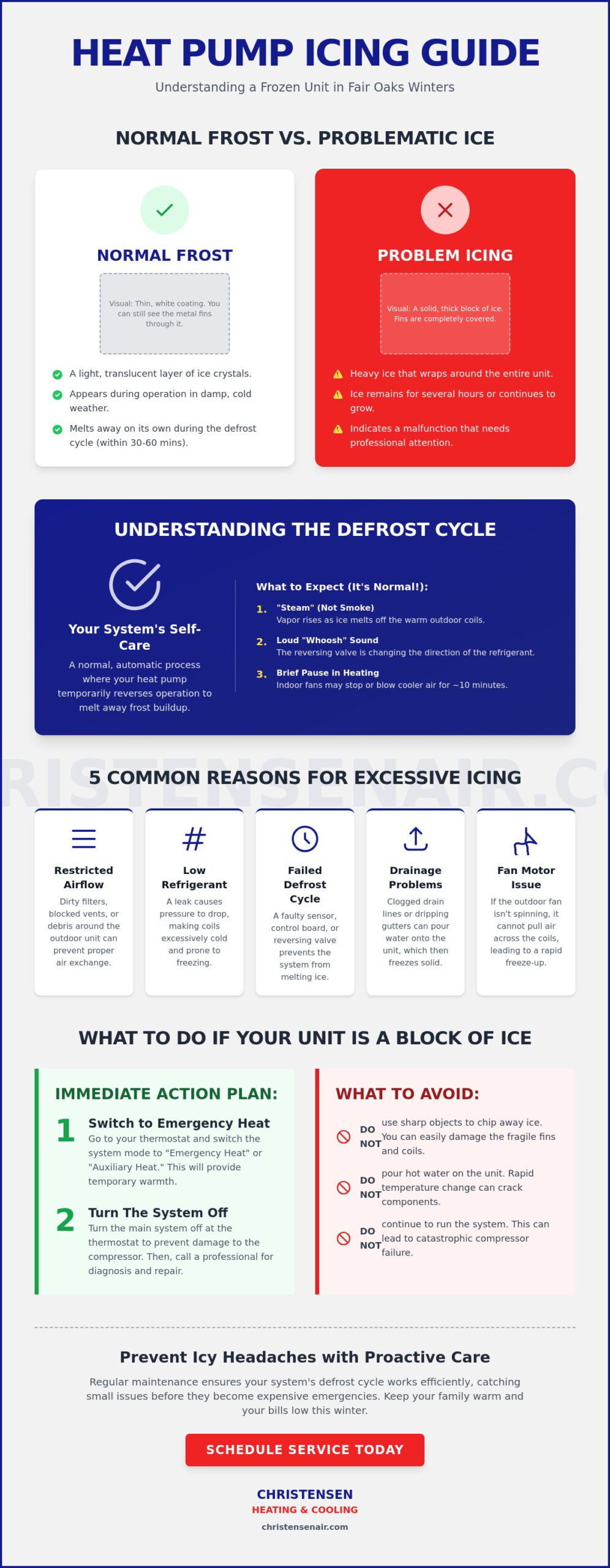
Seeing a layer of white on your outdoor unit can be startling when you’re just trying to keep your family warm. In Fair Oaks, our winters are unique. We deal with heavy humidity and that thick Tule Fog that settles over the Sacramento Valley during the colder months. These conditions are the perfect recipe for frost. Many residents call us when they worry about their heat pump freezing up in winter Fair Oaks, but often it’s just the climate playing tricks. Frost is simply a thin, translucent layer of ice crystals. It forms naturally as your unit pulls heat from the damp outdoor air. If you notice a light dusting that appears and then vanishes within 30 to 60 minutes, your system is likely doing exactly what it was designed to do.
However, there is a point where a little frost turns into a big headache. A heat pump freezing up in winter Fair Oaks homeowners should worry about looks less like a dusting of sugar and more like a solid block of ice. If you can’t see the metal fins or if the ice is thick enough to stay for hours, it’s time to take a closer look. Heavy icing can restrict airflow, which forces your system to work harder and drives up those winter utility bills. This leads to unnecessary wear and tear on your equipment during the times you need it most.
To better understand this concept, watch this helpful video:
The Visual Difference: Frost vs. Icing
Frost is a temporary byproduct of the heat exchange process that shouldn’t interfere with your home’s peace of mind. We recommend the “see-through” test to help you decide if you need to call a professional. If you can still see the individual metal fins through the white coating, it is likely just normal frost. On the other hand, warning signs of a real problem include heavy ice blankets that wrap around the unit like a block of snow. Solid ice blocks or ice building up deep inside the coils indicate a malfunction that needs professional attention. We often see these issues when the defrost cycle fails to trigger, leaving the unit trapped in a frozen state.
Why Your Heat Pump Gets Cold to Keep You Warm
It sounds counterintuitive, but your unit has to get very cold to keep your home cozy. To understand the physics, it helps to look at how heat pumps work by moving thermal energy from one place to another. The outdoor coil must stay colder than the surrounding air to successfully pull heat inside. When our damp Fair Oaks air hits those super-cooled coils, moisture instantly turns to ice. We want to reassure you that a little white on the unit isn’t an immediate emergency. It’s a sign of the system working hard, provided the internal defrost board is cycling correctly to melt that buildup away. If the ice doesn’t clear, the system loses efficiency and your comfort will suffer.
Understanding the Defrost Cycle: Your System’s Self-Care
It can be a bit alarming to look out your window and see white vapor billowing off your outdoor unit. Your first instinct might be to worry about a fire or your heat pump freezing up in winter Fair Oaks. In most cases, what you’re seeing is actually a sign of your system taking care of itself. This is called the defrost cycle. Think of it as a brief self-cleaning mode where the system temporarily reverses its operation. Instead of pulling heat from the cold outside air, it sends warm refrigerant back to the outdoor coils to melt away any ice buildup.
During this process, you will likely notice a few strange sights and sounds. You might hear a loud whoosh or a heavy shifting noise. This is the reversing valve changing the direction of the refrigerant flow. You might also see steam rising from the unit. This isn’t smoke; it’s just the ice melting and evaporating quickly off the warm coils. Most modern Heat Pump Systems are programmed to check for frost accumulation at set intervals, typically every 30, 60, or 90 minutes of compressor run time. If the sensor detects ice, the cycle kicks in and usually finishes within 10 minutes.
How the Reversing Valve Works
The reversing valve is the mechanical brain of your unit. When the defrost sensor tells the system it’s getting too cold, this valve flips the flow of refrigerant. While it melts the outdoor ice, your indoor fan will usually stop or blow slightly cooler air for a few minutes. We know this can be a bit unsettling when you’re trying to stay cozy, but it’s a necessary step to protect the unit’s longevity. If your system seems to be stuck in this mode for more than 15 minutes, our team can provide expert heat pump services to ensure everything is switching back correctly.
Why Defrost Cycles Fail
Even the best systems can run into trouble. Sometimes a defrost sensor fails, which means the unit doesn’t know it needs to melt the ice. When a defrost cycle fails, it often results in the heat pump freezing up in winter Fair Oaks families dread, turning a small frost issue into a solid block of ice. Another common issue is a stuck reversing valve. If this component fails, your unit might stay in cooling mode indefinitely or refuse to defrost at all. We find that older units, especially those nearing the 10-year average lifespan, often struggle with these timing components more than newer models. Keeping these sensors clean and calibrated is a key part of our neighborhood maintenance visits.
5 Common Reasons for Excessive Heat Pump Icing
While a light dusting of frost is a normal part of winter operation, a heat pump freezing up in winter Fair Oaks homes usually points to a specific mechanical or environmental failure. We often find that these issues start small but quickly escalate into a total loss of heat. If your system can’t move enough air or manage its internal temperatures, the moisture in our damp valley air turns into a thick, insulating blanket of ice. This forces the compressor to work much harder, which can lead to expensive repair bills ranging from $197 to over $900 depending on the damage. Understanding why this happens is the first step toward restoring your home’s peace of mind.
According to the U.S. Department of Energy, proper maintenance is key to keeping these systems running efficiently. When a unit is neglected, it loses the ability to shed ice naturally. We’ve identified five primary culprits that lead to excessive icing in our local climate:
- Restricted Airflow: This is the most common cause we encounter. If air can’t flow freely over the outdoor coils, the heat exchange process fails.
- Low Refrigerant Levels: A leak in your system reduces its capacity to move heat. This causes the outdoor coil to get much colder than designed, attracting even more ice.
- Faulty Defrost Components: If the defrost sensor or control board fails, the unit will never enter its self-cleaning mode.
- Outdoor Fan Issues: A fan motor that has burned out or slowed down won’t pull the necessary air through the fins, allowing moisture to freeze instantly.
- Environmental Blockages: Fair Oaks is known for its beautiful trees, but falling leaves and garden debris can quickly clog your unit’s “lungs.”
Airflow and Ductwork Issues
Your heat pump needs to breathe. When air filters are clogged with dust or pet hair, the system struggles to maintain the correct pressure. This stress often extends to your home’s internal structure. Leaky or poorly designed ducts can also cause the system to cycle improperly, leading to a heat pump freezing up in winter Fair Oaks families shouldn’t have to deal with. If you suspect your home’s “veins” are the problem, our team can evaluate your needs for a duct system replacement to ensure your new or existing unit operates at peak performance. Additionally, the residue left behind by our local Tule fog can act like a magnet for dirt, further sealing off the fins and accelerating ice growth. During wildfire season, this problem is compounded significantly, which is why understanding the best MERV rating for filters during fire season is essential for Sacramento Valley homeowners who want to protect both their air quality and their equipment’s airflow.
Technical Component Failures
Technical failures often require a professional eye. Refrigerant leaks are particularly tricky because simply “topping it off” isn’t a real solution. We focus on finding the source of the leak to protect your system’s longevity. We also check for fan motor health. If the fan stops spinning, the unit can’t shed moisture, and ice will build up from the inside out. Finally, improper drainage is a silent culprit. If the base of your unit is clogged with dirt or leaves, the water melted during a defrost cycle has nowhere to go. It sits at the bottom and refreezes, eventually creating a solid block of ice that can bend the delicate metal fins or damage the fan blades.
What to Do If Your Heat Pump Is Frozen Solid
Finding your outdoor unit encased in a thick block of ice is a stressful experience for any family. While it’s tempting to try and fix the problem quickly, taking the wrong steps can lead to permanent damage. If you notice your heat pump freezing up in winter Fair Oaks, your priority should be protecting the compressor and the delicate internal coils. Following a specific set of steps can help you manage the situation safely while keeping your home warm until a professional can arrive to diagnose the underlying cause.
We recommend following these five steps immediately if you discover a frozen unit:
- Turn the system off: Switch your thermostat to the “off” position right away. This stops the cooling process and prevents the compressor from burning out while trying to work through the ice.
- Check your air filter: A dusty or dark filter is a leading cause of icing. If you haven’t changed it lately, replace it with a fresh one to restore proper airflow.
- Clear physical blockages: Look for fallen leaves, overgrown bushes, or garden debris that might be hugging the unit. Your heat pump needs at least 18 to 24 inches of clear space on all sides to breathe.
- Avoid sharp tools: Never use a screwdriver, ice pick, or hammer to chip away the ice. The copper refrigerant lines are very thin, and a single puncture will lead to an expensive leak.
- Use Emergency Heat: Most thermostats have an “EM Heat” or “Aux Heat” setting. This bypasses the outdoor unit and uses your indoor electric heat strips to keep your family comfortable while the outdoor unit thaws.
Safe Thawing Techniques
If you want to speed up the melting process, the only safe DIY method is using a garden hose. Gently spray the outdoor coils with lukewarm water. This is much safer than using a de-icer chemical, which can corrode the metal over time. You must avoid using a pressure washer at all costs. The high-pressure stream will flatten the delicate aluminum fins, permanently reducing your system’s efficiency. Be patient and let the water do the work naturally.
When to Call Christensen Heating and Cooling
There are times when a DIY thaw isn’t enough to solve the root problem. If you melt the ice only to see it return within a few hours, your defrost sensor or reversing valve is likely failing. You should also listen for unusual sounds. If you hear loud grinding or buzzing noises coming from the outdoor cabinet, it could indicate a fan motor or compressor under extreme stress. If your utility bills have spiked unexpectedly during a cold snap, your unit is likely struggling to keep up. Our team is here to help with expert Heat Pump Services to get your system back to peak performance and restore your peace of mind.
Preventing Winter Freezes with Proactive Care
Preventing a heat pump freezing up in winter Fair Oaks doesn’t have to be a guessing game. While we’ve discussed how to handle an emergency, the best way to protect your home’s sanctuary is to stop the ice before it starts. Our team focuses on proactive care because we know how stressful a cold house can be for your family. A routine tune-up, which typically costs around $87 based on early 2026 local averages, is a small investment that helps you avoid those $900 emergency repair bills. We take pride in ensuring your system is prepared for the damp, foggy mornings that define our local winters.
One of the simplest ways to prevent icing is ensuring your unit is properly elevated. Heat pumps should never sit directly on the damp Fair Oaks soil or in a spot where water pools. We install our systems on raised pads to allow melted water to drain away freely during the defrost cycle. If the unit is too low, that water has nowhere to go and refreezes at the base. This eventually leads to the solid ice blocks that can damage your fan blades or bend the delicate metal fins. Proper drainage is just as important as the mechanical components inside the cabinet.
For homeowners looking for the ultimate in efficiency and reliability, upgrading to modern Inverter Heat Pumps is a smart move. Unlike older single-stage units that are either all-on or all-off, variable-speed technology allows the system to adjust its output in tiny increments. This constant, gentle movement of air and heat makes it much harder for ice to get a foothold on your coils. These modern systems are specifically designed to handle the humidity fluctuations we see in Northern California without breaking a sweat.
The Comfort Club Advantage
We designed our Comfort Club Maintenance Plan to take the maintenance burden off your shoulders. When our technicians visit your home, they don’t just give the unit a quick glance. We specifically test the defrost control board and sensors to ensure they trigger exactly when they should. We also deep-clean the outdoor coils to ensure maximum heat transfer. Even a thin layer of dirt can act as an insulator, which forces the system to run longer and colder than necessary. This proactive approach gives you the peace of mind that your system is ready for the next cold snap. Homeowners who want to go even further in protecting their indoor environment should also explore the benefits of HVAC UV light installation, which can eliminate biological pathogens that circulate through your system during the winter months.
Planning for the Future
Every piece of equipment has a limit. On average, a heat pump has a lifespan of about 10 years, and repairs on older units generally become more expensive as parts wear out. If your unit is approaching this age and you frequently struggle with a heat pump freezing up in winter Fair Oaks, it might be more cost-effective to consider a replacement. Gaining a better understanding of what is hvac and how modern SEER2 efficiency standards affect your utility bills can help you make the best choice for your household. As a family-owned business, our goal is to treat your home like our own. We’re here to help you navigate these choices with honesty, ensuring your family stays warm and comfortable all year long.
Keep Your Fair Oaks Home Cozy All Season
Your home should be a place of warmth and peace, even when the thick Tule fog settles over the Sacramento Valley. We’ve seen how a light dusting of frost is just a sign of your system working hard, while heavy ice is a signal that your unit needs professional attention. By keeping your filters clean and ensuring your outdoor unit has room to breathe, you take the first steps toward avoiding a heat pump freezing up in winter Fair Oaks families often face. We want you to feel confident that your equipment is ready for whatever the weather brings.
Since 2009, our family-owned and operated team has specialized in protecting the comfort of our neighbors. We are specialists in high-efficiency inverter heat pumps and serve the greater Sacramento area with neighborly care. Don’t wait for the next cold snap to test your system’s limits. Schedule your winter heat pump inspection with Christensen Heating and Cooling today! We take personal pride in every job and treat your household like our own. Stay warm and enjoy the comfort you deserve.
Frequently Asked Questions
Is it normal for my heat pump to have frost on it in the morning?
Yes, seeing a light layer of frost in the morning is perfectly normal for Fair Oaks homes. Our local humidity and Tule fog create the ideal environment for moisture to collect on the coils. As long as the frost is translucent and melts within 30 to 60 minutes, your system is operating as intended. It’s only a concern if that frost turns into a thick, opaque block of ice that remains for hours.
Why is my heat pump blowing cold air during the defrost cycle?
Your unit blows cooler air indoors during defrost because it is temporarily working in reverse. To melt the outdoor ice, the system pulls heat from inside your home and sends it to the outdoor coils. While this might feel a bit chilly for a few minutes, it is a necessary self-care step. Most modern systems use auxiliary heat strips to help take the edge off this brief cooling period and maintain your comfort.
Can I use a hair dryer or heat gun to melt the ice on my heat pump?
You should never use a hair dryer, heat gun, or open flame to melt ice on your unit. These high-heat tools can easily warp the delicate aluminum fins or damage the electrical components inside the cabinet. If you need to melt ice quickly, a garden hose with lukewarm water is the only safe method. It’s much better to let the system’s internal defrost cycle handle the job naturally to protect the equipment.
How often should a heat pump go into defrost mode in Fair Oaks?
Most heat pumps in our area are programmed to check for frost every 30, 60, or 90 minutes of compressor run time. In the damp Fair Oaks climate, you might notice your system entering this mode more often than a neighbor in a drier region. The frequency depends on the outdoor temperature and the amount of moisture in the air. If it cycles every 15 minutes, however, that usually points to a sensor issue.
What happens if I leave my heat pump frozen for too long?
Leaving a unit frozen for too long can lead to a total compressor failure. Ice acts as an insulator, preventing the heat exchange process and forcing the motor to work under extreme stress. This neglect can turn a simple maintenance issue into a repair costing over $900, based on early 2026 project data. It’s always safer to turn the system off and call for help before the damage to your home’s sanctuary becomes permanent.
Why is my heat pump making a loud ‘whooshing’ sound in winter?
That loud whooshing sound is the reversing valve shifting the flow of refrigerant. It’s a completely normal part of the defrost process. You might also hear the outdoor fan stop or a slight humming noise while the ice melts. These sounds indicate that the mechanical brain of your system is successfully switching modes to protect the unit from a heat pump freezing up in winter Fair Oaks.
Does a dirty air filter really cause the outdoor unit to freeze?
A dirty air filter is the most common reason for a system to ice up. When air can’t flow freely through your home, the refrigerant in the coils gets much colder than it should. This causes moisture to freeze instantly on the outdoor unit. We recommend checking your filter every 30 days during the peak of winter to ensure your system can breathe and operate at peak efficiency without unnecessary strain. If you live in an area prone to wildfire smoke, choosing the best MERV rating for filters during fire season becomes even more critical, as the wrong filter can accelerate clogging and trigger the very icing problems described above.
Is ice on the refrigerant lines a sign of a leak?
Ice specifically on the copper refrigerant lines is a strong indicator of a leak. While frost on the fins is often environmental, icing on the lines usually means the system is low on refrigerant. This reduces the system’s ability to manage heat and can lead to a lifespan shorter than the typical 10 years. Our technicians use specialized tools to find these leaks and protect your system’s long-term health and your family’s peace of mind.