





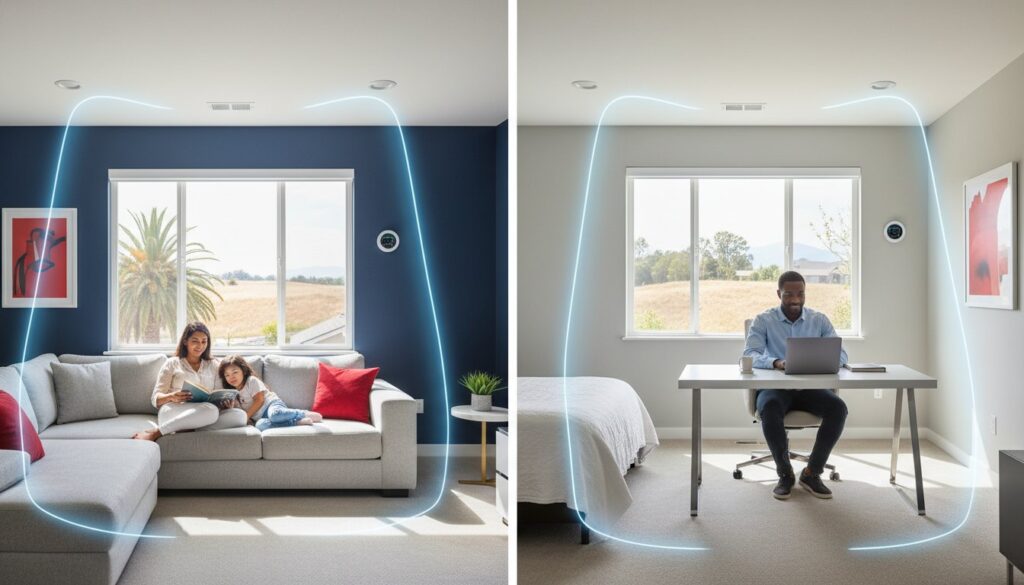
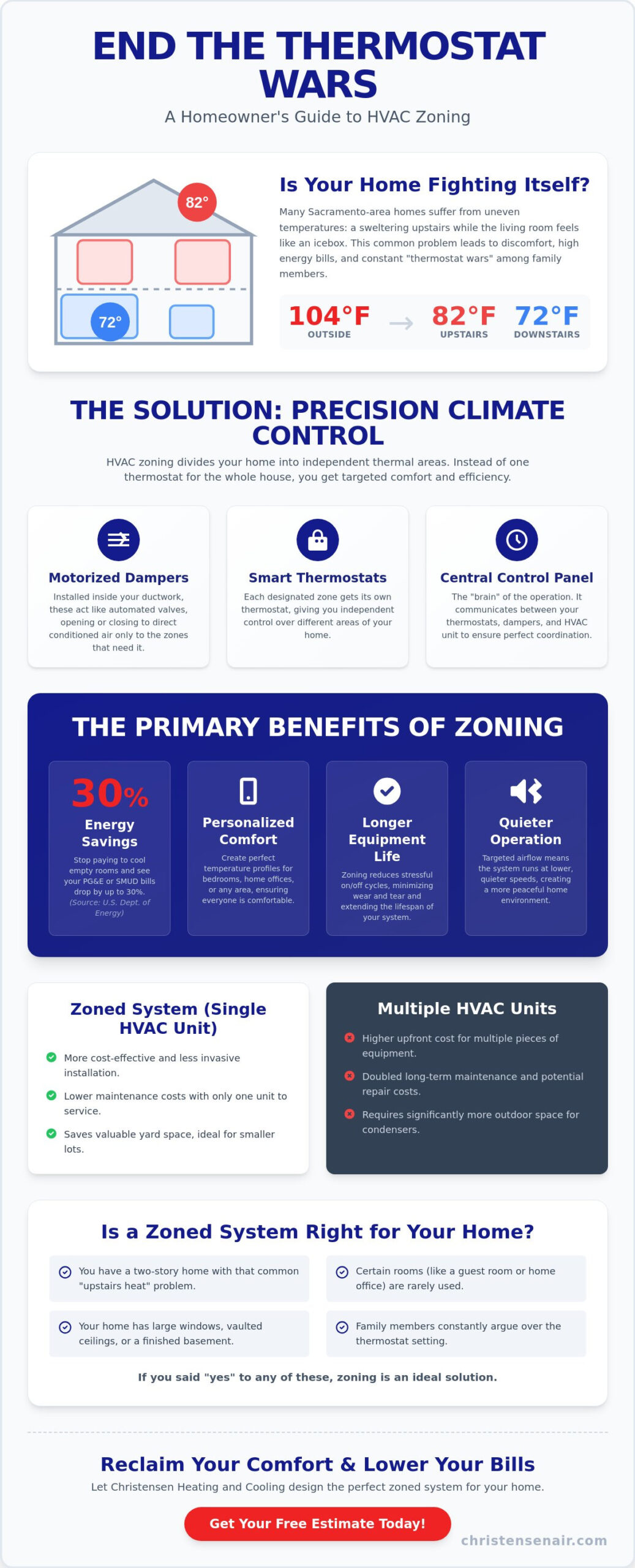
Last Tuesday in Roseville, the outside temperature hit 104 degrees, and while your living room felt like an icebox, your upstairs master bedroom was still sweltering at 82 degrees. This “thermostat war” is a daily reality for many families in the Sacramento area who struggle with uneven temperatures. We understand how frustrating it feels to watch your PG&E or SMUD bills climb while certain rooms remain unusable. You shouldn’t have to choose between your monthly budget and your family’s comfort. Exploring the benefits of zoned HVAC systems is the first step toward reclaiming your home from the Northern California heat.
We believe every family deserves a sanctuary that stays cool without breaking the bank. This article explains how HVAC zoning eliminates stubborn hot spots and can lower your cooling costs by up to 30 percent based on data from the U.S. Department of Energy. We will show you how to achieve consistent comfort in every room while extending the lifespan of your equipment. From customized settings to improved efficiency, we’re here to help you find the peace of mind that comes with a perfectly balanced home.
Key Takeaways
- Learn how motorized dampers divide your Northern California home into independent thermal areas for precision temperature control.
- Discover the primary benefits of zoned HVAC systems, including customized comfort for every family member and significant energy savings.
- Find out why zoning is the most effective solution for “upstairs heat” issues common in Roseville and Rocklin two-story homes.
- Explore how variable-speed inverter technology works in harmony with zoning to provide maximum efficiency and household peace of mind.
- Use our expert checklist to determine if a zoned system is the right investment to enhance the comfort of your Placer County home.
What is HVAC Zoning and How Does it Work in Roseville Homes?
We often meet families in Roseville who struggle with a common problem: the upstairs bedrooms feel like a sauna while the living room stays chilly. This happens because traditional HVAC systems operate on an all-or-nothing principle. A single thermostat in a central hallway dictates the temperature for the entire house, regardless of how sun exposure or vaulted ceilings affect different rooms. HVAC zoning changes this by dividing your home into independent thermal areas. Instead of one sensor making decisions for the whole family, we create custom zones that allow you to set different temperatures for different parts of the house.
One of the primary benefits of zoned HVAC systems is the precision they offer. The system uses motorized dampers installed directly into your existing ductwork. These dampers act like traffic controllers for your air. When a specific room reaches its target temperature, the dampers close to prevent over-cooling or over-heating that space. A central control panel serves as the brain of the operation. It communicates between your thermostats and your outdoor unit to ensure air goes exactly where you want it. This targeted approach eliminates the “thermostat wars” that many local households experience during our 100-degree Sacramento summers.
The Components of a Zoned System
A reliable zoned setup relies on three main parts working in harmony. First, we install smart thermostats in each designated zone. These devices talk to the central controller independently. Second, automatic dampers function as mechanical valves within the ducts. They open and close based on real-time demand. Finally, we include a bypass duct. This component is critical because it manages air pressure. When several dampers close at once, the bypass duct redirects excess air to prevent strain on your blower motor, which helps avoid the 15% increase in wear and tear often seen in poorly designed systems.
Zoning vs. Multiple HVAC Units
Many homeowners in neighborhoods like Granite Bay wonder if they should just install two separate AC units. While two units provide control, a single zoned system is often more cost-effective. You only have one piece of equipment to maintain, which cuts your long-term service costs in half. Zoning also saves significant space in smaller side yards where a second condenser might not fit comfortably. According to data from the U.S. Department of Energy, implementing the benefits of zoned HVAC systems can save homeowners up to 30% on their annual energy bills. For those retrofitting older Roseville homes, zoning is a much less invasive way to achieve modern comfort without the need for major structural renovations or additional electrical upgrades.
The Primary Benefits of Zoned HVAC Systems
We see it all the time in Roseville and Sacramento homes. One person is shivering in the kitchen while someone else is sweating in an upstairs bedroom. One of the biggest benefits of zoned HVAC systems is the ability to stop treating your entire house as one giant room. Instead of forcing your air conditioner to cool the whole building just to satisfy a single thermostat, we install dampers in your ductwork to direct air only where it’s needed. This targeted airflow management leads to much quieter operation. The system doesn’t have to work at maximum capacity to reach every corner of the home simultaneously, which creates a more peaceful environment for your family.
Beyond immediate comfort, this precision protects your equipment. Most standard systems suffer from constant on-and-off cycling as they struggle to balance temperatures across different floors. Zoning reduces this mechanical stress. By allowing the system to run in a more controlled, targeted manner, you significantly reduce the wear and tear that leads to mid-summer breakdowns. It’s a proactive way to ensure your home remains a sanctuary without overworking your hardware.
Ending the ‘Thermostat Wars’
We know that every family member has a different internal thermometer. Individual control solves the constant debate over the “perfect” temperature. With a zoned setup, you can keep the home office cool during a busy afternoon while leaving the guest rooms alone. This control is especially helpful for creating dedicated sleep zones. You can drop the temperature in the bedrooms for a restful night without wasting energy to chill an empty kitchen or living room. Zoning provides personalized comfort profiles for different lifestyles. It turns your home into a collection of comfortable spaces rather than a battleground over a single wall unit.
Maximizing Energy Efficiency and ROI
Switching to a zoned system is a smart financial move for Sacramento homeowners. Industry data from the U.S. Department of Energy shows that zoning can reduce your cooling and heating bills by up to 30% annually. In our local area, this efficiency is vital. Both SMUD and PG&E utilize tiered pricing structures where costs spike once you hit certain usage thresholds. By cooling only the rooms you actually use, you stay in those lower, more affordable tiers longer. This targeted approach is the most sustainable way to manage a large California home in our intense summer heat.
Investing in zoning also offers a long-term return by extending the lifespan of your unit. When your HVAC doesn’t have to work at 100% capacity to cool a 2,500-square-foot home just because one room is warm, you save money on both monthly bills and future replacement costs. If you’re curious about how this might work in your specific floor plan, our team can evaluate your current ductwork to see if zoning is right for you. We take pride in helping our neighbors find the most efficient path to total home comfort.
Why Sacramento Valley Architecture Demands Zoning
Living in the Sacramento Valley means dealing with unique climate challenges that standard heating and cooling setups often struggle to manage. We frequently experience 40-degree diurnal temperature swings where a crisp 55-degree morning transforms into a scorching 95-degree afternoon. This rapid shift puts immense pressure on your equipment. One of the primary benefits of zoned HVAC systems is the ability to adapt to these local shifts room by room, rather than forcing a single thermostat to guess the needs of your entire house.
Solving the Two-Story Temperature Split
Most two-story homes in Roseville and Rocklin suffer from a basic law of physics: heat rises. Because cool air is denser, it naturally settles on the ground floor while warm air collects upstairs. A single thermostat located in a downstairs hallway cannot see that your bedrooms are 82 degrees while the kitchen is a chilly 69. Zoning uses motorized dampers within your ductwork to push more cool air to the upper level during the heat of the day. We often see this issue in Loomis homes where a large bonus room sits directly over the garage. Without zoning, that specific room becomes an oven by 3:00 PM. Zoning ensures that space stays comfortable without freezing out the rest of the family downstairs.
Addressing Large Glass and High Ceilings
In Granite Bay, many of the homes we service feature stunning “view windows” and vaulted ceilings. While these architectural choices look beautiful, they create massive cooling hurdles. Large panes of glass act like radiators through solar gain, especially in west-facing rooms during our intense Northern California afternoons. Vaulted ceilings also create a “stack effect” where your expensive conditioned air hangs out near the rafters instead of where you are actually sitting.
If you are exploring the basics of your home comfort and asking What is HVAC?, it helps to think of zoning as a series of traffic controllers. Instead of one “on” switch for the whole house, the system directs airflow exactly where solar gain is strongest. This prevents those stubborn hot spots in your sun-drenched living areas. By tailoring the output, you enjoy the core benefits of zoned HVAC systems, which include consistent comfort and improved efficiency. We believe your home should be your sanctuary, regardless of how many windows you have or how high your ceilings reach.
- Zoning eliminates the “thermostat wars” between upstairs and downstairs occupants.
- It compensates for the 25 percent more energy typically required to cool rooms with vaulted ceilings.
- The system reacts in real-time to the afternoon sun hitting west-facing walls.
The Synergy: Inverter Heat Pumps and HVAC Zoning
We often see Sacramento homeowners struggle with uneven cooling even after installing new equipment. The secret to maximizing the benefits of zoned HVAC systems lies in the technology driving the outdoor unit. While traditional air conditioners operate like a light switch, being either fully on or fully off, inverter heat pumps function more like a dimmer switch. This flexibility makes them the perfect partner for a zoned home because they can adapt to the specific needs of each room in real time.
Standard single-stage units blast 100 percent of their cooling capacity every time they kick on. If your zoning system only has one small bedroom calling for air, that massive volume of airflow creates high pressure and loud noise in the ducts. Inverter-driven compressors solve this by slowing down. They match the exact cubic feet per minute of airflow needed for that specific area. This results in a whisper-quiet experience. You won’t hear the roar of air through the vents while you’re trying to sleep or relax in your living room.
Why Inverter Systems are the ‘Gold Standard’
Traditional units cause a blast of cold air followed by a long pause where the room warms up again. This creates a roller coaster of comfort that many families find frustrating. Inverter heat pumps modulate power to match zone demand perfectly. By running at lower speeds for longer periods, these systems maintain temperatures within 0.5 degrees of your thermostat setting. We find this level of precision is exactly what Roseville families need to keep every corner of the house cozy without wasting energy on unnecessary cycles.
Long-Term Reliability and Maintenance
High static pressure is a silent killer for HVAC motors. When a standard unit tries to force too much air into a single zone, it strains the entire system and can lead to premature part failure. Inverter technology eliminates this stress, which protects your investment over time. We’ve seen how this reduces the frequency of emergency calls and extends the life of the blower motor.
Even the most advanced systems need a professional eye to stay in peak condition. Our Comfort Club maintenance plan ensures your dampers and sensors stay calibrated so the zoning logic remains flawless. If you notice a zone isn’t responding or you hear unusual whistling in the ducts, we’re here to help with AC Repair Roseville services to get your system back in balance. We treat your home like our own, ensuring your family stays comfortable through every season.
Ready to experience a more quiet and efficient home? Contact Christensen Air today to discuss how an inverter-driven zoned system can transform your comfort.
Is a Zoned System Right for Your Placer County Home?
Deciding to upgrade your home’s climate control is a significant step toward lasting comfort. While the benefits of zoned HVAC systems are clear, you might wonder if your specific layout in Roseville or Lincoln is a good candidate. We often see families struggling with uneven temperatures, but they hesitate because they think zoning is only for brand-new builds. That is a common myth. Most existing homes can be successfully retrofitted to provide precise control over every room.
To help you decide if your property needs an upgrade, we recommend using this quick checklist:
- Do you have a second story that stays 7 to 12 degrees warmer than the ground floor during a Sacramento summer?
- Are there specific rooms, like a home office or guest suite, that stay empty for 60% of the day?
- Does your home feature vaulted ceilings or large south-facing windows that create “hot spots”?
- Do family members constantly argue over the single thermostat setting?
If you answered yes to any of these, your household is likely missing out on the efficiency and comfort that zoning provides. Our team at Christensen Heating and Cooling takes a personalized approach to these challenges. We don’t believe in one-size-fits-all fixes. Instead, we look at your home’s unique footprint to design a system that actually works for your family’s daily routine.
Retrofitting vs. New Installation
We can often install electronic dampers directly into your existing ductwork to create separate zones. However, we always start with a professional load calculation. This ensures your equipment can handle the redirected airflow without putting stress on the blower motor. If you’ve recently added a 400-square-foot sunroom or converted a garage, a ductless mini-split might be a more effective zoning alternative. These units allow you to cool a specific area without touching your main duct system at all. For homeowners also considering a full system upgrade, learning about inverter heat pumps for Roseville and Sacramento homes can help you choose the most energy-efficient equipment to pair with your new zones.
Trusting Your Local Comfort Experts
Choosing a family-owned business means you get honest advice from neighbors who understand the local climate. We’ve spent years serving the Sacramento region, and we take personal pride in every thermostat we wire and every duct we seal. We focus on high-efficiency solutions that provide peace of mind for years, not just a quick fix for today. Our goal is to protect your home’s comfort while helping you save on monthly utilities. When you are ready to stop fighting with your thermostat, we are here to help. Schedule your home comfort assessment with Christensen Heating and Cooling to discover how the benefits of zoned HVAC systems can transform your living space.
Take Control of Your Home’s Climate Today
Upgrading your home with a zoned configuration solves the common struggle of hot and cold spots across different floors. You’ll enjoy the primary benefits of zoned HVAC systems by directing airflow exactly where it’s needed. This eliminates energy waste in unoccupied rooms. Since 2009, Christensen Air has helped families across the Sacramento Valley and Placer County achieve this balance. Our specialists focus on high-efficiency inverter heat pumps that adjust their output in 1% increments to maintain perfect conditions. This precision ensures your system doesn’t work harder than it has to. It protects your equipment and your peace of mind. We’re a family-owned and operated business that treats your home like our own. We provide clear guidance without high-pressure tactics. It’s time to stop compromising on your family’s comfort. You deserve a home that responds to your specific needs.
Ready for balanced comfort? Get a free estimate from our Roseville zoning experts!
We look forward to helping you create the perfect environment for your household.
Frequently Asked Questions
Can I add zoning to my existing HVAC system in Roseville?
Yes, we can often retrofit your current central air setup by installing motorized dampers within your existing ductwork. Our team finds that roughly 85% of homes in the Roseville area built after 1990 have duct configurations compatible with a zoning upgrade. We install a central control panel that communicates between your thermostat and these dampers to direct airflow exactly where you need it most.
How much money can I really save with a zoned HVAC system?
You can save up to 30% on your annual heating and cooling costs according to data from the U.S. Department of Energy. One of the primary benefits of zoned HVAC systems is the ability to stop conditioning empty guest rooms or formal dining areas. By focusing energy only on occupied spaces, a typical Sacramento household can see a noticeable reduction in utility bills during our peak 100 degree summer days.
Does a zoned system put more stress on my air conditioner?
A properly designed system actually reduces wear and tear by preventing the unit from overworking to cool the entire house at once. We install bypass ducts or utilize variable speed blowers to manage air pressure effectively. This ensures the static pressure remains within the 0.5 inches of water column range recommended by manufacturers. It protects your equipment while keeping your family comfortable and providing peace of mind.
What is the difference between HVAC zoning and a ductless mini-split?
HVAC zoning uses your existing central furnace and air conditioner to manage different areas via duct dampers. A ductless mini-split is an independent system that requires its own indoor air handler mounted on a wall. While zoning is a great way to maximize your current investment, mini-splits are often better for room additions or garage conversions where ductwork doesn’t exist yet. Both options improve your home’s efficiency.
How many zones should I have in my house?
Most two-story homes in our community function best with 2 to 4 distinct zones. We typically recommend separating the upstairs sleeping quarters from the downstairs living areas. This allows you to keep bedrooms at a cool 68 degrees at night while the rest of the house remains at a higher energy saving temperature. We help you map out a plan based on your family’s daily routine and specific comfort needs.
Are zoned systems hard to maintain?
Maintaining a zoned system is very similar to a standard HVAC setup and doesn’t require extra daily effort from you. During our 21 point seasonal inspections, we simply verify that the motorized dampers are moving freely and the zone sensors are calibrated. Keeping your filters changed every 90 days remains the most important task for ensuring the long term health of your system and your home’s air quality for your family.
Do I need a special thermostat for each zone?
You will need a dedicated thermostat or sensor for every zone you create in your home. These individual controllers talk to a central zone board that tells the dampers when to open or close. We often install smart thermostats that allow you to manage every room from a single smartphone app. This gives you total control over your family’s comfort from anywhere in the world while protecting your sanctuary.
Will zoning fix the hot rooms in my two-story home?
Zoning is the most effective solution for the common 10 degree temperature imbalance between floors in Sacramento homes. Because heat naturally rises, upstairs bedrooms often stay uncomfortably warm while the downstairs feels like a refrigerator. One of the major benefits of zoned HVAC systems is that they force cool air upstairs until that specific thermostat is satisfied. This eliminates hot spots and ensures every family member sleeps soundly through the night.