





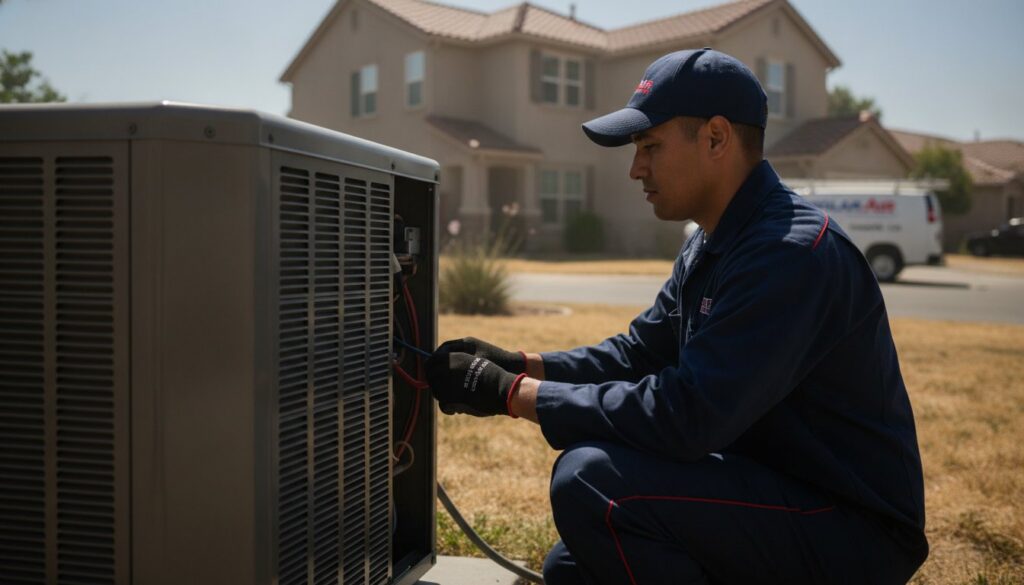
Imagine it is a 105 degree afternoon in July, and while you are trying to stay cool, you notice a damp water stain spreading across your hallway ceiling. This is the moment every local homeowner dreads, yet in our region, these emergencies are often caused by a simple blockage rather than a total system collapse. We understand the immediate stress of facing potential water damage while the Sacramento heat is rising outside. You shouldn’t have to guess whether you need a plumber or an HVAC expert when your family’s comfort and safety are on the line.
In this guide, we will show you exactly how to handle AC drain line clog repair Roseville so you can stop leaks before they ruin your floors or drywall. We believe in protecting your home like it is our own, so we have gathered the best ways to identify, troubleshoot, and prevent these clogs. You will learn how to tell if a fix is a simple filter change, why our Comfort Club maintenance plan is your best defense against future leaks, and how modern UV light installations can keep your system running safely through the hottest California summers.
Key Takeaways
- Learn how Roseville’s unique environmental factors, like valley dust and wildfire smoke, contribute to rapid buildup in your AC’s drainage system.
- Master the essential troubleshooting steps for AC drain line clog repair Roseville to protect your home from sudden water leaks and expensive ceiling damage.
- Identify the warning signs of biological sludge and frozen coils so you can act before your cooling system fails during a Sacramento heatwave.
- Discover how preventative solutions like UV light installations and our Comfort Club maintenance plan keep your drain lines clear year-round.
- Understand the critical first steps to take when you spot moisture, ensuring you prioritize your household’s safety and comfort above all else.
How Air Conditioners Create Condensation (and Where It Is Supposed to Go)
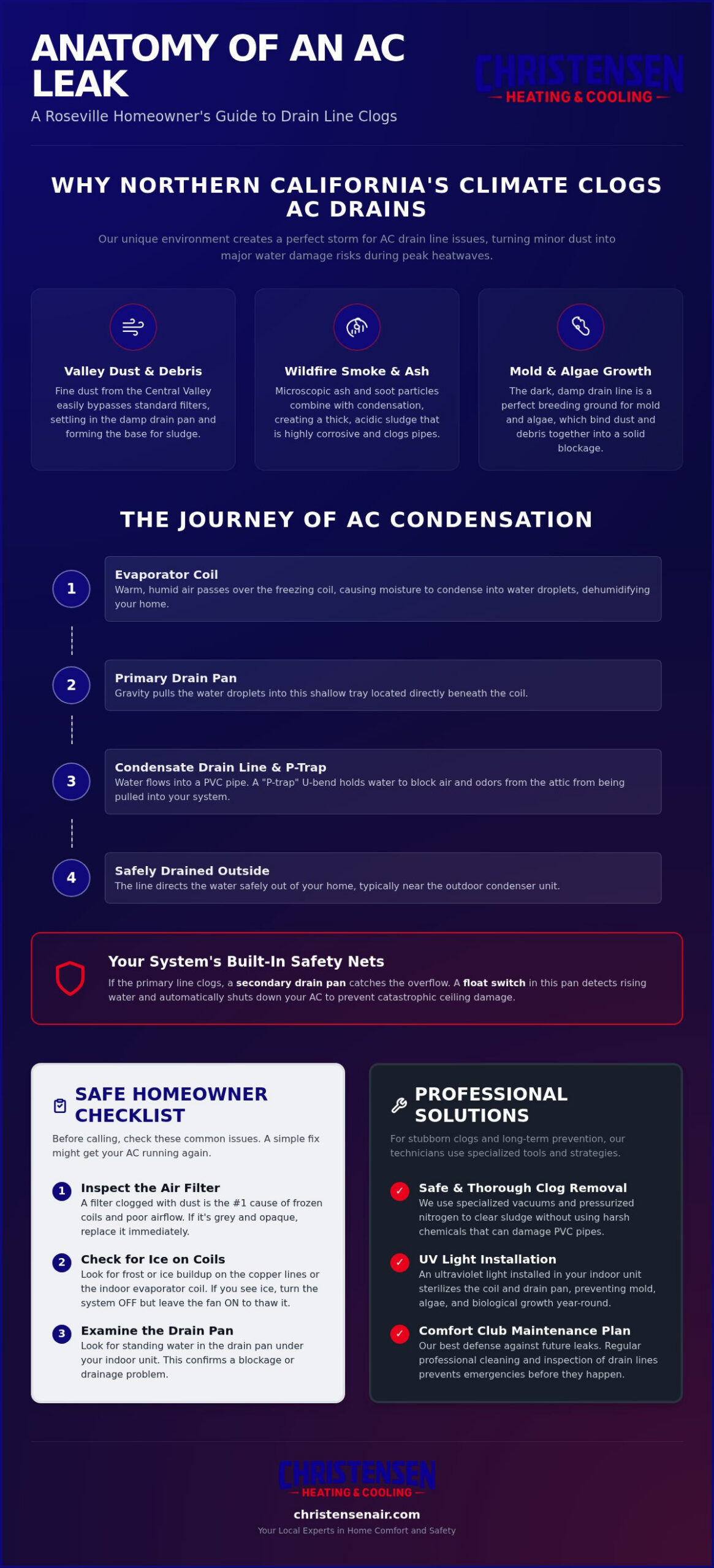
Most families in Roseville think of their air conditioner as a giant ice box. In reality, your cooling system is a complex moisture management tool. To keep your home comfortable, the system must remove both heat and humidity from the air. We see this process every day through how HVAC systems create condensation. When warm, humid air from your living room blows over the freezing evaporator coil, the moisture in that air reaches its dew point and turns into liquid. This physical change is exactly why your home feels crisp and refreshing instead of sticky during a July heatwave.
The Role of the Evaporator Coil
The evaporator coil serves as the dehumidifier of your HVAC system. This component sits inside your indoor unit and stays significantly colder than the air around it. For this process to remain balanced, we need steady, unobstructed airflow. If your air filter is thick with dust or the blower fan slows down, the moisture on the coil can actually freeze. This creates a block of ice that eventually thaws and overwhelms your drainage system, which is a common reason homeowners call us for AC drain line clog repair Roseville.
The Drainage System: Pans and Lines
Once those water droplets form on the coil, gravity takes over. They drip down into the primary drain pan, a shallow tray designed to catch every drop. From there, the water flows into the condensate drain line, a PVC pipe that leads safely out of your home. We often install a “P-trap” in this line; it looks like a small “U” shape. This trap holds a small amount of water to create an air seal, preventing attic air or odors from being sucked into your ductwork while allowing the water to drain freely.
Most modern systems also include a secondary drain pan. This is your home’s first line of defense. If the primary line clogs, the water overflows into this larger emergency pan rather than onto your flooring. In many local homes, this secondary pan is equipped with a float switch. This safety device shuts the system off immediately if it detects rising water, saving you from a major restoration project.
It is perfectly normal to see a small puddle or a dripping pipe near your outdoor condenser unit. This simply means the system is doing its job and moving moisture out of your sanctuary. However, finding water pooling around your indoor unit or dripping from a hallway ceiling is a major red flag. If you spot moisture inside, it usually indicates a blockage that requires professional AC drain line clog repair Roseville to protect your home’s structure and your family’s peace of mind.
Common Culprits Behind AC Water Leaks and Drain Clogs
Identifying the source of a leak is the first step toward restoring your peace of mind. While a puddle near your indoor unit is stressful, it usually points to a specific mechanical or environmental issue we can resolve. Algae and biological growth are the most frequent offenders. The dark, damp environment inside your drainage system is a perfect breeding ground for mold and mildew. This is why the EPA guide to mold and moisture emphasizes keeping drain lines unobstructed to prevent indoor air quality issues and structural damage.
Clogged Condensate Drain Lines
When dust particles bypass your air filter, they settle in the moist drain pan and mix with biological growth to create a thick, jelly-like sludge. This sludge eventually works its way into the narrow PVC piping, creating a stubborn blockage. You might notice water dripping from your hallway ceiling or pooling at the base of the furnace. While it’s tempting to pour harsh chemicals down the line, these can actually weaken your PVC joints and lead to hidden leaks. Our team uses specialized tools for AC drain line clog repair Roseville to clear these blockages safely without damaging your home’s infrastructure.
Frozen Coils and Airflow Obstructions
A dirty air filter is more than just a nuisance; it’s a mechanical threat to your system. If air can’t move freely over the evaporator coil, the temperature drops too low and turns condensation into solid ice. Once the system finally cycles off or fails, that ice begins to thaw rapidly. This sudden “flash flood” often overwhelms the primary drain pan’s capacity, leading to water spilling over the sides. Maintaining clean filters is one of the easiest ways to prevent this, and you can learn more about how to improve indoor air quality to keep your system running efficiently.
In many of our older Roseville neighborhoods, we also encounter rusted or damaged drain pans. After years of service, metal pans can develop pinhole leaks that allow water to escape before it ever reaches the drain line. Additionally, if you hear a faint hissing sound near your indoor unit, it may indicate low refrigerant. This imbalance causes the coil to freeze just like an airflow restriction does. We often find that a quick visit from a professional can catch these small issues before they turn into a major AC drain line clog repair Roseville. If you haven’t had your system checked this year, our Comfort Club maintenance plan is designed to spot these culprits before they threaten your home’s sanctuary.
Why Northern California’s Climate Accelerates AC Drain Line Issues
Living in the Sacramento Valley offers a beautiful landscape, but our unique environment presents specific challenges for your cooling system. While standard HVAC guides focus on general wear and tear, we know that Roseville homeowners face a different set of obstacles. The combination of intense agricultural activity, ongoing suburban construction, and our legendary triple-digit heat waves creates a “perfect storm” for drainage failures. Our local team specializes in AC drain line clog repair Roseville, specifically addressing the environmental factors that corporate contractors often overlook.
The “Sacramento Summer” cycle is particularly brutal on condensate lines. During a typical July week, temperatures often soar above 100°F during the day and stay warm well into the evening. This constant heat means your system never truly rests. As the evaporator coil works overtime to pull moisture from the air, it produces gallons of water every day. If your drain line has even a minor restriction from local dust, this sudden spike in condensation can quickly lead to an indoor flood.
Wildfire Smoke and Filter Clogging
In recent years, wildfire smoke has become a seasonal reality that impacts more than just our outdoor plans. Fine particulate matter from these fires is small enough to bypass low-quality fiberglass filters, eventually coating your indoor coils in a sticky residue. Many of our neighbors switch to high-efficiency MERV filters to protect their family’s health, but these filters can restrict airflow if they aren’t monitored closely during smoky weeks. Wildfire ash acts as a glue for drain line sludge, turning normal household dust into a thick, waterproof barrier that stops drainage in its tracks. We recommend checking your filters every two weeks when air quality alerts are active to prevent a total system freeze.
Placer County Dust and Pollen
The “Roseville buildup” is a real phenomenon caused by the fine silt and pollen native to Placer County. As wind carries these particles into your home, they are pulled into the return air vents and settle in the moist environment of your drain pan. Over time, this pollen contributes to the biological “mat” that we frequently find during AC drain line clog repair Roseville. This organic material grows rapidly in the dark, damp spaces of your HVAC unit. We often see a surge in the need for residential AC repair in Carmichael and Roseville during peak allergy season, as high pollen counts lead to faster biological growth in drainage systems. Keeping your coils clean is essential for maintaining the sanctuary of your home and preventing water damage before the next heat wave arrives.
Safe Troubleshooting: What Roseville Homeowners Can Check
Discovering water pooling around your indoor unit can trigger immediate panic. Before you reach for a mop, the most important step is to turn your system off at the thermostat. This stops the cooling process and prevents your evaporator coil from pulling more moisture out of the air, which effectively “turns off the faucet” on your leak. If you find water pooling, you might be searching for AC drain line clog repair Roseville to stop the leak immediately. Taking a few minutes to assess the situation safely can help you decide if you can resolve the issue with a simple maintenance task or if you need our professional help.
Once the system is off, perform a quick visual inspection of these four areas:
- The Air Filter: Pull your filter out and hold it up to a light. If it is dark, dusty, or feels damp to the touch, it is likely the primary culprit behind a frozen system.
- The Drain Pan: Look for standing water in the tray beneath your unit. While a small amount of moisture is normal, several inches of water indicate a total blockage in the line.
- The Copper Lines: Check the insulated copper pipes leading into your indoor unit. If you see white frost or solid ice on the metal, your system has frozen over.
- The Unit Base: Inspect the floor or ceiling around the unit for dampness. We want to catch these leaks before they penetrate your home’s structure.
When to Stop the DIY Effort
We often see homeowners attempt to clear lines by “poking” them with stiff wires or coat hangers. We strongly advise against this, as it can easily puncture the PVC or break internal joints, leading to hidden leaks inside your walls. You should also never use household drain cleaners in your HVAC system. These caustic chemicals are designed for heavy-duty plumbing and can eat through your drain pan or weaken the glue on your PVC fittings. Additionally, your HVAC unit contains sensitive electrical components and high-voltage wiring. If water is dripping near a circuit board or electrical junction, please step back and let a professional handle it. Our team provides professional AC drain line clog repair Roseville to ensure your pipes are cleared without risking a broken fitting or an electrical hazard.
The Quick Filter Test
A restricted filter is the most common reason for a frozen coil. If your filter is clogged, the lack of airflow causes the temperature to plummet, turning condensation into ice. If you find ice, leave the system off and let it thaw completely. This can take several hours, but it is a necessary step before any repair can begin. Changing your filter regularly is the simplest way to protect your sanctuary. You can learn more about how to make my HVAC system last longer by establishing better maintenance habits. If your system continues to leak after a filter change and a full thaw, it is time for a deeper look. Schedule your diagnostic visit with us today to protect your home from further water damage.
Professional Solutions and Preventing Future Water Damage
When we arrive at your home, our priority is to restore your sanctuary and stop the immediate threat of water damage. A professional AC drain line clog repair Roseville begins with a thorough diagnostic process that goes beyond a simple quick fix. We don’t just clear the blockage and leave; we investigate why the clog formed in the first place. This might involve checking the pitch of your PVC lines to ensure gravity is working in your favor or testing the mechanical health of your condensate pump. In homes where the HVAC unit is located below the drainage exit level, a reliable pump is essential to move water up and out of the structure safely.
Preventative Maintenance with the Comfort Club
The most effective way to handle a water leak is to prevent it from ever starting. Our Comfort Club Maintenance Plan serves as your primary defense against sudden system failures and the stress they bring. During our bi-annual inspections, we perform a deep flush of your condensate lines and a meticulous cleaning of the primary drain pan. This proactive care addresses the most common cause of emergency AC calls in Placer County before the triple-digit heat arrives. As a family-owned business, we take personal pride in every task, providing the neighborly care and dependable communication you deserve.
Advanced Air Quality Solutions
For many local households, modern technology offers a more permanent solution to the biological growth we discussed earlier. We frequently install UV lights to keep coils clean and eliminate the algae that leads to stubborn sludge. These lights work silently inside your unit to kill organic matter before it can ever reach your drain pan. If your home has older, deteriorating insulation that contributes to excessive dust, we may suggest a duct system replacement to ensure your indoor air remains clean and your drainage system stays clear.
Protecting your home from water damage shouldn’t be a source of constant worry. Whether you are facing an active leak or want to establish a long-term maintenance strategy, our team is here to provide clear, informative guidance that prioritizes your family’s needs. Trust our family to protect yours and keep your household cool and dry through every Sacramento summer. Schedule your AC repair today and let us help you maintain the comfort and safety of your home.
Keep Your Roseville Home Cool and Dry All Year Long
We have explored how Roseville’s unique climate, from agricultural dust to seasonal wildfire smoke, puts extra pressure on your air conditioner’s drainage system. Understanding that water inside your home is a red flag is the first step in protecting your sanctuary. By staying ahead of biological growth and keeping your filters fresh, you can avoid the stress of a sudden leak during a 100-degree heatwave. Our goal is to ensure you feel confident in managing your home’s comfort while knowing exactly when professional intervention is necessary.
When troubleshooting isn’t enough, a professional AC drain line clog repair Roseville provides the long-term security your household needs. At Christensen Heating and Cooling, we’ve been family-owned and operated since 2009, specializing in protecting Placer County homes through our Comfort Club and high-efficiency cooling expertise. Schedule Your Professional AC Diagnostic with Christensen Heating and Cooling today to ensure your system is ready for the next heatwave. We take personal pride in every task and look forward to serving as your trusted local experts for years to come.
Frequently Asked Questions
Is it safe to run my AC if it is leaking water?
No, you should turn your system off at the thermostat immediately if you notice a leak. Continuing to run the unit will only produce more condensation, which can quickly turn a small puddle into major water damage for your ceilings or flooring. We recommend switching the power off to stop moisture production while you wait for our team to arrive. This simple step protects your sanctuary from expensive structural repairs.
How much water is normal for an AC unit to drain?
A healthy air conditioner can produce between 5 and 20 gallons of water per day during a typical Sacramento heatwave. The exact amount depends on the humidity levels inside your home and how hard the system is working to keep you cool. You should see this water exiting through the PVC line outside your house. If that outdoor line is dry while the unit is running, it is a sign you need AC drain line clog repair Roseville.
Why is my AC leaking water inside the house but not outside?
This scenario almost always points to a total blockage in your primary condensate drain line. When the path to the outdoors is obstructed by algae or dust, the water has nowhere to go but back into your indoor unit’s drain pan. If the pan overflows or has a hidden crack, you will see water inside your home. We often find that local valley dust creates a thick sludge that requires professional clearing to restore proper drainage.
Can a dirty air filter really cause a water leak?
Yes, a clogged air filter is a very common cause of indoor water leaks. When airflow is restricted, the evaporator coil gets too cold and the condensation on it turns into solid ice. Once that ice melts, it creates a volume of water that often exceeds what your drain pan was designed to handle. We suggest checking your filters every month, especially during the peak of summer or after a period of poor outdoor air quality.
How do I know if my condensate drain line is clogged?
You will know there is a problem if you see standing water in the emergency drain pan located under your indoor unit. Many modern systems in Placer County also include a safety float switch. If this switch detects rising water, it will automatically shut down your cooling to prevent a flood. If your thermostat is blank and won’t turn on, a clogged drain line is often the hidden culprit we find during a diagnostic visit.
Does homeowner insurance cover AC water damage in California?
Most California policies cover water damage if the leak was sudden and accidental, but they often exclude damage caused by a lack of maintenance. If a drain line clogs overnight and causes a ceiling stain, you might be covered. However, if a slow leak has been neglected for months, your claim could be denied. We recommend reviewing your specific policy and keeping up with regular maintenance through our Comfort Club to avoid these stressful disputes.
Will my AC stop leaking if I just change the filter?
Changing the filter can stop the freezing process, but it won’t clear a physical blockage already sitting in your pipes. If the leak was strictly due to ice buildup from poor airflow, a new filter and a few hours of thawing might solve the immediate drip. However, if biological sludge has already settled in the drain pan, you will likely still need professional AC drain line clog repair Roseville to ensure the system stays dry.
What should I do if water is dripping from my ceiling near the AC vent?
Shut down your HVAC system at the thermostat and the breaker immediately to protect your home’s electrical components. Place a bucket under the drip to catch the water and prevent further damage to your flooring or drywall. This type of leak often means the secondary drain pan is overflowing or the ductwork is heavily sweating. Once you have contained the water, give us a call so we can identify the root cause and restore your home’s safety.