





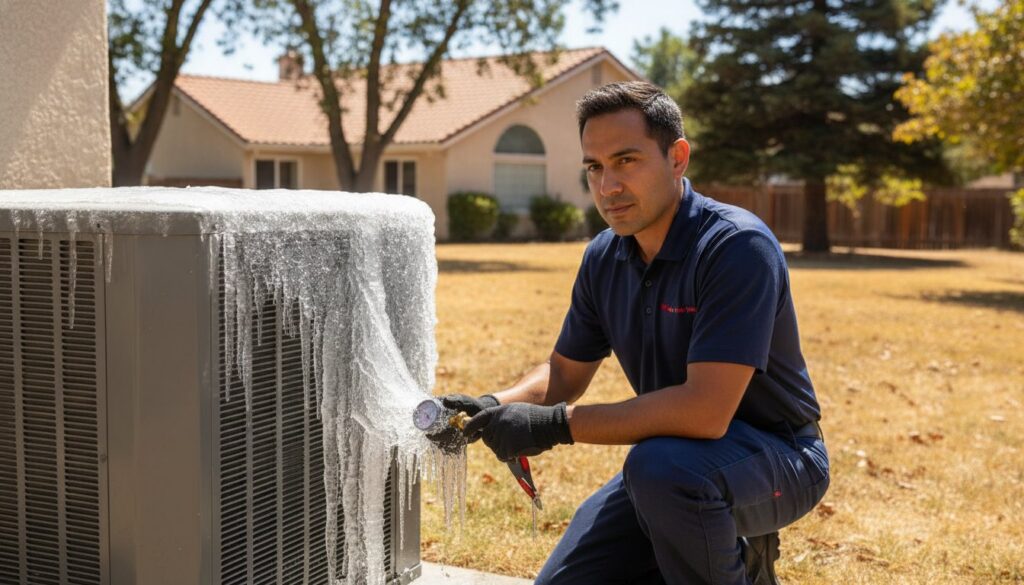
How can your air conditioner be covered in a thick layer of ice when the Citrus Heights sun is pushing temperatures past the 100 degree mark? It feels like a cruel joke to find your AC unit freezing up in summer Citrus Heights while your living room feels more like a sauna than a sanctuary. We know how stressful it is to see those frozen coils and wonder if you are facing a total compressor replacement during the hottest week of July.
We understand that your home is your refuge, and a cooling failure during a Sacramento Valley heatwave is more than just an inconvenience; it is a threat to your family’s comfort. In this guide, we will explain the science behind why energy starved systems turn into ice blocks and provide the exact steps you need to take to thaw your system safely. You will learn how to identify if you need a simple filter change or professional maintenance. Our goal is to help you avoid unnecessary breakdowns and keep your SMUD bills under control as rates continue to rise in 2026. We will walk through the immediate fixes and the long term plan to ensure your home remains a cool, reliable haven for your loved ones.
Key Takeaways
- Understand how restricted airflow and local Sacramento Valley dust create a domino effect that turns your cooling system into an ice block.
- Discover why an AC unit freezing up in summer Citrus Heights is often a sign of energy starvation rather than the unit working too hard.
- Learn why low refrigerant levels cause extreme cold and why finding the leak is more important than simply topping off the system.
- Master the immediate steps to safely thaw your evaporator coil without causing permanent damage to your expensive compressor.
- Find out how regional expertise and preventative maintenance can protect your home’s sanctuary and prevent emergency failures during 100 degree days.
Table of Contents
- Understanding the 'Freezing Up' Phenomenon: How Ice Forms in 100-Degree Heat
- Restricted Airflow: The Most Common Culprit for Frozen AC Units
- Refrigerant Issues and Mechanical Failures: When DIY Isn't Enough
- How the Citrus Heights Climate Aggravates AC Icing
- Steps to Safely Thaw Your System and Prevent Future Freezes
Understanding the ‘Freezing Up’ Phenomenon: How Ice Forms in 100-Degree Heat
Finding ice on your air conditioner when it is 100 degrees outside feels like a scientific impossibility. You might think your system is working too hard to keep up with the heat, but the truth is actually the opposite. Your system is suffering from a heat transfer failure. Every air conditioner operates on the vapor-compression refrigeration cycle. This process involves a refrigerant that expands and evaporates, which naturally pulls heat away from the metal surfaces of your system. When something goes wrong with this cycle, those metal surfaces can drop well below 32 degrees, causing an AC unit freezing up in summer Citrus Heights.
To better understand what this looks like inside your system, watch this helpful video:
What is an Evaporator Coil?
The evaporator coil is the heart of the indoor portion of your cooling system. It is usually tucked away inside your air handler or furnace cabinet. We like to describe the coil as a thermal sponge. Its primary job is to soak up the heat from your indoor air as the blower fan pushes it across the cold metal fins. Our ac repair roseville technicians often find that when these “sponges” get clogged with dust or debris, they can no longer absorb heat effectively. Without enough heat to soak up, the refrigerant inside stays too cold, and the entire unit begins to transform into a block of ice.
The Dew Point Dilemma in Citrus Heights
Even though we live in the relatively dry Sacramento Valley, our air still carries moisture. As the warm air from your home passes over the freezing coils, it reaches its dew point. This causes water to condense on the metal, much like the sweat on a cold glass of lemonade. In a healthy system, this water drips safely into a condensate pan and drains away. However, if the coil temperature is too low, that moisture freezes instantly. This creates a thin layer of frost that quickly acts as insulation. This ice blanket prevents the remaining warm air from reaching the coil, causing the temperature to plummet even further. Before long, what started as a few drops of water becomes a thick, solid mass that blocks all airflow.
When this cycle of freezing and insulation takes hold, your home’s comfort is the first casualty. Understanding this phenomenon is the first step toward restoring your sanctuary. Recognizing the signs of an AC unit freezing up in summer Citrus Heights allows you to take action before the ice causes permanent damage to your compressor. We are here to help you identify these symptoms early so you can get back to enjoying a reliable, cool home.
Restricted Airflow: The Most Common Culprit for Frozen AC Units
Airflow is the lifeblood of your home’s cooling system. For your air conditioner to work correctly, the evaporator coil requires a constant bath of warm indoor air to keep its temperature above the freezing point. When this air supply is cut off, the refrigerant inside the coil continues to drop in temperature without any heat to absorb. This creates a rapid domino effect. A colder coil leads to frost, and that frost quickly grows into a solid block of ice that completely chokes the system. If you find your AC unit freezing up in summer Citrus Heights, the very first thing we recommend checking is whether your system can actually breathe.
Many homeowners accidentally starve their units by placing furniture, heavy curtains, or decorative rugs over return air vents. Even “high-efficiency” pleated filters can be a hidden danger. If a filter is too thick for your specific blower motor to handle, it acts like a wall rather than a sieve. This restriction forces the motor to work harder while the coil stays too cold, eventually leading to a total freeze-up that leaves your family in the sweltering heat.
The Air Filter: Your First Line of Defense
During a typical Citrus Heights summer, your air conditioner might run for 12 to 15 hours a day. This heavy usage means filters clog much faster than the manufacturer’s “90-day” suggestion. We recommend checking your filter every 30 days when temperatures stay in the triple digits. You can often hear a “starved” system before you see the ice. Listen for high-pitched whistling sounds at the return vent or notice if the air blowing from your registers feels weaker than usual. While it is tempting to buy the highest MERV-rated filter available, a mid-range MERV 8 or 11 filter usually provides the best balance of air quality and necessary airflow for most residential systems.
Ductwork and Vents: Hidden Obstructions
A common myth is that closing vents in unused rooms saves money on cooling. In reality, this increases the static pressure inside your system and reduces the volume of warm air reaching the coil. This can directly cause an AC unit freezing up in summer Citrus Heights. Furthermore, much of the housing stock in our community was built between the 1960s and 1980s. These older homes often have original ductwork that may be undersized, collapsed, or leaking significant amounts of air into the attic. If your ducts are failing, even a brand-new unit will struggle to stay thawed. In these cases, a professional duct system replacement is often the only way to ensure long-term reliability and comfort.
If you have cleared your vents and changed your filter but the ice keeps coming back, it might be time for a deeper look. Our team can perform a thorough diagnostic to ensure your system’s internal components are clean and functioning as they should. You can always reach out to us for a professional inspection to protect your home’s sanctuary before the next heat spike hits.
Refrigerant Issues and Mechanical Failures: When DIY Isn’t Enough
While dirty filters are often the culprit, sometimes the problem lies deeper within the system’s chemistry. If you have checked your vents and the ice remains, you might be dealing with a refrigerant issue. It sounds counterintuitive, but having less refrigerant in your system actually makes the coils colder. This is due to the Joule-Thomson Effect. When refrigerant pressure drops because of a leak, the liquid expands much more rapidly than intended. This rapid expansion causes the temperature to plummet far below freezing, turning your indoor unit into an ice block.
When this happens, your AC unit freezing up in summer Citrus Heights isn’t just a nuisance; it is a sign of a mechanical struggle. Simply “topping off” the refrigerant is never a permanent solution. Refrigerant exists in a closed loop. If it’s low, there is a leak. Adding more without finding the hole is like pouring water into a bucket with a hole in the bottom. It wastes money and can eventually destroy your compressor. We believe in doing the job right the first time by locating the source of the leak and sealing it properly to protect your home’s comfort.
Signs of a Refrigerant Leak
Identifying a leak early can save your system from a total breakdown. Keep an ear out for unusual sounds. A hissing or bubbling noise near the indoor coil or the outdoor condenser often indicates gas escaping the lines. You might also notice that your AC runs 24/7 without ever reaching the temperature you set on the thermostat. Because refrigerant is a regulated chemical that requires specialized tools and handling, only EPA-certified technicians should perform these repairs to ensure your home’s safety and compliance with environmental standards.
Mechanical Components That Fail
Beyond the refrigerant, several mechanical parts must work in harmony to prevent icing. The expansion valve is responsible for regulating the flow and pressure of the refrigerant into the evaporator coil. If it gets stuck or clogged, the pressure can drop too low, leading to an immediate freeze. Similarly, the blower fan is vital. If the motor begins to fail or slows down, it won’t move enough air to keep the coil warm.
Another common issue involves stuck contactors in the outdoor unit. If a contactor sticks, the compressor might keep running even when the indoor fan has cycled off. This causes the coil to freeze rapidly because there is zero air movement. Learning how to make my HVAC system last longer often starts with these annual mechanical checks. We take pride in inspecting these small but critical components during our routine visits to ensure your sanctuary remains protected throughout the hottest months of the year. Regular maintenance is always more affordable than an emergency compressor replacement in the middle of a July heatwave.
How the Citrus Heights Climate Aggravates AC Icing
The Sacramento Valley offers a unique set of challenges for HVAC systems that coastal California simply doesn’t face. While our humidity is relatively low, our local environment introduces other stressors that contribute to an AC unit freezing up in summer Citrus Heights. We see a specific pattern of failures every July and August that are directly linked to our regional geography and weather patterns. Your system isn’t just fighting the heat; it is fighting the very air it breathes.
Valley Dust and Coil Cleanliness
If your home is located near busy thoroughfares like Sunrise Boulevard or Antelope Road, your system is likely inhaling more particulates than you realize. Sacramento Valley dust is fine and silty. It bypasses standard filters more easily than larger particles found in other climates. Once this dust settles on your evaporator fins, it creates a textured surface. This surface acts as an anchor for moisture to cling to and freeze. Unlike a clean, smooth metal fin where water can drip away into the drain pan, a dusty fin holds onto that moisture until it turns into a solid sheet of ice.
Local wildfire seasons add another layer of complexity to this problem. Ash and smoke particulates are microscopic but incredibly sticky. During a “bad air” day, your filter can become completely choked in less than a week. This sudden drop in airflow is a primary cause for an AC unit freezing up in summer Citrus Heights. We often find that a system was running perfectly until a smoke event pushed it over the edge into a total freeze-up. A simple filter change after a fire isn’t always enough; the coils themselves often require a professional cleaning to restore proper heat exchange.
The Stress of the 100-Degree Spike
Our region is famous for the “Delta Breeze,” which provides cool nights after scorching 100-degree days. While we love the relief, these extreme temperature swings put immense physical stress on your system’s copper refrigerant lines. Metal expands when it’s hot and contracts when it cools. This constant movement can expose tiny “pinhole” leaks that might not have been an issue during a mild June. When the mercury hits 105, the increased pressure inside the lines forces more refrigerant out of these small cracks, leading to the pressure drop that causes icing.
There is a common myth that an AC unit freezes because it is “working too hard” during a heatwave. In reality, a healthy, well-maintained system is designed to run continuously during high-heat events. If it freezes at 105 degrees but worked at 90, it’s usually because the higher outdoor temperatures increased the internal load enough to worsen an existing, undetected mechanical issue. If you suspect your system is struggling with the local heat, you can schedule an expert AC inspection to ensure your unit is ready for the next triple-digit stretch. We take pride in protecting your home’s sanctuary from these predictable regional spikes.
Steps to Safely Thaw Your System and Prevent Future Freezes
When you discover your AC unit freezing up in summer Citrus Heights, your first instinct might be to panic. It is a stressful situation, especially when the afternoon heat is climbing. However, taking the right steps now can prevent a simple icing issue from turning into a permanent mechanical failure. We want to help you protect your home and your budget by managing the thawing process safely and effectively. Follow these immediate steps to begin the recovery process.
- Step 1: Turn the system OFF at the thermostat. Continuing to run the cooling cycle will only make the ice block thicker and put your compressor at risk of “slugging,” which happens when liquid refrigerant enters the motor.
- Step 2: Switch the fan to the ‘ON’ position. Move the fan setting from ‘AUTO’ to ‘ON’. This keeps the indoor blower running without the cooling cycle. It forces warm indoor air over the frozen coils to speed up the melting process.
- Step 3: Check and replace your air filter. As we discussed earlier, a dirty filter is a primary cause of airflow restriction. Replace it now so your system is ready to breathe once the ice is gone.
- Step 4: Inspect the condensate drain. A large block of ice produces a significant amount of water as it melts. Ensure your drain line is clear so you don’t end up with water damage in your attic or closet.
- Step 5: Call a professional. Ice is a symptom, not the disease. Even if the system starts cooling again after thawing, the root cause like a refrigerant leak or mechanical failure still exists.
What NOT to Do When Thawing Your AC
We know how tempting it is to speed up the process when your house is warming up. However, you should never use a hair dryer, heat gun, or any type of open flame to melt the ice. The copper fins on your evaporator coil are incredibly delicate. Intense, localized heat can cause them to warp or even crack. Similarly, never try to chip away at the ice with a screwdriver or ice pick. One small slip can puncture a refrigerant line, turning a repairable leak into a total system replacement.
Avoid the temptation to turn the cooling back on the moment the visible ice disappears. There is often still ice deep within the coil assembly that you cannot see. Running the system too early will just cause it to freeze right back up. Patience is your best friend here. Let the fan run for several hours to ensure the entire assembly is completely dry before attempting to restart the cooling cycle.
Long-Term Prevention: The Christensen Comfort Club
The best way to handle an AC unit freezing up in summer Citrus Heights is to prevent the ice from forming in the first place. Since 2009, our family owned team has helped neighbors avoid these emergencies through our Comfort Club Maintenance Plan. Regular bi-annual inspections allow us to catch tiny refrigerant leaks and clean Valley dust from your coils before the first triple digit heatwave arrives. Members of our club also enjoy priority scheduling during those intense Sacramento Valley heat spikes. We treat your home with the same care we would our own, ensuring your sanctuary remains a cool and reliable refuge for your family all summer long.
Protect Your Home’s Sanctuary from the Triple-Digit Heat
An AC unit freezing up in summer Citrus Heights is a clear signal that your system is struggling to breathe or maintain its thermal balance. Whether the culprit is a layer of Sacramento Valley dust choking your coils or a hidden refrigerant leak exposed by a 100-degree spike, taking immediate action prevents a simple icing issue from becoming a costly compressor replacement. By following the safe thawing steps we have shared, you are already on the right path to restoring your indoor comfort and protecting your household’s well-being.
We are here to help you navigate these summer emergencies with neighborly care and professional authority. As a family-owned and operated team since 2009, we bring over 15 years of local HVAC expertise to every home we visit. Our Comfort Club members enjoy the peace of mind that comes with priority summer service and preventative maintenance that stops freezes before they start. You don’t have to face the sweltering Valley heat alone. Our hardworking team takes personal pride in ensuring your cooling system remains a steady, dependable refuge for your loved ones.
Schedule your emergency AC repair in Citrus Heights with Christensen today!
We look forward to helping you keep your household cool, safe, and secure all season long.
Frequently Asked Questions
Can I run my AC if I see ice on the outside pipe?
No, you should turn the system off at the thermostat immediately. Running the unit while ice is visible on the copper lines can cause liquid refrigerant to flood back into your compressor. This leads to a catastrophic failure known as slugging, which can destroy the motor. Shutting it down now is the best way to protect your sanctuary from a much more expensive replacement.
How long does it take for an AC unit to thaw out?
A full thaw typically takes between 2 and 24 hours depending on the severity of the ice buildup. While the ice on the outside might melt quickly, the block inside your indoor cabinet is often much thicker. We recommend leaving the cooling cycle off for at least 12 hours while running the fan to ensure every bit of moisture has cleared from the delicate coil fins.
Will a dirty air filter really cause my AC to freeze?
Yes, a clogged filter is the primary reason for an AC unit freezing up in summer Citrus Heights. When airflow is restricted, the evaporator coil doesn’t receive enough warm air to keep the refrigerant above the freezing point. This causes the moisture in the air to turn into frost. Once that frost starts, it quickly grows into a solid sheet of ice that chokes the entire system.
Why is my AC freezing up even though I just changed the filter?
If your filter is fresh but the ice persists, you likely have a refrigerant leak or a mechanical failure. Low refrigerant levels cause a pressure drop that makes the coils much colder than they should be. Other culprits include a failing blower motor that isn’t moving enough air or a stuck expansion valve. These internal issues require a professional diagnostic to ensure a safe and reliable repair.
Is it expensive to fix a frozen air conditioner?
The repair cost depends entirely on what caused the freeze in the first place. If the issue is a simple airflow blockage, the fix is often very affordable. However, repairing a refrigerant leak or replacing a failed motor is a larger investment. We focus on providing honest, clear guidance to help you understand if a repair or a high-efficiency upgrade is the best choice for your household’s long term comfort.
Can I just add more Freon to stop the freezing?
No, adding refrigerant without fixing the source of the problem is never a good idea. Your cooling system is a closed loop, so low levels mean there is a leak that must be sealed. Simply “topping it off” is a temporary fix that wastes money and can lead to an AC unit freezing up in summer Citrus Heights again within days. We prioritize finding and fixing the leak to protect your home and the environment.
What happens if I ignore the ice and keep running the unit?
Ignoring the ice can lead to a total compressor failure, which is the most expensive component in your system. The ice acts as an insulator, so your home won’t actually get any cooler even though the unit is running 24/7. This puts extreme stress on the electrical components and can also cause significant water damage to your home as the ice eventually melts and overflows the drain pan.
Does the ‘fan only’ setting help melt the ice faster?
Yes, switching your thermostat fan setting to “ON” instead of “AUTO” is the safest way to speed up thawing. This keeps the blower motor running to pull warm indoor air across the frozen coils without running the compressor. It is a much better alternative than using a hair dryer or heat gun, which can easily damage the sensitive aluminum fins and copper lines inside your unit.