





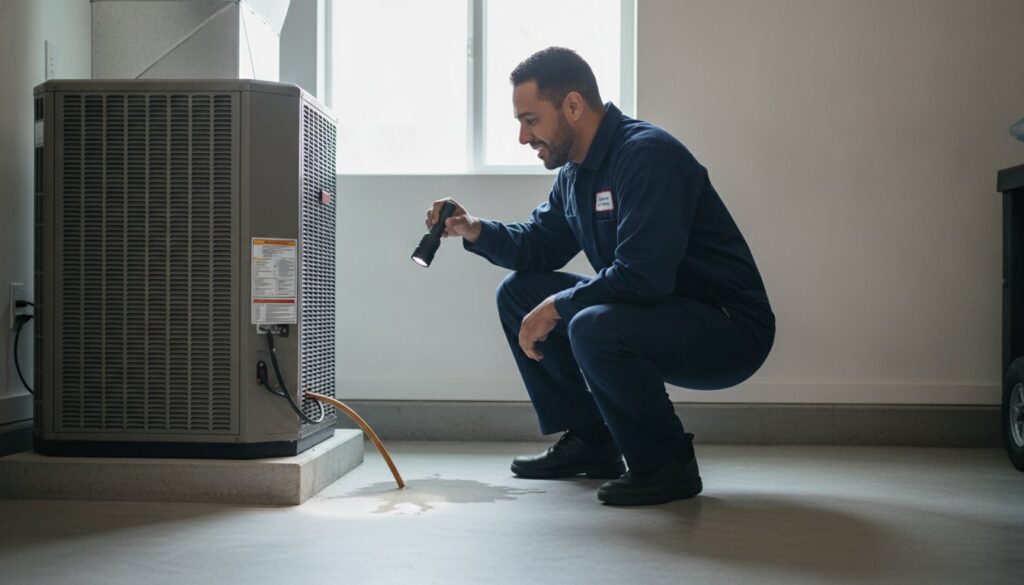
Imagine it’s a sweltering July afternoon here in Roseville, and while you’re searching for relief from the heat, you step into a cold, wet puddle right next to your indoor unit. That sinking feeling in your stomach isn’t just about the damp socks. It’s the immediate fear of structural water damage and the worry that your cooling system might be failing right when you need it most. We’ve seen this happen to many of our neighbors, and we know how stressful it feels to wonder if you’re facing a simple fix or a major HVAC emergency.
If you’re asking yourself, “why is my AC unit leaking water,” you’ve come to the right place for honest answers. We believe your home should be a sanctuary of comfort, not a source of anxiety. In this 2026 guide, we’ll help you identify exactly where that moisture is coming from and show you the immediate steps to take to protect your floors and ceilings. We’ll walk through common culprits like clogged drain lines and frozen evaporator coils, helping you decide when a DIY check is enough and when it’s time to call in a professional to restore your peace of mind.
Key Takeaways
- Stop water damage immediately by shutting down your system at the thermostat and turning off the breaker if moisture is near electrical parts.
- Identify exactly why is my AC unit leaking water by checking for common issues like “sludge” clogs in your drain line or frozen evaporator coils.
- Understand the difference between simple DIY fixes and professional repairs involving condensate pumps or improper system installation.
- Learn safe troubleshooting methods to clear minor blockages, including how to use a wet/dry vac on your external drain exit.
- See how regular maintenance through the Comfort Club can prevent nearly 90% of common leak causes before they disrupt your home’s comfort.
Table of Contents
Immediate Action: What to Do if Your AC is Leaking Water
Finding a puddle under your indoor unit can be alarming, and your first thought is likely, “why is my AC unit leaking water?” Before you start investigating the technical details, you must take three immediate steps to protect your home. First, head to your thermostat and shut the system down completely. This stops the cooling cycle and prevents the unit from generating more moisture. Second, if you see water anywhere near the furnace or electrical control boards, turn off the system’s power at the circuit breaker. Finally, use a shop-vac or towels to clear any standing water. Stopping the spread of moisture now prevents long-term issues like floor warping or mold growth.
To understand why this happens, it helps to know how air conditioning works. Your AC doesn’t just cool the air; it acts as a massive dehumidifier. As warm air passes over the cold evaporator coils, moisture from your home’s air condenses into liquid water. Under normal conditions, this water collects in a drain pan and flows outside. When something blocks that path or the system malfunctions, that water has nowhere to go but onto your floor.
Is an AC Water Leak Dangerous?
While a few drips might seem minor, water and electricity are a hazardous combination. If your air handler is located directly above your furnace, a leak can drip into the electrical components or the blower motor. This can cause short circuits or even permanent damage to your heating system. In our local Roseville and Sacramento neighborhoods, many HVAC units are installed in attics. A persistent leak in an attic can quickly saturate drywall, leading to sudden, expensive ceiling collapses. Beyond the structural risk, damp carpets and drywall are breeding grounds for black mold; this can impact your family’s health within just 24 to 48 hours.
Distinguishing Between Condensation and Refrigerant
A common misconception is that a puddle on the floor means your unit is leaking refrigerant. Refrigerant is a chemical that stays under high pressure; if a leak occurs, it typically escapes as a gas, not a liquid. If you see a liquid puddle, it is almost certainly water. However, that water might be the result of a frozen coil. If your unit’s coils are encased in ice, they will eventually thaw and overwhelm the drain pan. A drain clog is a physical blockage in the pipe, while a coil freeze-up is usually caused by restricted airflow or low refrigerant levels.
The 3 Most Common Causes of AC Water Leaks in Roseville Homes
We see hundreds of units every summer across the Sacramento Valley, and while every home is unique, the reasons for a leak usually boil down to a few specific failures. If you’re currently asking yourself why is my AC unit leaking water, the most likely culprit is a drainage system that simply can’t keep up with our California heat. When your system works overtime to keep you cool, it produces gallons of water every day. If that water has nowhere to go, it will find its way into your home.
Our team has identified three primary issues that account for nearly all the residential leaks we encounter. From the fine dust of Placer County to the age of the equipment in established neighborhoods, these factors play a major role in your system’s health. Understanding these causes is the first step toward getting your home back to its comfortable, dry state.
The Clogged Drain Line: A Placer County Staple
In our region, the combination of fine outdoor dust and indoor biological growth creates a thick, jelly-like sludge inside your 3/4-inch PVC drain line. This “sludge” acts like a cork, stopping the water from exiting through the P-trap. The P-trap is designed to prevent sewer gases from entering your home, but its curved shape also makes it the perfect place for debris to settle. If you notice water backing up, it often requires professional ac repair roseville to safely clear these deep clogs without damaging the delicate pipe connections.
Airflow Issues and Frozen Coils
A dirty air filter is more than just a nuisance; it’s a primary reason why is my AC unit leaking water. When airflow is restricted, the temperature of your evaporator coil can drop below freezing. Ice begins to form on the coils, and once the system cycles off, that ice melts rapidly. This sudden deluge often overwhelms the drain pan, causing water to spill over the sides. We’ve also found that closing too many vents in unused rooms can create similar pressure issues that lead to freezing. If your system consistently freezes despite a clean filter, a duct system replacement might be necessary to ensure your home has the proper airflow to stay dry and efficient.
Damaged or Rusted Drain Pans
In many of the beautiful, established homes in Roseville that feature systems over 10 years old, the secondary drain pan may simply be reaching the end of its life. These metal pans can rust through over time, creating small pinholes that allow water to seep through. While modern systems use durable polymers, older units rely on metal that eventually succumbs to constant moisture. If you notice your system is struggling with frequent drainage issues, our team can help you explore modern options like an air conditioning installation to upgrade your home’s reliability.
Secondary Causes: Pumps, Pans, and Installation Errors
While clogs and frozen coils are the most frequent answers to why is my AC unit leaking water, secondary mechanical issues often fly under the radar. In our local Roseville neighborhoods, we frequently encounter installation errors or component failures that create persistent moisture problems. For instance, if your unit wasn’t perfectly leveled during installation, water can pool at the wrong end of the drain pan and bypass the exit pipe entirely. Over time, the natural vibration of your system can even shake PVC joints loose. This leads to a slow drip that goes unnoticed until it eventually stains a ceiling or wall.
We’ve also seen that rare Sacramento humidity spikes can overwhelm older systems that weren’t designed for high moisture loads. When the dew point rises, your AC works much harder to pull water from the air. This increased volume can expose tiny cracks in an old drain pan that wouldn’t normally leak during a typical dry summer. If you’re wondering why is my AC unit leaking water only on the most humid days, this sudden surge in condensation volume is likely the culprit.
When the Condensate Pump Quits
If your air handler is tucked away in a closet or basement where gravity can’t pull water outside, your system relies on a condensate pump. This small reservoir collects water and pumps it through a thin tube to a proper drainage point. If the motor burns out or the float switch gets stuck, the reservoir overflows almost instantly. You might hear a faint humming or clicking sound coming from the pump even though no water is moving. Pumps simply wear out over time. These components typically have a limited lifespan of about 5 to 7 years and require periodic replacement to keep your home dry.
The “Sweating” Ductwork Phenomenon
Sometimes, the moisture you see isn’t a leak from the unit itself but rather condensation forming on the outside of your equipment. This is known as “sweating.” During those brutal 100-degree Sacramento afternoons, the temperature difference between your cold refrigerant lines and the sweltering attic air can be extreme. If the insulation on these lines or your ductwork is thin or damaged, moisture from the air condenses on the cold surface and drips off. This can create “ghost leaks” that look like a failing system but are actually an insulation issue. Understanding the basic components of what is hvac can help you distinguish between a mechanical failure and an environmental one.
DIY Troubleshooting vs. Professional AC Repair
We know that many of our neighbors take great pride in maintaining their own homes. When you first notice a puddle, it’s natural to look for a quick fix before calling in the experts. A simple clog is often the answer to why is my AC unit leaking water, but forcing a fix can sometimes do more harm than good. There are several safe steps you can take to diagnose the issue, but knowing when to put the tools down is the best way to protect your system’s long-term health and your home’s sanctuary.
The 30-Minute Homeowner Checklist
Before you reach for the phone, walk through these three simple checks. They cover the most common issues that don’t require specialized tools or technical training.
- Check the air filter: Pull out your filter and hold it up to a light. If it looks gray, furry, or completely blocked, it’s restricting airflow. This is the primary cause of frozen coils that eventually melt into a leak.
- Inspect the secondary drain pan: Most units in our area have an “emergency” pan underneath the main unit. If there is standing water here, your primary drain line is definitely blocked and requires attention.
- Verify the float switch: This is a small plastic device attached to your drain line. If it has “tripped,” it will shut off your system to prevent a flood. If your AC won’t turn on at all while leaking, this safety feature is doing its job.
One popular DIY method involves using a wet/dry vac on the outdoor exit point of your condensate line to suck out the blockage. While this often works for minor clogs, you must use caution. Older PVC pipes can become brittle over time; too much suction or physical pressure can crack the joints inside your walls. This leads to a hidden leak that is much harder to fix than a simple puddle on the floor. If you’ve gone through these checks and are still wondering why is my AC unit leaking water, it’s time to look at deeper mechanical issues.
Why Professionals Use Nitrogen and Tablets
When our team arrives for a service call, we use specialized tools that go far beyond a standard vacuum. We use high-pressure nitrogen to “blow out” the entire length of the drain line, ensuring every bit of sludge is cleared safely. We also place professional-grade anti-algae tablets in the pan to prevent that “jelly” from returning. Our residential AC repair Carmichael specialists don’t just clear the water; they inspect the entire system to ensure a frozen coil or low refrigerant isn’t the root cause of the moisture.
A final word of safety: never attempt to “recharge” or handle refrigerant yourself. It’s dangerous to your health and illegal for anyone without an EPA certification to handle these chemicals. If you find a rusted pan or a coil encased in ice, it’s time to call in the professionals to ensure your home stays safe and dry. If you need a hand getting your system back in order, schedule your AC repair with our team today.
Preventing Water Leaks with the Christensen Comfort Club
We believe the most effective way to handle a system failure is to ensure it never has the chance to start. Most of our neighbors only begin asking why is my AC unit leaking water after they’ve discovered a damp ceiling or a ruined hardwood floor. However, our Comfort Club maintenance plan is specifically designed to prevent nearly 90% of the common drainage issues we’ve covered in this guide. By catching a small algae build-up or a loose PVC connection during a spring visit, we save you from the stress and high costs of emergency repairs during a triple-digit Sacramento heatwave.
One of the most important components we inspect is your secondary drain line. You might have noticed a small pipe poking out from the eaves of your house, often positioned directly over a window. This is your system’s “warning light.” If you ever see water dripping from this specific spot, it means your primary drain is blocked and the system is relying on its backup. If you’re still wondering why is my AC unit leaking water, remember that a proactive check of these lines is always better than a reactive repair. Our seasonal visits ensure both the primary and secondary paths are clear and ready for the summer surge.
What Happens During a Christensen Maintenance Visit?
During a professional maintenance visit, our team performs a deep dive into your system’s health. We don’t just glance at the filters; we provide a detailed check of all drain lines and ensure your condensate pump is operating at peak efficiency. We also focus on cleaning the evaporator coils, which is vital for Northern California air quality. Dust and local pollen can quickly coat these coils, leading to the airflow issues and freezing we discussed earlier. We also physically test the safety float switch to ensure your home is fully protected against overflows. For more tips on maintaining your system’s health, read our guide on how to make my HVAC system last longer.
The Peace of Mind of a Dry Home
Our goal is to provide a “set it and forget it” solution that keeps your home a sanctuary. Dealing with a major leak when it’s 105 degrees outside is a situation no homeowner wants to face. By joining our local community of Comfort Club members, you’re choosing the peace of mind that comes with reliable, expert care. We are a family-owned business, and we take personal pride in treating your home with the same level of safety and attention we would apply to our own. Let us help you stay cool, dry, and comfortable all year long.
Join the Comfort Club or Schedule Your Repair Today
Protect Your Home and Restore Your Comfort
Dealing with a sudden puddle can be stressful, but understanding exactly why is my AC unit leaking water helps you take control of the situation. We’ve covered how simple maintenance, like changing filters and clearing drain lines, can prevent the structural damage and mold growth that every homeowner fears. Whether it’s a minor clog or a more complex mechanical failure, taking swift action ensures your air conditioner continues to serve as a reliable source of relief from our intense Northern California summers.
Since 2009, our family-owned and operated team has been dedicated to serving our neighbors in Roseville, Rocklin, and the greater Sacramento area. We take personal pride in every task, treating your environment with the same care we would apply to our own. If you’re ready to stop the drips and secure your peace of mind, schedule your professional AC leak repair in Roseville now. Remember that our Comfort Club members receive priority emergency service, so you can always count on us to be there when you need us most. We look forward to helping you keep your sanctuary safe, dry, and perfectly cool.
Frequently Asked Questions
Is it okay to run my AC if it is leaking water?
No, you should shut down your system at the thermostat immediately. Continuing to run the unit produces more condensation, which will only worsen the leak and increase the risk of structural damage or electrical failure. It’s best to wait until the source of the moisture is identified and repaired before turning the cooling back on to protect your home’s interior.
How much does it cost to fix an AC water leak in Roseville?
The total cost depends entirely on the underlying cause of the leak and the specific components involved. A simple drain line clearing is generally a straightforward service, while replacing a rusted secondary pan or a failed condensate pump requires more labor and parts. We focus on providing honest assessments so you aren’t paying for repairs you don’t actually need to restore your comfort.
Why is water dripping from the small pipe above my window?
This pipe is your secondary or “emergency” drain line, and it is designed to drip in a visible location to alert you of a problem. If you see water here, it means your primary drain line is completely blocked. You should address this immediately before the backup overflows into your ceilings or walls, as the secondary line is only a temporary safety measure.
Can a dirty air filter really cause a water leak?
Yes, a clogged filter is a very common reason why is my AC unit leaking water. When air can’t flow freely, the temperature of the evaporator coil drops too low and causes ice to form. Once that ice begins to melt during the off-cycle, it often produces more water than your drain pan was designed to handle at one time.
How do I unstop my AC drain line with a vacuum?
You can use a wet/dry shop vacuum on the external exit point of the PVC drain line outside your home. Create a tight seal around the pipe with a rag and run the vacuum for about 30 seconds to pull out any “sludge” or debris. Be careful not to use excessive force on older, brittle pipes that might crack and create a hidden leak.
Why is my AC leaking water inside but the filter is clean?
If your filter is clean, the issue is likely a physical blockage in the condensate drain line or a mechanical failure. Algae growth can block the P-trap, or your condensate pump might have a failed motor. In some cases, a cracked drain pan or an unlevel unit can also cause water to bypass the drainage system and spill onto your floor.
What happens if water drips into my furnace?
Water dripping into your furnace can cause immediate electrical shorts in the control board or blower motor. Over time, moisture leads to internal rust and corrosion, which can significantly shorten the lifespan of your heating system. It is critical to turn off the power at the breaker if you suspect water has entered the furnace cabinet to prevent a safety hazard.
Does homeowner’s insurance cover AC water damage?
Most policies cover water damage that is “sudden and accidental,” such as a pipe bursting or a sudden pump failure. However, insurance companies often deny claims if the leak was caused by long-term maintenance neglect, like a clogged drain line. Keeping up with regular service through our Comfort Club can help you avoid these costly, uncovered situations and keep your home dry.