





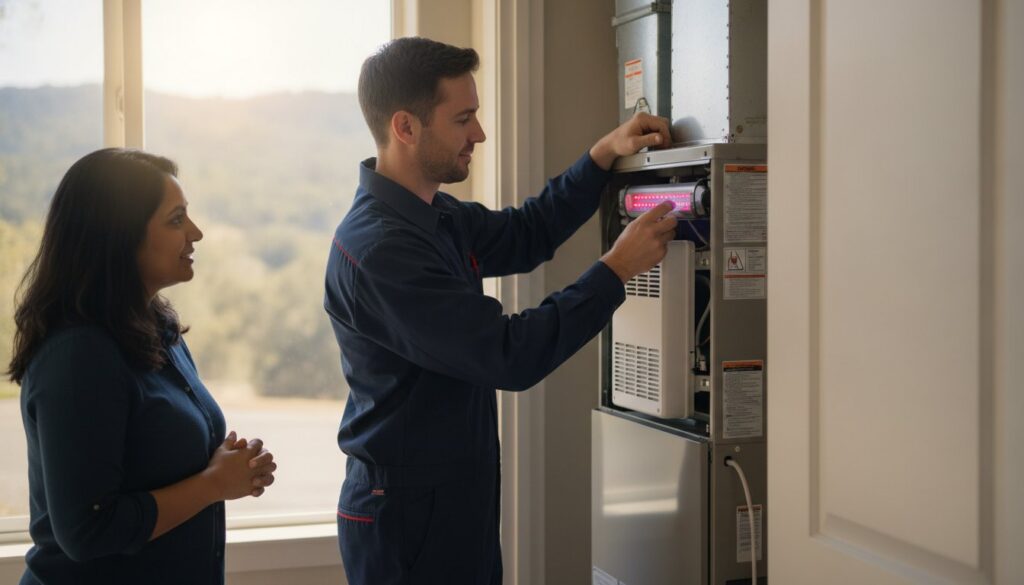
Imagine waking up in your Diamond Springs home, windows tightly shut against the Foothill breeze, yet your eyes are still itching and that familiar sneeze is already starting. It’s a common frustration for many of our neighbors, especially since the 2026 allergy season in California is expected to be worse than average due to recent wet weather and early blooms. If you’re wondering how to improve indoor air quality for allergies Diamond Springs families face daily, you aren’t alone. We know how exhausting it is to keep cleaning dust that seems to reappear overnight, and we understand why you don’t want to spend another season feeling miserable in your own living room when the EPA reports that indoor air can be two to five times worse than the air outside.
We believe your home should be your ultimate sanctuary, and we’re here to help you reclaim that peace of mind. In this 2026 guide, we’ll show you exactly how to transform your living space into a truly allergy-free environment using the latest expert HVAC strategies. We’ll walk you through the differences between UV light installations and HEPA filtration, explain how the updated Title 24 standards affect your home’s ventilation, and provide local tips to keep those seasonal triggers at bay for good. Our goal is to provide the clear, informative guidance you need to protect your household and ensure your comfort remains our top priority.
Key Takeaways
- Learn why Diamond Springs’ unique geography traps pollen and smoke, making specific filtration strategies essential for your respiratory health.
- Discover how to improve indoor air quality for allergies Diamond Springs families deal with by finding the perfect MERV rating balance for your specific HVAC system.
- Explore the benefits of professional UV light installations and how they work alongside whole-home purifiers to neutralize biological irritants.
- Gain practical tips on when to seal your home and when to ventilate, helping you maintain a clean environment without overworking your equipment.
- Understand the importance of a personalized IAQ assessment to identify the specific triggers in your home and find the right solutions for your family.
Why Diamond Springs Homes Face Unique Indoor Air Quality Challenges
Living in the Sierra Nevada foothills offers incredible views and a connection to nature, but the geography of Diamond Springs creates a unique set of challenges for our respiratory health. Our town’s position often means that local air currents can trap airborne particles against the rising terrain. This geographical “bowl” effect keeps pollutants closer to the ground and, eventually, closer to your front door. When we talk about your home’s environment, we are looking at a comprehensive overview of indoor air quality that includes everything from humidity levels to microscopic biological triggers.
As we move through 2026, residents in El Dorado County are facing a particularly intense allergy season. Recent wet weather patterns have led to rapid plant growth, resulting in earlier and more concentrated pollen counts than in previous years. Many of our neighbors find that simply “staying inside” doesn’t provide the relief it used to. Without a properly optimized HVAC system, your home can actually concentrate these outdoor irritants. Understanding how to improve indoor air quality for allergies Diamond Springs families deal with starts with recognizing that your indoor air can be two to five times more polluted than the air outside, according to the EPA.
To better understand this concept, watch this helpful video:
Local Allergens: Beyond Common Dust
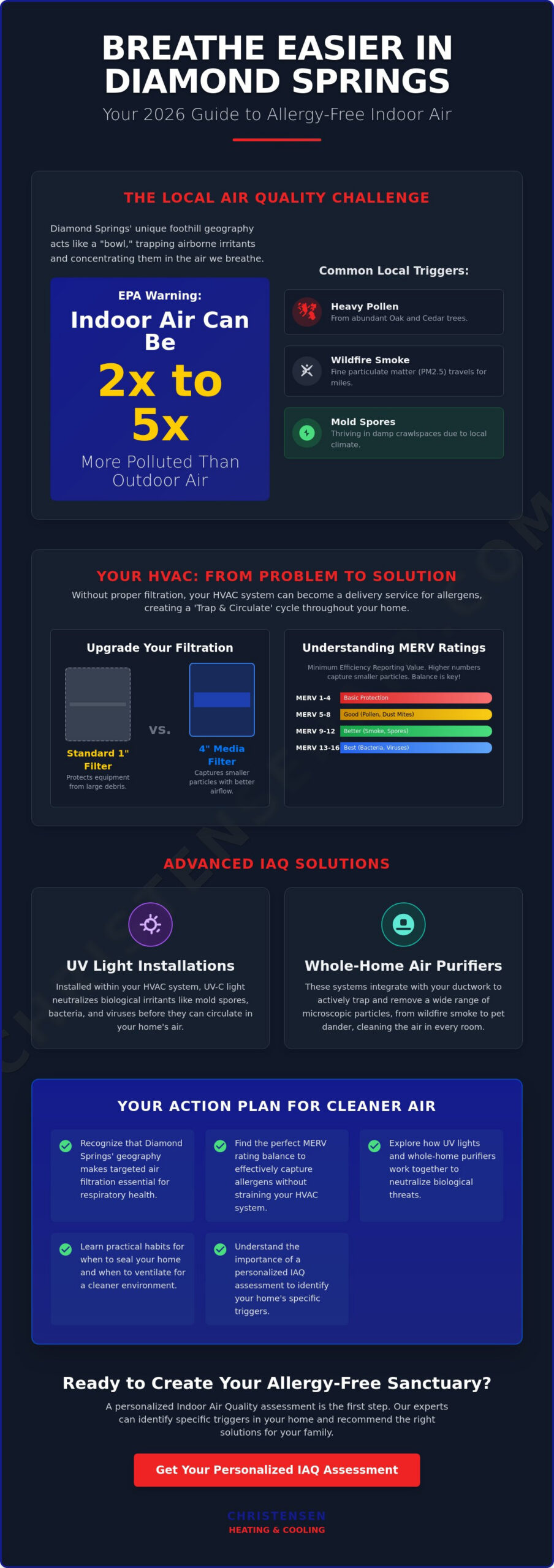
In our neck of the woods, we aren’t just fighting standard household dust. Diamond Springs is home to massive stands of Oak and Cedar, both of which release heavy amounts of sticky, irritating pollen. Beyond the trees, we also have to consider the seasonal reality of wildfire smoke. Even when fires are burning miles away, fine particulate matter known as PM2.5 can infiltrate even the most tightly sealed homes. Additionally, our local climate can cause moisture to linger in crawlspaces, allowing mold spores to thrive and eventually enter your breathing zone through small gaps in your flooring or ductwork.
The ‘Trap and Circulate’ Phenomenon
Many homeowners don’t realize that a standard HVAC system is often designed primarily for temperature control, not air purification. If your system isn’t equipped with high-efficiency filtration, it acts as a delivery system for allergens, moving them from room to room every time the fan kicks on. This is why you might notice stuffy air or lingering odors even after you’ve cleaned. It’s a vital part of learning how to improve indoor air quality for allergies Diamond Springs residents face; we have to distinguish between “cooling” the air and actually “cleaning” it. When your system traps pollutants instead of neutralizing them, it creates a cycle of exposure that keeps your symptoms active all season long.
Your HVAC System: The First Line of Defense Against Allergens
Your HVAC system acts as the lungs of your household. While it’s easy to think of it as just a tool for staying cool during a Diamond Springs summer, it’s actually your primary weapon for filtering out irritants. To effectively manage your home’s environment and Control Indoor Allergens, you need to look closely at your filtration setup. Standard 1-inch filters are often designed to protect the mechanical equipment from large debris, not to protect your family from microscopic pollen. Upgrading to a 4-inch media filter provides a much larger surface area, allowing for better airflow while capturing significantly more pollutants.
When considering how to improve indoor air quality for allergies Diamond Springs residents often ask about MERV ratings. MERV stands for Minimum Efficiency Reporting Value. A higher number means the filter can catch smaller particles. However, simply buying the highest rated filter at the hardware store isn’t always the best move. If a filter is too restrictive, it can cause your blower motor to work too hard. This leads to higher energy bills and potential system failure. Finding that “sweet spot” is where professional guidance makes a difference for your specific equipment.
Another factor to consider is how often your system runs. If your thermostat is set to “Auto,” the air is only being filtered when the heater or air conditioner is actively running. For those with severe respiratory sensitivities, we often suggest running the blower fan independently. This provides constant air circulation through your filtration system, ensuring that pollutants don’t have a chance to settle on your furniture or floors.
Choosing the Right Filter for Allergy Season
Most homes come with a MERV 8 filter, which is fine for basic dust. If you’re dealing with the heavy pollen counts we’ve seen in 2026, you likely need a MERV 11 or MERV 13. These higher ratings are specifically designed to capture the fine particles that trigger sneezing and itchy eyes. We typically recommend high-efficiency pleated filters because they offer the best balance of protection and performance. Just remember that a thick filter needs to be changed regularly to avoid “suffocating” your air conditioner and causing a freeze-up.
The Critical Role of Duct Integrity
You can buy the most expensive filter on the market, but it won’t help if your air is bypassing it. In many Diamond Springs homes, leaky ductwork acts like a vacuum. It pulls in dusty air from your attic or insulation fibers from your crawlspace and pushes them directly into your living areas. This bypasses the filter entirely. If you notice “hot spots” in certain rooms or a layer of dust that returns immediately after cleaning, your ducts might be the culprit. A professional duct system replacement is often the missing link for families who can’t seem to get their allergies under control. Ensuring your ductwork is sealed and sized correctly is a fundamental step in how to improve indoor air quality for allergies Diamond Springs homeowners rely on for long-term comfort.
Professional Upgrades: UV Lights and Whole-Home Purifiers
While high-efficiency filters handle the physical debris we discussed in the previous section, they don’t solve the problem of biological growth or chemical odors. If you are exploring how to improve indoor air quality for allergies Diamond Springs families face, you have to look beyond just catching dust. True relief often requires a transition from passive filtration to active purification. We’ve seen that adding professional-grade technology to your existing HVAC system can bridge the gap between “mostly clean” and a truly healthy indoor environment.
Unlike portable units that only clean the air in a single room, whole-home solutions treat every cubic foot of air that passes through your ducts. These systems are integrated directly into your air handler, meaning they work silently in the background without taking up floor space or requiring separate maintenance for every room. Adding these upgrades is a significant step beyond basic practical tips for controlling indoor allergens like frequent vacuuming or keeping pets off the furniture.
The Science of UV Light Installation
UV light installations are one of the most effective ways to keep your system clean and your air healthy. These germicidal lamps are positioned near your AC’s evaporator coil, which is a naturally damp environment where mold and bacteria love to grow. By bathing this area in specific wavelengths of light, we can prevent “dirty sock syndrome” and stop biological triggers before they ever enter your airstream. We often explain to our neighbors that UV lights help with wildfire smoke by breaking down volatile organic compounds (VOCs) and odors that a standard filter would simply let pass through. These bulbs generally need to be replaced once a year to maintain their effectiveness, a simple task we can handle during your regular seasonal check-up.
Whole-House Air Scrubber Benefits
While UV lights focus on the coil, air scrubbers take an active approach to cleaning the air throughout your entire home. Instead of waiting for pollutants to pass through a filter, these devices send out specialized molecules that “seek out” and neutralize pet dander, odors, and smoke particles in every room. This is a game-changer for households with sensitive residents who need a comprehensive solution for how to improve indoor air quality for allergies Diamond Springs homes often harbor. Because these systems integrate with your HVAC infrastructure, professional installation is essential to ensure they operate safely without voiding your equipment’s warranty. We take pride in helping you choose the right balance of technology to protect your sanctuary and your family’s well-being.
Practical Daily Habits to Reduce Indoor Triggers
While the advanced filtration and purification systems we’ve discussed are powerful, they work best when supported by smart daily habits. We want to help you create a routine that minimizes the entry of new irritants into your living space. One of the easiest ways to protect your home is a strict shoes-off policy. By leaving footwear at the door, you prevent outdoor pollen, pesticides, and Sierra dust from being tracked onto your carpets and eventually sucked into your HVAC system. This simple change can noticeably extend the life of your high-efficiency filters and reduce the allergen load on your floors.
Humidity management is another vital piece of the puzzle. We recommend keeping your indoor humidity levels between 30% and 50%. Dust mites, which are a major trigger for many of our neighbors, thrive in humid environments. By staying within this range, you make it much harder for these microscopic pests to survive and multiply. If you are looking for more ways on how to improve indoor air quality for allergies Diamond Springs homes encounter, consider using your thermostat’s ‘Fan On’ mode. This keeps air moving through your filtration system even when the AC or furnace isn’t actively heating or cooling, providing continuous protection against floating particles.
Strategic Ventilation (House Burping)
In Diamond Springs, we can’t always rely on “fresh” air to be clean air. Before you open your windows to ventilate, or “burp,” your house, always check the local Air Quality Index (AQI). During El Dorado County’s fire season, outdoor air often contains hazardous smoke particles that will only worsen your symptoms if allowed inside. When the AQI is in the green zone, brief periods of ventilation can help clear out indoor pollutants like cleaning chemicals or cooking odors. We also suggest running your bathroom and kitchen exhaust fans during use to pull stale air out of the home immediately, preventing it from circulating through the rest of the house.
Maintenance as an Allergy Strategy
Regular system care is about more than just avoiding mechanical breakdowns; it’s a core health strategy for your family. Seasonal tune-ups allow us to inspect your evaporator coils and drain pans for any signs of mold growth before it has a chance to spread through your vents. It’s also important to keep the area around your outdoor condenser unit clear of leaves and debris to ensure it can breathe properly and doesn’t pull extra pollutants toward your home’s perimeter. To stay ahead of these tasks without the stress, we invite you to join our Comfort Club maintenance plan. This proactive approach ensures your IAQ equipment and your entire HVAC system run at peak performance year-round. Explore our Comfort Club options to ensure your home remains a safe, clean sanctuary for your loved ones.
Creating a Sanctuary with Christensen’s IAQ Solutions
At Christensen’s, we have been dedicated to serving our Diamond Springs neighbors since 2009. We understand that your home is more than just a building; it’s the sanctuary where your family should feel safest. This is why we take a deeply personal approach to every project we undertake. We don’t believe in one-size-fits-all solutions because every home in the Foothills has its own unique challenges, from specific ductwork layouts to varying levels of exposure to local pollens. Our team takes pride in providing the reliable expertise you need to breathe easier and live more comfortably.
When you’re looking for the most effective way regarding how to improve indoor air quality for allergies Diamond Springs residents struggle with, you need a partner who looks at the big picture. We specialize in combining duct system replacement, high-efficiency filtration, and UV light installation into a cohesive strategy for maximum relief. By addressing both physical particles and biological triggers, we help you create an environment that supports your respiratory health year-round. We treat your home’s air with the same care and attention we would apply to our own households, ensuring every task is completed with personal pride.
Expert IAQ Consultation
Our professional IAQ audit goes far beyond a simple visual check. During a consultation, we use specialized tools to identify airflow imbalances that often contribute to rapid dust accumulation in specific rooms. We also examine your ductwork for leaks and test your current filtration efficiency to see where irritants might be bypassing your defenses. This comprehensive view allows us to provide personalized recommendations that target your family’s specific allergy triggers. We want you to have a clear understanding of your home’s needs so you can make informed decisions about your comfort.
Reliable Local Service You Can Trust
As a family-owned HVAC contractor in Northern California, our reputation is built on honesty and long-term relationships rather than short-term transactions. Our technicians are trained to prioritize education, helping you understand your options without the stress of high-pressure sales tactics. We believe in providing straightforward, action-oriented guidance that prioritizes your family’s well-being. This commitment to quality and neighborly care is the hallmark of our identity, distinguishing us as a trusted, local fixture in the community. We are here to help you navigate the technical side of home comfort so you can focus on enjoying your sanctuary. Schedule your Diamond Springs IAQ assessment today!
Take Control of Your Home’s Health Today
You don’t have to accept seasonal sneezing and itchy eyes as a permanent part of life in the Sierra Foothills. Reclaiming your comfort starts with a clear plan on how to improve indoor air quality for allergies Diamond Springs families face during our increasingly intense pollen seasons. By combining high-efficiency filtration with professional UV light installations and ensuring your ductwork is properly sealed, you can effectively block out the microscopic triggers that threaten your sanctuary. We’ve seen how these targeted strategies transform local living spaces into clean, breathable environments where your loved ones can truly relax.
As a family-owned and operated team serving Diamond Springs and the greater Roseville area since 2009, we take personal pride in every home we protect. We are specialized UV light and duct replacement experts who believe in providing neighborly care and honest, reliable guidance. You deserve to feel safe and comfortable in your own home; we’re here to help you achieve that peace of mind through proven technology and dedicated service.
Breathe easier today with a professional IAQ assessment from Christensen Heating and Cooling!
Frequently Asked Questions
Can my HVAC system really help with my spring allergies?
Yes, your HVAC system acts as a whole-home air filtration unit that can cycle your entire indoor air volume several times an hour. By using high-efficiency filters and running the fan, it captures pollen and mold spores before they settle on your furniture. This is a key part of how to improve indoor air quality for allergies Diamond Springs families face during the heavy oak and cedar blooms common in our region.
What is the best MERV rating for a home with allergy sufferers in Diamond Springs?
We generally recommend a MERV 11 or MERV 13 filter for those with respiratory sensitivities. These ratings are high enough to catch fine pollen and smoke particles without putting excessive strain on your blower motor. While a MERV 16 captures even more, it often requires a specialized media cabinet to prevent air restriction and potential damage to your heating and cooling equipment.
Do UV lights actually kill mold inside air conditioners?
Germicidal UV lamps effectively neutralize mold, bacteria, and viruses by disrupting their DNA as they pass the light or grow on the evaporator coil. This prevents biological growth from ever entering your ductwork. We install these lights directly over the coil, which is the dampest part of your system and the most likely spot for mold to thrive during a humid Sierra summer.
How often should I change my air filter during wildfire season?
You should check your filter every two weeks and likely replace it once a month during heavy smoke events. Wildfire particles are incredibly fine and can clog a high-efficiency filter much faster than standard household dust. Keeping a fresh filter ensures your system continues to clean the air without overworking the motor or reducing your home’s airflow when you need it most.
Is whole-home air purification better than a portable HEPA filter?
Whole-home systems are typically more effective because they treat the air in every room simultaneously through your existing ducts. While portable units work well for a single bedroom, they can’t address the pollutants in your kitchen, living room, and hallways all at once. Integrating purification into your HVAC setup provides a more comprehensive and energy-efficient solution for your entire household sanctuary.
Will sealing my ducts help reduce the dust in my house?
Sealing your ducts significantly reduces dust by preventing attic and crawlspace debris from being sucked into your air stream. Many homes have gaps that act like a vacuum, pulling in insulation fibers and outdoor dirt that bypasses your main filter. Professional duct sealing or replacement ensures that only filtered, clean air is being delivered to your living spaces, keeping your surfaces cleaner.
How do I know if my indoor air quality is actually poor?
Common signs include persistent sneezing, itchy eyes, lingering odors, and a visible buildup of dust shortly after cleaning. You might also notice that your symptoms improve when you leave the house and worsen when you return. If your home feels stuffy or you see signs of moisture around your vents, it’s a strong indicator that your air needs better filtration or purification.
Does the Comfort Club maintenance plan include air quality checks?
Yes, our Comfort Club maintenance plan includes a thorough inspection of your filtration system and evaporator coils to ensure they are clean. We look for any signs of biological growth or airflow restrictions that could impact your health. This proactive approach is a vital part of how to improve indoor air quality for allergies Diamond Springs residents rely on to keep their homes safe.