






You wake up on a chilly Roseville morning only to be greeted by a painful static shock from the bedroom carpet and a throat that feels like sandpaper. While we often focus on the thermostat setting during a Sacramento Valley winter, the moisture in your air is just as vital for your family’s comfort. You’re likely asking, what should humidity be in house in winter to stop your wood floors from cracking and your skin from itching? We understand how frustrating it is to balance a cozy home with the worry of condensation dripping down your windows.
We believe every local family deserves a sanctuary that protects their health and their property investment. In this guide, we’ll show you why maintaining a range between 30% and 45% is the key to total home comfort. You will learn how to adjust these levels based on the outdoor temperature and discover how modern, energy-efficient humidifiers can save you up to 30% on electricity while keeping your indoor air perfectly balanced all season long.
Key Takeaways
- Find your home’s “Goldilocks Zone” by learning exactly what should humidity be in house in winter to balance personal comfort with structural safety.
- Understand how to use your windows as a “canary in the coal mine” to prevent moisture damage when Sacramento Valley temperatures drop.
- Master the use of a digital hygrometer to get accurate, real-time moisture readings in the high-traffic areas of your household.
- Discover how whole-home humidification systems integrate with your HVAC unit to provide set-and-forget comfort and sterile air for your family.
The Ideal Winter Humidity Range for Sacramento Valley Homes
Understanding what humidity is helps us manage the comfort of our homes more effectively. Technically, we’re talking about Relative Humidity (RH), which measures the amount of water vapor in the air compared to the maximum amount that air could hold at its current temperature. Since warm air holds more moisture than cold air, our heaters can actually dry out the indoor environment as they warm up the space. This is why your home feels parched even when it’s raining outside.
To better understand this concept, watch this helpful video:
For most Roseville households, the “Goldilocks Zone” is between 30% and 45%. We’ve found that staying within this range provides the best protection for your family’s health and your home’s structural integrity. While some general guides suggest going as high as 50%, we recommend keeping 45% as your strict upper limit. This ceiling is vital because moisture can easily get trapped in wall cavities or behind furniture. Once it hits 50% or higher, you risk mold growth and wood rot that can be incredibly expensive to repair. Knowing exactly what should humidity be in house in winter gives you the power to prevent these issues before they start.
Why 30% to 45% is the Sweet Spot
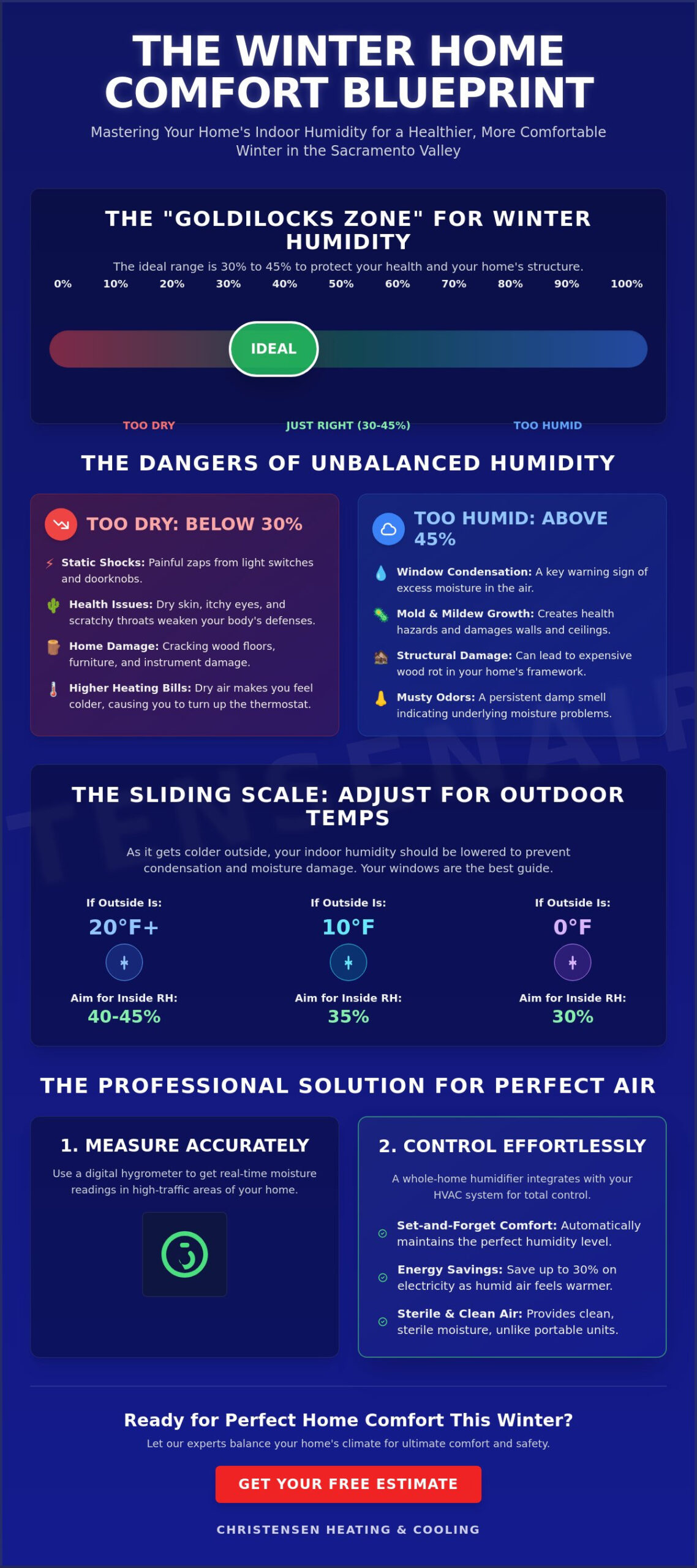
This specific range mimics the natural comfort levels our bodies crave. When the air stays in this window, your skin stays hydrated and your respiratory system functions at its best. If you go below 30%, you’ll deal with constant static shocks and scratchy throats. If you push past 45%, you’ll likely see condensation on your windows, which indicates the air is too heavy with moisture. The ideal winter RH range is 30-45% to maximize comfort while protecting home materials.
The Impact of Sacramento’s Local Climate
Our region presents a unique challenge for homeowners. While we experience thick Tule fog and damp mornings, that outdoor moisture doesn’t naturally translate to indoor comfort. In fact, heating that damp air often results in very low indoor RH. Unlike our neighbors in higher elevations like Placerville or Shingle Springs who deal with consistently dry mountain air, Roseville residents face a fluctuating balance. It is a common mistake to assume the damp weather outside means you don’t need to worry about indoor humidity in winter. We’ve seen many local homes suffer from “dry air syndrome” even during our rainiest months. Knowing what should humidity be in house in winter allows you to adjust your system as the Valley weather shifts from foggy mornings to crisp, dry afternoons.
Why Humidity Drops in Winter and How It Affects Your Family
Physics tells us that cold air is physically incapable of holding as much water vapor as warm air. When that chilly Sacramento breeze enters your home through small gaps or ventilation, and your furnace cranks up to 70 degrees, the relative humidity plummets. This creates what we call a “sponge effect.” The air becomes thirsty. It actively seeks out moisture from anything it touches, pulling water from your houseplants, your pets, and even your own body. This is the primary reason why your indoor environment feels so different once the seasons shift.
There is a sneaky financial side to this process as well. Dry air evaporates moisture off your skin faster, which makes you feel significantly colder than the actual temperature shown on your thermostat. You might find yourself bumping the heat up to 72 or 74 degrees just to stop shivering. In reality, a well-humidified room at 68 degrees often feels much cozier. If you are wondering what should humidity be in house in winter to help manage your utility bills, keeping it above 30% allows you to feel warmer without overworking your heater.
Every time you feel a painful spark at the light switch or notice your hair standing on end, your home is sending a signal. These static shocks are the most common warning signs that your indoor air has become too thin and dry. While these are minor annoyances, the impact on your household’s health and the structure of your property can be much more serious if left unaddressed.
Health and Comfort Implications
Your body’s first line of defense against winter bugs is the mucous membranes in your nose and throat. When these tissues dry out, they can’t trap germs as effectively, making your family more susceptible to respiratory infections. For our neighbors in Roseville who live with asthma or chronic allergies, this dry environment can trigger persistent flare-ups. Our Comfort Club members often report a significant improvement in their daily wellness once we help them stabilize their indoor air quality and find the right moisture balance.
Protecting Your Home’s Structural Integrity
Your home is a living investment that expands and contracts. Wood is a “hygroscopic” material, meaning it acts like a sponge by absorbing and releasing moisture. In very dry conditions, you will start to see unsightly gaps in your hardwood floors or crown molding that pulls away from the ceiling. This isn’t just a cosmetic problem; it can lead to permanent warping of expensive musical instruments, antique furniture, and the very “bones” of your house. Knowing what should humidity be in house in winter is the first step in preventing this costly structural damage.
The Sliding Scale: Adjusting Humidity Based on Outdoor Temperatures
While we previously established the 30% to 45% range as the ideal target, it’s vital to understand that this isn’t a static number. In the Sacramento Valley, our winter nights can fluctuate wildly. We might see a crisp 55 degree afternoon followed by an overnight dip into the low 30s. When the temperature outside drops, the glass in your windows becomes much colder. If your indoor humidity stays too high during these cold snaps, the air hitting that glass will reach its “dew point,” resulting in condensation.
We often tell our clients to look at their windows as the “canary in the coal mine” for their home’s health. If you notice a thin layer of fog or water droplets forming on the bottom of your window panes, your indoor moisture is too high for the current weather. This excess water doesn’t just sit on the glass; it can drip down into the wooden frames or drywall, leading to hidden rot and mold growth. Determining what should humidity be in house in winter requires a proactive approach that changes with the local forecast.
The Winter Humidity Adjustment Chart
To keep your home safe and comfortable, we recommend following these specific guidelines based on the outdoor conditions in Roseville. You can use a simple digital hygrometer to monitor these levels and adjust your humidification settings accordingly.
| Outdoor Temperature | Recommended Max Indoor RH |
|---|---|
| 40°F and above | 45% |
| 30°F to 40°F | 40% |
| 20°F to 30°F | 35% |
| Below 20°F (Rare for Roseville) | 30% |
Heat Pumps vs. Furnaces: Moisture Management
The type of heating system you use also plays a major role in your air quality. Traditional gas furnaces create a very intense, high-temperature heat that can strip moisture out of your home environment rapidly. If you have a furnace, you’ll likely need to be more aggressive with your humidification to maintain that 30% baseline.
On the other hand, many of our neighbors are transitioning to modern inverter heat pumps. We have seen a surge in inverter heat pump installations in Rocklin and Roseville because these systems provide a steadier, more temperate warmth. Because they don’t “scorch” the air like a furnace, they often help preserve more of your home’s natural moisture. Regardless of your system type, knowing what should humidity be in house in winter ensures your equipment works in harmony with your family’s comfort needs.
Practical Ways to Measure and Control Home Humidity
Taking control of your indoor environment starts with accurate data. You can’t manage what you don’t measure. We always recommend that homeowners pick up a digital hygrometer. These small, inexpensive devices provide a real-time percentage of your indoor moisture. To get an honest reading, place your sensors in high-traffic areas like the living room or master bedroom. Avoid putting them near bathrooms or kitchens where steam from a shower or a boiling pot will skew the numbers. This data is the only way to truly know what should humidity be in house in winter for your specific floor plan.
If you find your readings are consistently low despite your best efforts, your home might be “bleeding” moisture. Leaky ductwork is a common culprit we see in many local neighborhoods. When your HVAC system pushes air through gaps in the attic or crawlspace, you lose that treated air before it ever reaches your family. Sealing these leaks is often the most cost-effective way to stabilize your environment. Beyond mechanical fixes, you can also use temporary solutions like simmering a pot of water on the stove or adding more greenery to your decor to help bump up the levels during a dry spell.
Measuring Like a Pro
For our neighbors in Folsom or El Dorado Hills with two-story floor plans, one sensor usually isn’t enough. Heat and moisture rise. This often leaves the downstairs feeling like a desert while the upstairs feels swampy. We suggest placing at least one sensor on each level to get a complete picture. To ensure your device is accurate, perform a “salt test.” Place your hygrometer in a sealed bag with a bottle cap of damp salt for 24 hours. It should read exactly 75%. If it’s off by a few points, you’ll know how to adjust your expectations when checking what should humidity be in house in winter on a daily basis.
Quick DIY Fixes for Dry Air
If you’re looking for immediate relief, a few household tricks can help. Houseplants act as natural humidifiers through a process called transpiration. They release moisture into the air as they “breathe,” which can slightly raise the RH in a small room. You can also leave the bathroom door ajar after a hot shower to let that steam migrate into the hallway. While portable humidifiers are popular, they require daily cleaning to prevent bacteria growth and usually only treat a single room. If you’re tired of refilling tanks every night and want a permanent solution for your whole household, you should contact our friendly team for an air quality consultation today.
Professional Solutions: Whole-Home Humidification in Roseville
While tracking your indoor moisture with a hygrometer is a great start, many Roseville families find that manual adjustments feel like a full-time job. If you’re tired of constantly asking what should humidity be in house in winter every time the weather shifts, a whole-home system offers a set-and-forget solution. These units integrate directly into your existing ductwork, adding moisture to the air as it circulates. This ensures every room, from the kitchen to the back bedroom, stays within that ideal 30% to 45% range without you lifting a finger.
Truly improving indoor air quality requires looking at more than just moisture. At Christensen Heating and Cooling, we often pair humidification with UV light installations and high-efficiency filtration. This holistic approach ensures that the water vapor being added to your air is sterile and free from the bacteria that can sometimes thrive in damp environments. It’s about creating a sanctuary where your family can breathe easy all winter long. By choosing a professional installation, you also ensure your system meets the new 2026 energy efficiency standards, which can reduce electricity consumption by up to 30% compared to older models.
Portable vs. Whole-Home Systems
Many homeowners start with small portable units, but these often lead to more stress than they solve. In our region, the minerals in our local water can create a fine “white dust” that settles on your furniture when using ultrasonic portable models. Whole-home systems are plumbed directly into your water line and use sophisticated filters to prevent this issue. Beyond the mess, consider the labor. A portable unit requires daily filling and deep cleaning every few days to prevent mold. A whole-home bypass or steam unit only needs professional attention once a year. For most Sacramento families, the cost-to-value ratio favors the integrated system because it protects the entire structure rather than just one corner of a room.
The Christensen Comfort Club Advantage
We treat every client’s home as if it were our own. We created the Comfort Club to take the guesswork out of home maintenance and provide peace of mind. When we service your HVAC system, we also inspect your humidifier to ensure the water panel is clean and the drainage is clear. This prevents your comfort system from becoming a source of mold or mildew during the damp Valley winters. Knowing exactly what should humidity be in house in winter is easier when you have a partner monitoring your system’s performance. Members also enjoy priority service, which is vital when you need a quick IAQ adjustment during a January cold snap. Schedule an IAQ consultation with our family-owned team today to find the perfect balance for your household.
Master Your Home’s Winter Comfort
Achieving a healthy moisture balance is one of the best ways to protect your family’s health and your home’s long-term value. By keeping your indoor air between 30% and 45%, you can say goodbye to painful static shocks and scratchy throats. Remember to adjust those levels as the outdoor temperature shifts to keep your windows clear and your wall cavities dry. Knowing what should humidity be in house in winter gives you the control you need to create a true sanctuary for your loved ones.
Our team has been family-owned and operated since 2009. We take personal pride in serving our neighbors throughout Roseville, Rocklin, and the greater Sacramento area. As specialists in UV light technology and ductwork, we focus on reliable solutions that bring you lasting peace of mind. Breathe easier this winter; schedule your Indoor Air Quality audit with Christensen Heating and Cooling today! We are ready to help your household stay warm, hydrated, and healthy all season long.
Frequently Asked Questions
Is 50% humidity too high for a house in winter?
Yes, 50% is generally too high for most Roseville homes during the winter months. While the EPA suggests a broad range of 30% to 50%, anything over 45% often leads to condensation on window glass when outdoor temperatures dip into the 30s. This excess moisture can eventually cause wood rot or mold growth in your wall cavities. We recommend staying within the 30% to 45% range to keep your home safe.
How can I tell if my house is too dry without a meter?
You can spot dry air through several physical warning signs in your household. Frequent static shocks when touching doorknobs or seeing new gaps in your hardwood flooring are clear indicators that moisture is low. Your family might also experience scratchy throats, dry skin, or persistent nosebleeds. While these signs are helpful, a digital hygrometer is the best tool to confirm exactly what should humidity be in house in winter for your comfort.
Why do my windows have water on them in the morning?
Water on your windows is a sign of condensation, which happens when moist indoor air hits the cold surface of the glass. This tells you that your indoor humidity is too high for the current outdoor temperature. If you don’t lower your humidifier settings, that moisture can drip into your window frames and cause structural damage. We suggest using these “window canaries” as a signal to turn your humidity down a few percentage points.
Can low humidity make my heater work harder?
Low humidity indirectly increases your energy bills because dry air makes you feel colder than it actually is. When moisture evaporates off your skin quickly, you feel a chill even if the room is 70 degrees. This often leads homeowners to bump up the thermostat, which forces the heater to run more frequently. Maintaining proper moisture can help you feel warmer at lower temperatures, potentially saving you up to 30% on energy costs.
Do I need a humidifier if I have a heat pump?
Many heat pump owners still find a humidifier necessary for total winter comfort. While heat pumps provide a more temperate heat than gas furnaces, the heating process still dries out the air as it circulates through your home. If you notice static electricity or dry skin, a whole-home system can help you reach the target for what should humidity be in house in winter. We often install these systems together to provide a balanced indoor environment.
What is the best way to increase humidity in a large house?
The most effective solution for a large property is a whole-home humidifier integrated into your central HVAC system. Portable units are usually designed for single rooms and can’t maintain consistent levels across a two-story floor plan. A whole-house system uses your existing ductwork to distribute moisture evenly to every room. This method also avoids the “white dust” issues caused by minerals in our local water that often plague smaller, portable ultrasonic models.
Are whole-house humidifiers hard to maintain?
Whole-house systems are much easier to maintain than portable units that require daily scrubbing and refilling. A professional whole-home humidifier typically only needs a new water panel once per season to keep it running at peak efficiency. We usually handle this quick service during a standard winter maintenance visit. This ensures the system remains clean and prevents any mineral buildup from affecting the air quality that your family breathes every day.
Will a UV light help with humidity-related mold?
A UV light is an excellent addition to any home with a humidification system because it kills mold spores and bacteria on contact. While the humidifier adds necessary moisture, the UV light ensures that moisture stays sterile as it passes through your HVAC coils. This combination prevents mold from growing in the damp areas of your system. It is a proactive way to protect your family’s health and keep your indoor air fresh throughout the damp Sacramento winter.