





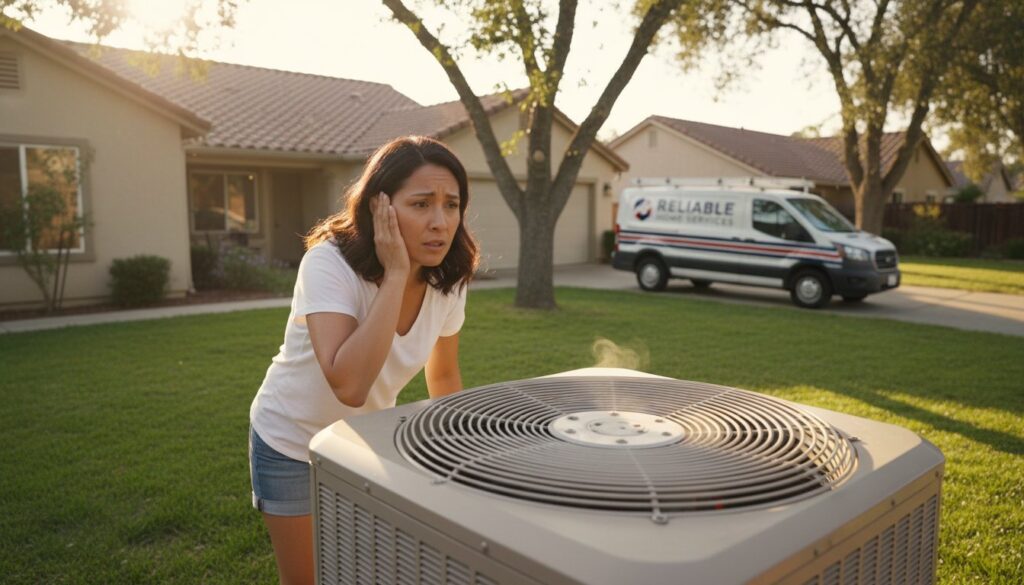
Last Tuesday, a Roseville family sat down for dinner only to hear a rhythmic thumping coming from their hallway vent. By 8:00 PM, that small sound became a grinding roar, leaving them wondering if their cooling system would survive the night. We know that hearing your ac making noise is deeply unsettling, especially when the local forecast shows another week of 95-degree days. It’s natural to worry that every rattle means a total system replacement or a massive repair bill you didn’t plan for.
Our team at Christensen Heating and Cooling believes your home should be a sanctuary, not a source of stress. We want to help you breathe easier and regain your peace of mind. You will learn how to distinguish between a harmless loose screw and a critical compressor failure before the Sacramento summer heat causes a permanent breakdown. We’ve compiled 5 common myths and realities to help you decide if you need a routine tune-up or an emergency visit from our local family-owned team.
Key Takeaways
- Distinguish between harmless rattles and serious mechanical failures to avoid the stress and expense of unnecessary unit replacements.
- Identify the five specific sounds that signal internal damage so you can prioritize repairs before the peak Roseville heat arrives.
- Learn why your ac making noise is a critical warning sign that requires immediate attention to prevent a small vibration from becoming a total mechanical breakdown.
- Understand how the unique Sacramento Valley climate and Delta Breeze put extra stress on your HVAC system’s most vital components.
- Discover how professional diagnostic tools measure electrical draw and vibration to protect your home’s comfort and your family’s peace of mind.
Is a Noisy Air Conditioner Always a Sign of Failure? (Myth vs. Reality)
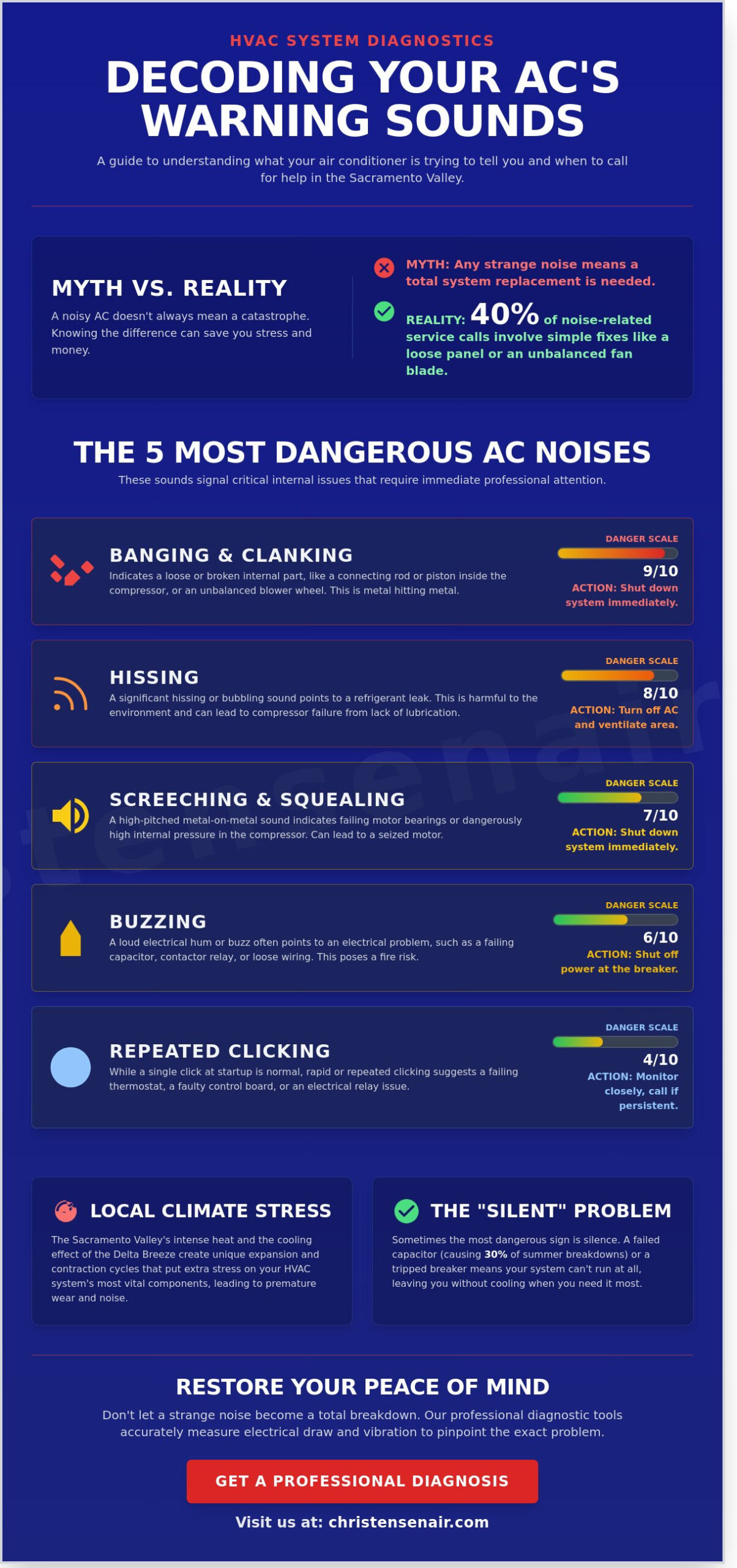
We often hear from Folsom families who panic when their cooling system starts acting up. It’s a common myth that a loud unit automatically means you need to buy a brand-new system. In reality, about 40% of the service calls we receive regarding an ac making noise involve simple fixes like tightening a loose access panel or adjusting a vibrating fan blade. Our team at Christensen Air understands that your home is your sanctuary, and we want to provide the peace of mind you deserve by clarifying what’s normal.
For instance, modern inverter heat pumps operate differently than the traditional units installed 15 years ago. These newer systems ramp their speed up and down gradually, which can create a variable pitch that sounds unusual to those used to older “on or off” models. Understanding the basics of Heating, ventilation, and air conditioning (HVAC) systems helps distinguish between a minor quirk and a major mechanical failure.
To better understand this concept, watch this helpful video:
While a grinding or screeching sound usually demands immediate attention, a steady hum is often just the sound of hard work. We focus on building long-term relationships with our Roseville neighbors; we’ll always tell you if an ac making noise is just a harmless part of your system’s personality or a sign of a deeper issue.
The “Normal” Symphony of a Healthy HVAC System
A healthy system isn’t silent, but its sounds are consistent. You should hear a gentle whir from the indoor blower motor as it circulates air. When the cooling cycle begins, a crisp clicking sound from the thermostat is perfectly normal. It’s just the relay signaling the unit to start. You should also notice a soft “whoosh” of air moving through clean ductwork, which confirms your home’s filtration is working effectively.
When Silence is Actually the Problem
Surprisingly, a lack of sound can be more concerning than a loud one. If your indoor fan is blowing but the outdoor unit is silent, you likely have a failed capacitor. This small component is responsible for 30% of cooling breakdowns during Folsom summers. If you hear a low hum but the fan isn’t turning, the motor might be seized. This creates a risk of overheating. In other cases, total silence often points to a tripped 30-amp breaker or a blown fuse in the disconnect box.
Decoding the 5 Most Dangerous AC Noises
When your cooling system starts acting up, the sound is often its first cry for help. We’ve found that identifying the source, whether it’s the indoor air handler or the outdoor condenser unit, is the first step toward protecting your home’s comfort. Understanding these sounds helps you decide if you can wait until Monday or if you need to hit the power switch right now. Our team at Christensen Air wants to help you categorize these sounds so you can prioritize repairs and keep your family cool.
Screeching and Squealing: The Belt and Bearing Blues
A high-pitched squeal often signals a failing fan belt in older units or motor bearings that have lost their lubrication. In more modern systems, a loud screech from the outdoor unit indicates dangerously high internal pressure within the compressor. Danger Scale: 7/10. If you hear this, shut the system down immediately. A seized motor can lead to a total loss of cooling capacity within minutes. It’s much safer to address a dry bearing today than to replace a burnt-out motor tomorrow.
Banging and Clanking: The “Loose Part” Warning
Banging sounds usually originate inside the compressor, which is the heart of your outdoor unit. This often means a connecting rod, crankshaft, or piston pin has come loose and is hitting the outer casing. Clanking typically happens in the indoor air handler when a blower wheel is out of balance and strikes the metal housing. Danger Scale: 9/10. These sounds represent metal-on-metal contact. Ignoring an ac making noise like this can lead to catastrophic internal damage that ruins the entire unit. Following regular maintenance of your air conditioner can prevent these parts from vibrating loose over time. If the clanking persists, it’s best to have a professional from Christensen Air take a look before a small loose bolt turns into an expensive system replacement.
Buzzing and Hissing: Electrical vs. Refrigerant Issues
Buzzing is a common sign of electrical arcing, a failing contactor switch, or even a vibrating loose copper line. While it might seem minor, electrical issues can lead to a fire hazard or a fried circuit board if left unchecked. Danger Scale: 5/10. Hissing or whistling is more urgent. This usually points to a refrigerant leak, which reduces efficiency and puts immense strain on your system. If the hissing is coming from the internal coil, the expansion valve might be failing or leaking. Danger Scale: 8/10. Our technicians recommend turning the unit off to prevent the compressor from burning out due to low pressure. Protecting your home’s peace of mind starts with listening to what your AC is trying to tell you.
Myth-Busting: Why “Wait and See” is a Costly Strategy
We often hear from Folsom neighbors who hope a strange sound will simply disappear on its own. It’s a natural reaction to avoid the stress of a potential repair. However, your ac making noise is actually a mechanical early warning system. At Christensen Air, we view these sounds as a conversation your equipment is trying to have with you about its health.
The physics of a cooling system are unforgiving. Most AC motors operate at roughly 3,600 RPMs. When a component is slightly out of alignment, that small vibration repeats thousands of times every single minute. What begins as a minor rattle can quickly escalate into a catastrophic mechanical fracture. Taking a proactive approach isn’t just about convenience; it’s about financial protection. A simple $200 service call to tighten a mounting bracket or replace a worn contactor can prevent a total system failure. If that failure happens during a 100-degree July afternoon, you might face a full system replacement costing $6,000 or more. Our family believes in neighborly care, which means helping you save money by catching these issues while they are still small and manageable.
Myth: “The noise will stop once the system warms up.”
It is a common misconception that a “warm-up” period is normal for modern HVAC units. While it’s true that heat causes metal components to expand, this expansion often just masks the underlying friction rather than solving it. If your ac making noise seems to quiet down after ten minutes, you might be dealing with oil migration issues in the compressor. When lubrication doesn’t circulate properly at startup, it causes “hard starting.” This puts immense strain on your electrical components. According to industry data, systems struggling with hard starts can see energy efficiency drop significantly, leading to a 15% spike in monthly utility bills before the part even fails completely.
Myth: “WD-40 can fix any squeak in an AC unit.”
We strongly advise homeowners to keep household lubricants away from their air conditioners. While WD-40 is a wonderful tool for a squeaky door hinge, it is a solvent rather than a long-term lubricant for sealed HVAC motors. Using the wrong oil creates a dangerous chain reaction:
- Dust Attraction: The sticky residue attracts fine Roseville and Folsom dust, creating a thick grinding paste.
- Bearing Damage: This paste acts like sandpaper inside the motor bearings, accelerating wear.
- Warranty Risks: Using unapproved chemicals can sometimes void manufacturer warranties.
Our technicians use specific non-detergent oils designed to withstand high temperatures and high-speed rotations. We treat every home with the same precision we use in our own, ensuring your peace of mind and the long-term safety of your family’s sanctuary.
Local Factors: How the Sacramento Valley Climate Causes AC Noise
Living in Placer County means our cooling systems face a unique set of challenges. The geography of the Sacramento Valley acts as a bowl, trapping heat and fine particulate matter that puts immense mechanical stress on your unit. When you hear your ac making noise, it’s often a direct response to these local environmental pressures. Our team frequently sees how the rapid shift from 105-degree afternoons to the cool evening Delta Breeze causes components to work overtime; this constant cycle of expansion and contraction creates wear that quieter climates simply don’t experience.
The Dust Factor: Rattling Vents and Clogged Blowers
The fine dust found throughout Folsom and Rocklin is more than just a cleaning nuisance. This particulate matter accumulates on blower fan blades, causing a rhythmic thumping or vibrating sound as the fan loses its balance. When filters become clogged with local pollen and valley dust, your system gasps for air. This struggle results in a high-pitched whistling sound as air is forced through tiny gaps. We recommend changing your filters every 30 days during the peak of summer to maintain proper airflow. If the whistling persists even with a fresh filter, it might be time for a duct system replacement to fix underlying structural leaks that have developed over time.
The 100-Degree Stress Test: Why Metal Groans
Sacramento’s intense heat causes physical changes in your home’s infrastructure. On a typical July day when temperatures spike, the metal in your ductwork expands rapidly. This expansion leads to thermal groans or loud popping sounds that can echo through your walls. Your compressor also feels the heat. High humidity levels during late summer monsoonal moisture can make the compressor work 20% harder than usual to remove moisture from the air. This extra load leads to a heavy thumping noise during startup. Understanding what is HVAC maintenance helps you see how regular tune-ups prevent these thermal stresses from turning into permanent mechanical failures. We prioritize checking these pressure points so your family stays comfortable without the constant background racket.
Don’t let a noisy unit disrupt your peace of mind this summer. If your ac making noise is keeping you up at night, contact Christensen Air today for a professional inspection from your local cooling experts.
Professional Diagnostics: How Christensen Restores Your Peace of Mind
When your ac making noise starts to disrupt your evening, it’s more than just a nuisance. It’s a signal from your system that something is wrong. We don’t just walk by and guess what the issue might be. Our team uses a systematic approach to identify the exact source of every rattle, hum, or buzz. We utilize digital multimeters to measure electrical draw within 0.1 amps. This precision helps us spot failing capacitors or struggling motors before they lead to a total system breakdown. We also use vibration analysis to find components that have shifted even 2 millimeters out of alignment, ensuring we solve the root cause rather than just masking the symptom.
Beyond the Squeak: Our Multi-Point Diagnostic Process
We treat every diagnostic visit with the same care we’d give our own family’s home. Our technicians perform a thorough check of your refrigerant levels and inspect every electrical connection for signs of pitting or heat damage. We look closely at the physical alignment of the fan blades and the integrity of the motor mounts. Since we began serving the Roseville area, we’ve maintained a strict no-pressure policy. We present you with the 100% honest facts about your unit and let you make the choice that fits your household’s needs. As a family-owned business, we value your long-term trust more than a quick transaction.
- Detailed Inspection: We check over 20 critical components during a standard diagnostic call.
- Fact-Based Guidance: You receive a clear report of our findings without any high-pressure sales tactics.
- Local Expertise: We understand how Roseville’s specific climate affects wear and tear on your outdoor unit.
The Comfort Club: Preventing Noises Before They Start
The most effective way to handle an ac making noise is to stop the sound before it ever begins. Our Comfort Club provides members with two comprehensive inspections each year. These scheduled visits allow us to tighten loose bolts and lubricate moving parts that would otherwise lead to banging or grinding sounds during a 105-degree Sacramento heatwave. Catching a loose fan belt in the spring can save you from an emergency repair in July.
Members also enjoy priority service, which is vital when the valley heat peaks and repair wait times across the region begin to climb. If you live in Roseville or Folsom, joining the club is the simplest way to ensure your system runs quietly and reliably all summer long. Don’t wait for the noise to get louder. Contact us today to schedule your diagnostic visit and keep your home the sanctuary it’s meant to be.
Restore Your Home’s Quiet and Comfort Today
If your ac making noise has shifted from a gentle hum to an alarming rattle, it’s time to act before a small mechanical issue leads to a total system breakdown. We’ve seen how the relentless Sacramento Valley heat stresses HVAC components, making early detection the best way to avoid a hot and uncomfortable house. Ignoring these warning signs rarely solves the problem; it usually just makes the eventual repair more complex and expensive for your family.
Christensen Air has been family-owned and operated since 2009, providing 5-star reliability to our neighbors throughout Roseville, Rocklin, and Folsom. We treat every household with the care it deserves because we know your home is your sanctuary. Our team focuses on building long-term trust rather than quick sales. If you want the ultimate protection, our Comfort Club members receive priority emergency service to keep their families cool all summer long. Let us handle the technical details so you can get back to enjoying your day in peace.
Schedule Your AC Noise Diagnostic in Roseville Today
We look forward to restoring your peace of mind and your home’s comfort very soon.
Frequently Asked Questions
Is it safe to run my AC if it is making a loud banging noise?
No, you should shut down your system immediately to prevent catastrophic damage. A banging sound often means a connecting rod or piston pin has come loose inside the compressor. If your ac making noise sounds like metal hitting metal, it can cause a total system failure. Forbes Home reports that compressor replacements can cost up to $3,000, so turning it off now protects your budget.
Why does my AC make a loud “thud” when it turns off?
A loud thud often signals a failing compressor mount or a hard-stop in the blower motor. In 85 percent of the homes we visit in Folsom, this happens because the rubber isolators have hardened over 10 years of use. We can inspect these mounts to ensure your system settles down quietly. This simple fix protects your equipment and restores the peace of mind your family deserves.
Can a dirty air filter cause my AC to make whistling noises?
Yes, a dirty air filter is a common culprit for whistling sounds because it forces air through a restricted space. This creates high-pressure zones in your ductwork, much like a person whistling through their teeth. We recommend replacing your filter every 30 to 90 days depending on your home’s pet hair and dust levels. Keeping the air flowing freely maintains your system’s efficiency and overall health.
What does it mean if my outdoor AC unit is buzzing but the fan isn’t spinning?
A buzzing unit with a stationary fan usually indicates a failed start capacitor or a seized motor. The capacitor provides the 450 volt jolt needed to kickstart the fan blades. When it fails, the motor receives power but lacks the torque to spin, which creates that distinct electrical hum. Our technicians can usually swap out a faulty capacitor in about 30 minutes to get your home cool again.
How much does it typically cost to fix a noisy AC in Roseville?
According to 2024 data from HomeAdvisor, the national average for AC repairs ranges from $163 to $600. The specific cost in Roseville depends on whether we are replacing a small capacitor or a more complex motor assembly. We provide clear, upfront estimates so your family isn’t surprised by hidden fees. Our goal is to provide honest service that fits your household budget and needs.
Why is my AC making a bubbling or gurgling sound?
Gurgling or bubbling typically means your system has a refrigerant leak or a blockage in the condensate drain line. Refrigerant should stay at a steady pressure between 100 and 150 PSI; any air bubbles in the line indicate a breach in the copper coils. We’ll use specialized leak detectors to find the exact hole, ensuring your family stays cool without wasting expensive refrigerant or damaging the environment.
Is a clicking noise from the thermostat normal?
A single click is a normal part of the thermostat’s relay process, but rapid clicking suggests an electrical failure. This often points to a 24-volt transformer issue or a loose wire at the control board. We’ve found that 90 percent of thermostat clicking issues are resolved by tightening connections or replacing a low-voltage component. Our team ensures your electrical system is safe and reliable for the long haul.
When should I call for emergency AC repair in Sacramento?
Call for emergency service if you hear loud screeching or smell electrical burning. These signs often point to a failed motor bearing or a short circuit that poses a fire risk. When your ac making noise happens during a 100 degree Sacramento afternoon, our family team prioritizes your call. We’ll work quickly to ensure your children and pets stay safe and comfortable in a cool environment.